

🔊 Cook mode: big steps, timers and voice control (say “next”), hands-free.
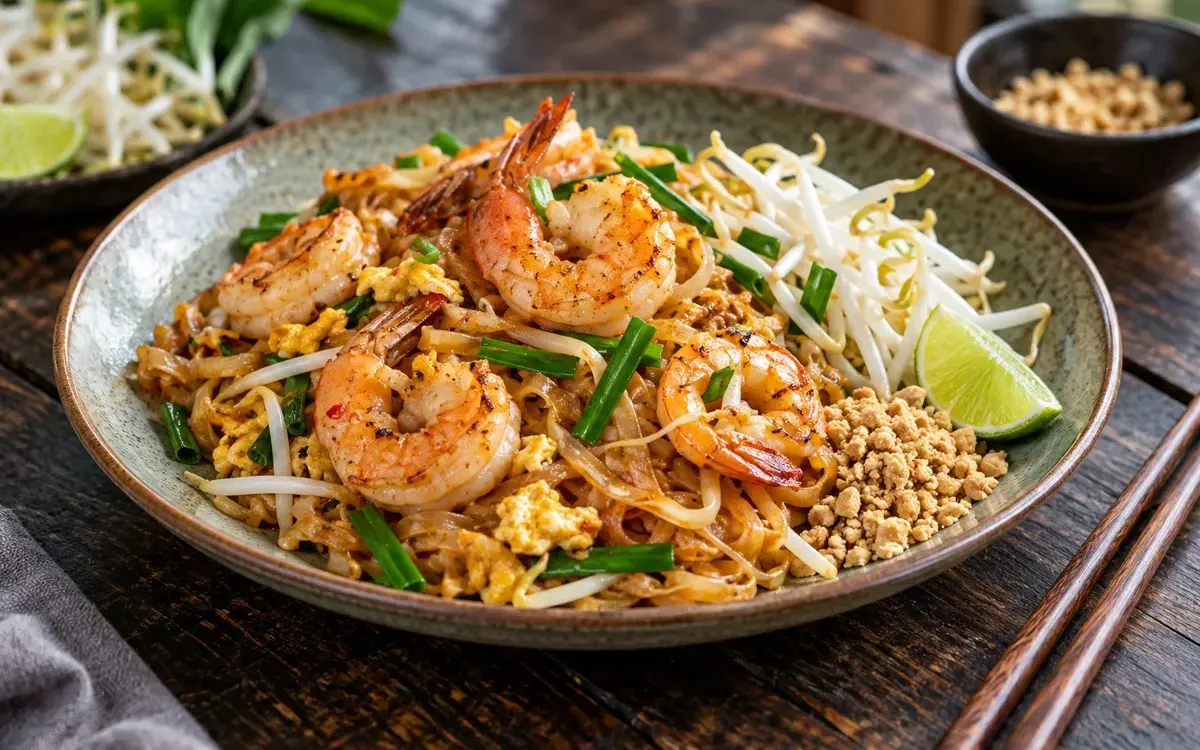
Pad Thai is the noodle dish that made Thai street food famous worldwide: chewy rice noodles tossed in a hot wok with egg, shrimp, bean sprouts and a sauce that is sweet, sour and savory all at once, finished with roasted peanuts and a squeeze of lime.
The secret is the sauce balance and a hot, fast stir-fry. Everything takes about 30 minutes and the ingredients are easy to find in most supermarkets.
The sauce that makes it
- Tamarind paste gives the true sour depth; lime alone is not the same.
- Fish sauce brings salt and savory flavor.
- Palm or brown sugar balances the sour.
- Taste the sauce before cooking and adjust: it should taste slightly too strong, because the noodles will soften it.
Technique tips
- Soak dried rice noodles in warm tap water, not boiling, until flexible but still firm; they finish cooking in the wok.
- Cook in small batches over high heat; a crowded pan steams the noodles and makes them sticky.
- Have everything chopped and measured before you start, as the cooking takes only a few minutes.
- Add the sprouts and chives last so they stay crunchy.
Variations
Swap the shrimp for chicken, tofu or both. For a vegetarian version use soy sauce plus a little extra tamarind in place of fish sauce and add fried tofu. Serve with lime, crushed peanuts, chili flakes and extra sprouts at the table.
Storage
Pad Thai is best eaten right away. Leftovers keep for 2 days in the fridge; reheat in a hot pan with a splash of water to loosen the noodles.
About the sauce ingredients
Authentic pad thai relies on a few Thai pantry staples. Tamarind paste gives sourness with fruity depth, fish sauce gives savory salt and palm sugar gives a rounded sweetness. If you cook Thai food often, they keep for months and unlock many other recipes.
How to serve
Serve straight from the wok on warm plates, with lime wedges, crushed roasted peanuts, a pinch of chili flakes and extra bean sprouts on the side so everyone can adjust the flavor. It is a complete meal on its own, or part of a shared Thai dinner with a crisp salad.
Frequently asked questions
Where do I find tamarind paste?
In the Asian aisle of most supermarkets and in Asian grocery stores. If you cannot find it, use 2 tablespoons of lime juice plus 1 tablespoon of brown sugar as a quick substitute.
Why are my noodles sticky?
They were over-soaked or the pan was too crowded. Soak only until flexible and cook in batches.
Recipe
Pad Thai: Easy Authentic-Style Noodles with Shrimp, Tamarind and Lime
- Prep
- 20 min
- Cook
- 12 min
- Total
- 32 min
- Calories
- 520
Ingredients
Method
Soak the noodles in warm water for 20 to 25 minutes until flexible, then drain.
Stir the tamarind, fish sauce and sugar together until the sugar dissolves.
Heat the oil in a large wok over high heat. Cook the shrimp 1 to 2 minutes until pink and set aside.
Fry the garlic for 15 seconds, add the noodles and the sauce and toss for 2 to 3 minutes until tender.
Push the noodles aside, scramble the eggs in the space, then mix everything together with the shrimp.
Add the sprouts and spring onions, toss for 30 seconds and serve with peanuts and lime.
Tips
- Soak noodles in warm, not boiling, water.
- Cook in small batches over high heat.
- Taste and balance the sauce before cooking.
Nutrition per serving
- Calories
- 520
- Protein
- 26 g
- Carbs
- 70 g
- Fat
- 15 g
- Fiber
- 4 g
Estimated values, for information only.
Vitamins and minerals per serving
- Vitamin B1251%
- Vitamin C37%
- Vitamin E35%
- Folate33%
- Zinc26%
- Vitamin K23%
Share of an adult’s daily value (FDA). Estimated from the main ingredients using USDA data, ignoring cooking losses; for information only. What do I need each day?

دیدگاهها