




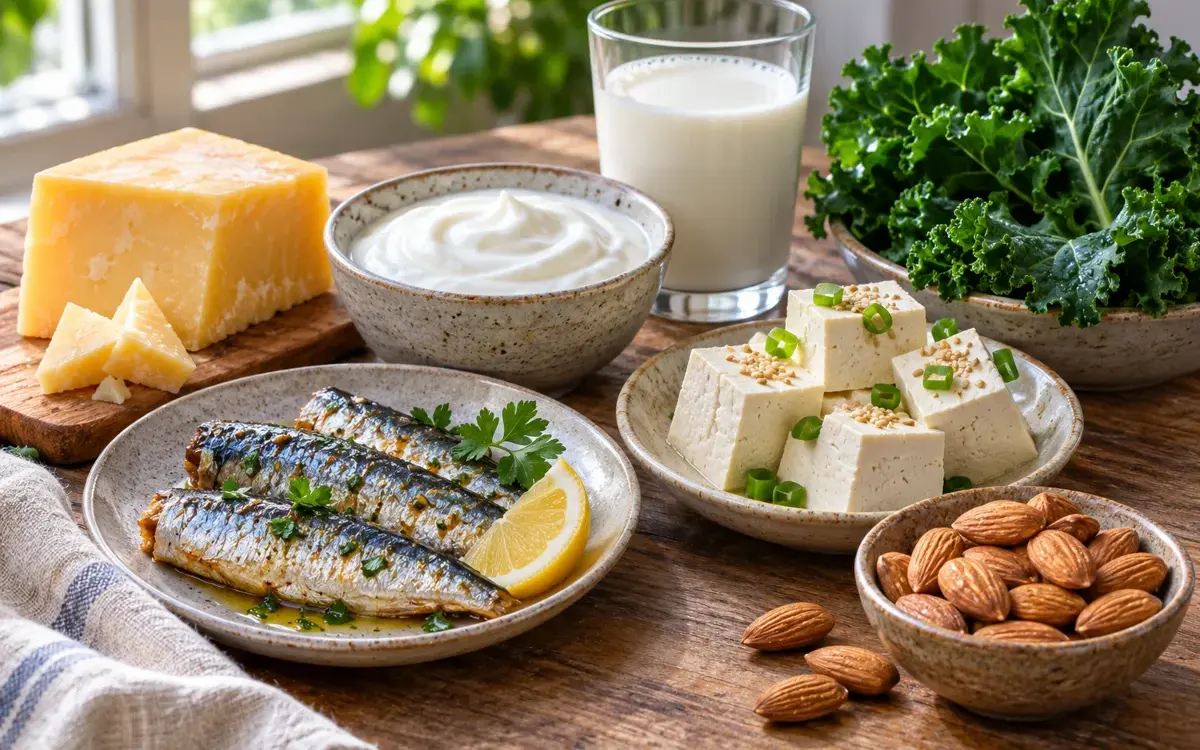
Calcium is the mineral most of us link with strong bones, and for good reason. MedlinePlus notes that the body stores almost all of its calcium in the bones and teeth. The good news is that for most people the everyday kitchen can do the job. This guide looks at the foods that supply calcium, a few habits that make the most of it, and when it is worth asking a professional for advice.
What calcium does
According to the NHS, calcium helps build bones and keep teeth healthy, regulates muscle contractions (including the heartbeat) and helps blood to clot normally. MedlinePlus adds that it supports nerves and the release of hormones. Not getting enough over many years is linked with weaker bones in later life, which is why steady, ordinary intake matters more than any one “superfood”.
How much do you need?
Recommendations differ slightly between countries, so check the guidance for where you live:
- UK (NHS): adults aged 19 to 64 need 700 mg a day, and the NHS says you should be able to get all you need from a varied, balanced diet.
- US (MedlinePlus, based on National Institutes of Health figures): 1,000 mg a day for adults aged 19 to 50, and 1,200 mg for women from age 51 and for all adults from age 71. Pregnant and breastfeeding adults need 1,000 mg; teens 1,300 mg.
MedlinePlus also notes that after menopause the body absorbs and retains less calcium, which is one reason needs rise for women over 50.
Good food sources
Both the NHS and MedlinePlus point to the same families of foods:
- Dairy foods: milk, yoghurt (yogurt) and cheese. MedlinePlus calls these the main calcium sources for most people in the United States.
- Leafy green vegetables: curly kale, okra, broccoli and Chinese cabbage (bok choy).
- Fish eaten with the soft bones: canned sardines, pilchards and salmon.
- Fortified foods: calcium-enriched soya (soy) drinks, some breakfast cereals, tofu, and bread made with fortified flour. Always check the label, because the amount varies between brands.
One detail often missed: the NHS says spinach contains plenty of calcium but the body cannot absorb all of it, so it should not be your main source. Eat it for its other nutrients, and lean on kale, broccoli or dairy for calcium.
Vitamin D: calcium’s partner
The NHS explains that vitamin D helps regulate the amount of calcium and phosphate in the body, which are needed for healthy bones, teeth and muscles. In the UK, government advice is that everyone should consider a daily 10 microgram (400 IU) vitamin D supplement in autumn and winter, when sunlight is too weak to make enough; some groups need it all year. Food sources include oily fish (salmon, sardines, trout, herring, mackerel), egg yolks, red meat and fortified spreads or cereals. Note that the NHS advises pregnant women to avoid liver. Vitamin D advice differs by country and latitude, so ask your doctor what suits you.
Simple ways to eat more calcium
- Breakfast: plain yoghurt with fruit and a spoonful of sesame seeds, or fortified cereal with milk or a calcium-enriched plant drink.
- Lunch: sardines or canned salmon (bones in) mashed on wholegrain toast with lemon and cucumber.
- Dinner: a stir-fry of broccoli and bok choy with tofu, or a kale and white bean soup.
- Snack: a small piece of cheese with fruit, or a latte made with milk or fortified soya drink.
Spreading calcium foods across the day is a sensible habit. MedlinePlus says calcium from supplements is absorbed best in amounts of 500 mg or less at a time, and the same “little and often” idea fits a day of meals.
For more bone-friendly ingredients, see our guide to sesame seeds, our tips on foods for the winter months, and our honest look at bone broth.
Food first, supplements with care
The NHS says taking 1,500 mg a day or less of supplemental calcium is unlikely to cause harm, while more than that could lead to stomach pain and diarrhoea. MedlinePlus says some people get gas, bloating or constipation from calcium supplements. Because these amounts are easy to exceed when you also eat dairy and fortified foods, do not add a supplement without asking your doctor or pharmacist whether you need one.
Who should be careful
- People who avoid dairy (for allergy, intolerance or by choice) should look for fortified alternatives and a dietitian’s help to plan meals.
- Women after menopause, and anyone who has been told they have low bone density, should talk to their doctor about their own needs.
- Pregnant and breastfeeding women have specific needs and food-safety rules (for example, avoiding liver); follow your midwife’s or doctor’s advice.
- People who take medication or have kidney or other chronic conditions should talk to their doctor before changing their diet or taking supplements.
- Children and teens need more calcium than adults while their bones are growing; ask a paediatrician or dietitian about picky eaters.
This article is for general information and does not replace advice from your doctor or dietitian.
The bottom line
Strong bones are built over a lifetime from ordinary meals: dairy or fortified alternatives, green vegetables, fish with soft bones, and enough vitamin D. The WHO describes a healthy diet as built on adequacy, balance, moderation and diversity, and calcium-rich foods fit easily into that pattern.
Sources
- Calcium – Vitamins and minerals, NHS (UK)
- Vitamin D – Vitamins and minerals, NHS (UK)
- Calcium, MedlinePlus, U.S. National Library of Medicine
- Healthy diet fact sheet, World Health Organization



Comments