

Sesame Seeds: Nutrition, Health Benefits, Risks, and Best Ways to Eat Them

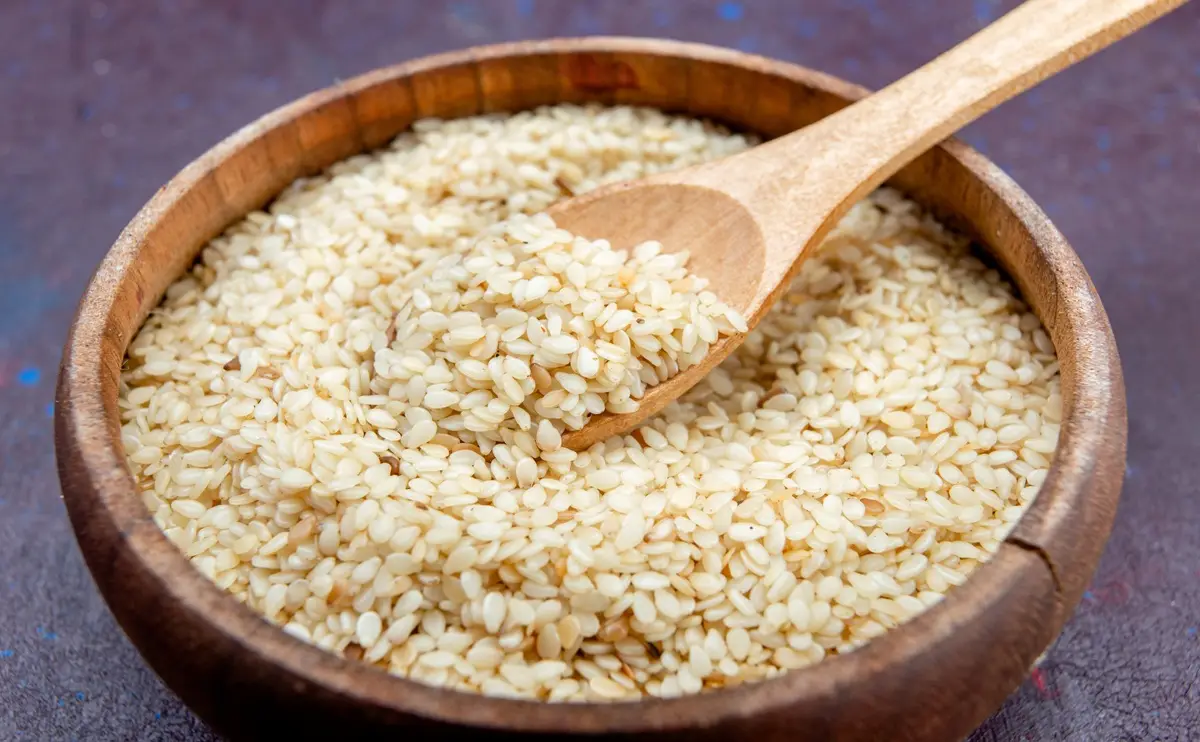
Sesame seeds are small but highly nutritious. They contain healthy fats, plant protein, dietary fiber, antioxidants, and important minerals such as calcium, iron, and magnesium.
These seeds have been used in traditional diets for thousands of years and remain popular in many cuisines around the world. Today, sesame seeds are valued not only for their flavor but also for their potential health benefits.
This article explains the nutritional value of sesame seeds, their possible health benefits, potential risks, and practical ways to include them in your diet.
Nutritional Value of Sesame Seeds (Per 100 g)
| Nutrient | Amount | Approx. Daily Value |
|---|---|---|
| Calories | 573 kcal | 29% |
| Protein | 17 g | 34% |
| Fiber | 11–12 g | 40%+ |
| Calcium* | up to 975 mg | ~75% |
| Iron | 14.6 mg | 80%+ |
| Magnesium | 351 mg | 85%+ |
| Potassium | 468 mg | 13% |
| Healthy fats | ~50 g | — |
Important note:
The high calcium value (about 975 mg per 100 g) mainly applies to unhulled sesame seeds (seeds with the outer shell).
When sesame seeds are hulled (the outer shell removed), the calcium content usually decreases to approximately 60–130 mg per 100 g, because a large portion of calcium is located in the outer hull.
Health Benefits of Sesame Seeds
1. May Support Bone Health
Sesame seeds are a rich source of calcium, magnesium, and phosphorus, which are essential minerals for maintaining strong bones and teeth.
However, sesame seeds also contain natural compounds such as phytates and oxalates, which may reduce the body’s ability to absorb some minerals.
2. May Promote Heart Health
Sesame seeds contain unsaturated fats, dietary fiber, and beneficial plant compounds.
Research suggests these components may help:
- reduce LDL (bad cholesterol)
- support healthy blood circulation
- contribute to lower inflammation levels
3. Rich in Antioxidants
Sesame seeds contain natural antioxidants, including sesamin and sesamolin.
These compounds may help protect cells from oxidative stress, which is associated with aging and various chronic diseases.
4. Supports Digestive Health
Due to their dietary fiber content, sesame seeds may support healthy digestion.
Fiber can help regulate bowel movements and contribute to a healthier digestive system.
5. May Support Skin and Hair Health
Sesame seeds provide nutrients such as vitamin E, zinc, and healthy fats, which play a role in maintaining healthy skin and supporting strong hair.
6. Possible Role in Hormone Balance
Sesame seeds contain plant compounds known as lignans.
Some preliminary research suggests that lignans may influence hormone metabolism. However, additional human studies are required to confirm these effects.
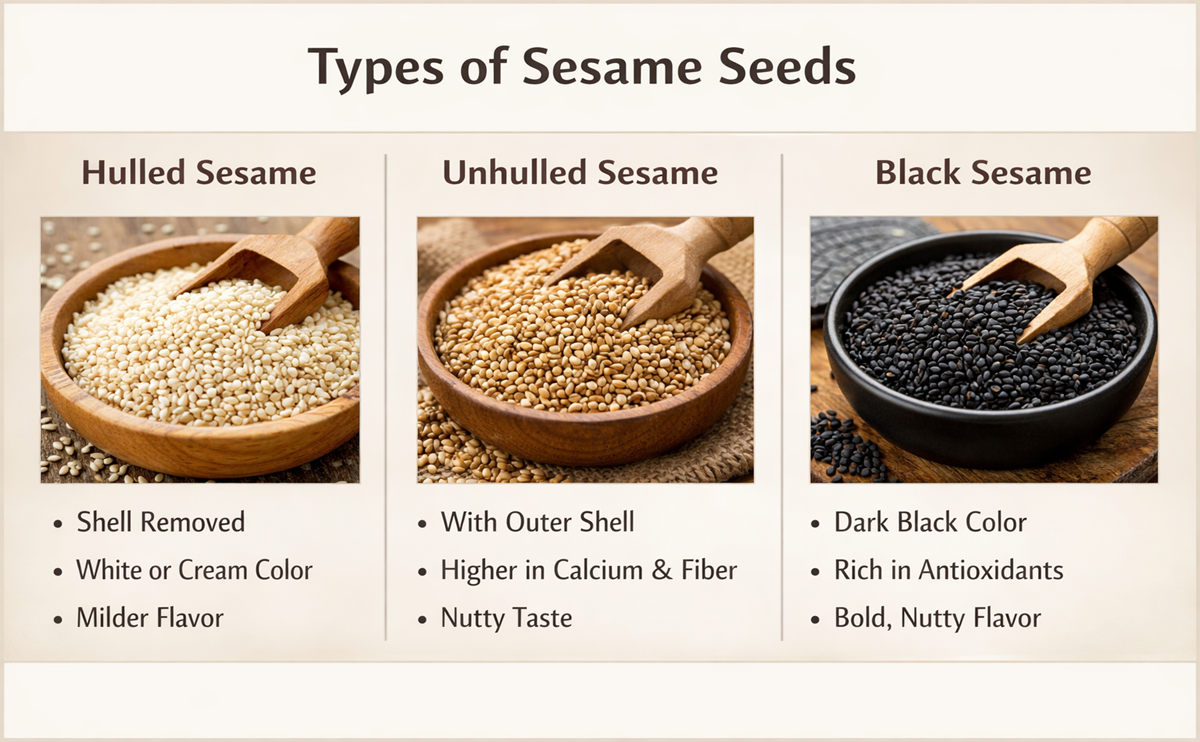
Compare unhulled, hulled, and black sesame seeds for taste and nutrition
Hulled vs Unhulled Sesame Seeds
Sesame seeds are commonly available in two forms.
Unhulled Sesame Seeds
- Contain the natural outer shell
- Higher in calcium and fiber
- Slightly stronger and more bitter flavor
Hulled Sesame Seeds
- Outer shell removed
- Softer texture and milder taste
- Lower mineral content
Both forms are nutritious, but unhulled sesame seeds generally provide higher mineral levels.
Black Sesame Seeds
Black sesame seeds are a natural variety of sesame with a dark color and a stronger flavor.
They are commonly used in Asian cuisine and may contain higher levels of antioxidants compared to white sesame seeds.
Who Should Be Careful with Sesame Seeds?
Although sesame seeds are safe for most people, certain individuals should consume them with caution.
| Group | Reason |
|---|---|
| People with sesame allergy | Sesame is a recognized food allergen |
| Individuals prone to kidney stones | Sesame seeds contain oxalates |
| People taking blood-pressure medication | Sesame may enhance blood pressure–lowering effects |
| Individuals on calorie-restricted diets | Sesame seeds are relatively high in calories |
If you have a medical condition, it is advisable to consult a healthcare professional before significantly increasing sesame consumption.
Best Ways to Eat Sesame Seeds
Sesame seeds can be easily incorporated into many meals.
Common ways to use them include:
- sprinkling them over salads or vegetables
- adding them to smoothies or yogurt
- mixing them into oatmeal or breakfast cereals
- using tahini (sesame paste) in sauces and dips
- adding them to homemade bread, cookies, or energy bars
Lightly roasting sesame seeds can enhance their flavor and aroma.
⚠️ Disclaimer:
This article is intended for informational purposes only and should not be considered medical advice. Always consult a qualified healthcare professional before making significant dietary changes.