
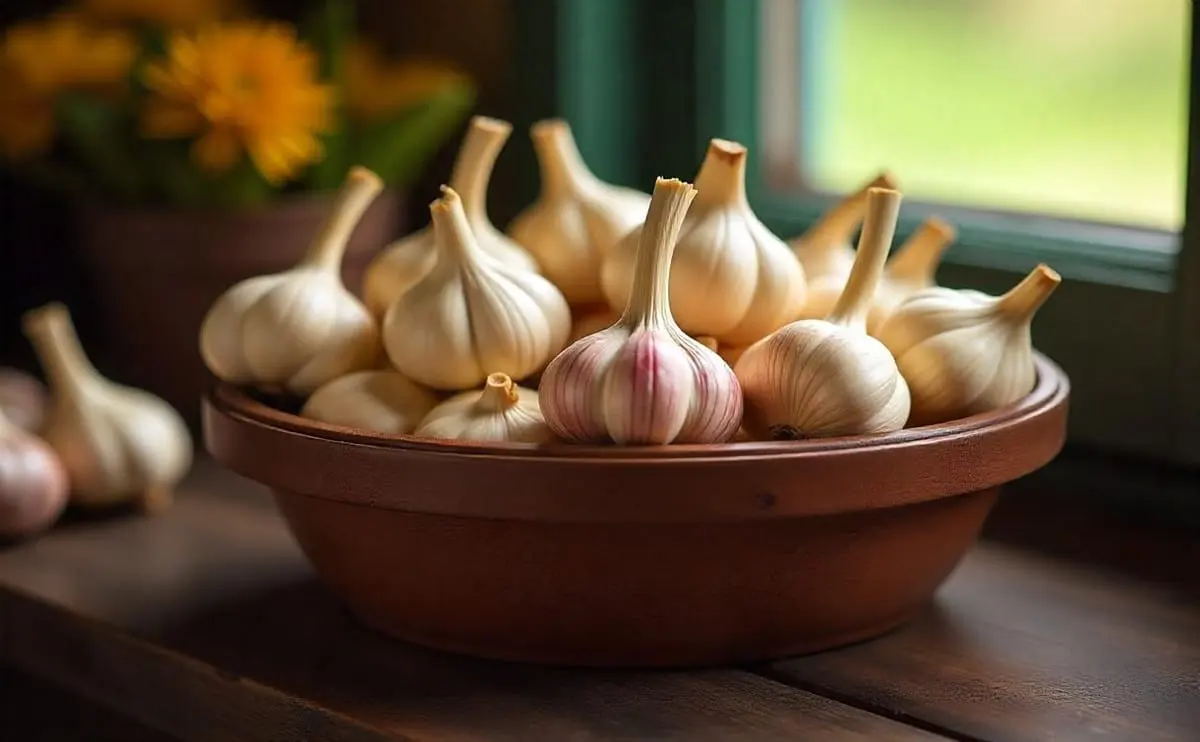
Garlic has been used in cooking and traditional medicine for thousands of years, from ancient Persia and Egypt to China. Its main active compound, allicin, forms when a clove is crushed or chopped, and it gives garlic its sharp smell and many of its effects. Garlic is also one of the easiest ways to add deep flavor to food without adding salt.
What garlic contains (per 100 g raw, approximate)
- About 150 calories (but a clove, 3 g, has only 4)
- Vitamin B6, vitamin C and manganese
- Sulfur compounds such as allicin, alliin and ajoene
- Small amounts of selenium, calcium and fiber, including prebiotic fructans
9 possible benefits
- Immune support: garlic has antibacterial, antiviral and antifungal properties in lab studies, and some trials link regular garlic supplements with fewer or shorter colds.
- Blood pressure: it may modestly lower blood pressure in people with high readings; the effect is smaller than that of medicine.
- Cholesterol: regular intake may lower total and LDL cholesterol a little.
- Heart health: it may help reduce artery stiffness and inflammation.
- Antioxidants: sulfur compounds help protect cells from damage.
- Gut: garlic acts as a prebiotic that feeds beneficial bacteria.
- Blood sugar: small studies suggest a mild effect on fasting blood sugar.
- Bones and joints: early research suggests possible support, but the evidence is limited.
- Flavor without salt: garlic lets you use less salt in food.
These effects are modest. Garlic is a healthy food, not a cure or a replacement for medicine.
How to get the most from garlic
- Crush, chop or press it, then rest it for about 10 minutes before cooking. The enzyme alliinase needs time to turn alliin into allicin, and a short rest protects it from heat.
- Raw garlic keeps the most allicin. If you eat it raw, 1 to 2 cloves a day is plenty; mix it into yogurt, dressings or dips.
- Cooked garlic is milder and gentler on the stomach, and still contains useful sulfur compounds.
- Do not burn it. Garlic turns bitter above about 160°C; add it after the onions or toward the end of frying, and keep the heat medium.
- Roasting whole heads at 180°C for 40 minutes makes sweet, spreadable garlic.
Garlic in Persian cooking
Persian cooks use garlic in torshi (pickles), in mast-o-musir (yogurt with wild shallot), in kebab marinades and in dips like mirza ghasemi, where garlic is fried until golden and mixed with smoky eggplant. Aged black garlic and garlic pickled in vinegar for years (seer torshi) are also treasured.
How to peel and store garlic
- To peel fast, press a clove under the flat of a knife, or shake whole cloves in a closed jar for 20 seconds.
- Store whole heads in a cool, dry, dark place with airflow, not in the refrigerator; they keep 3 to 6 months.
- Peeled cloves keep about a week in the fridge in a closed container; do not store garlic in oil at room temperature, because it can grow dangerous bacteria (botulism). Keep garlic in oil in the fridge and use within 4 days.
- Choose firm heads with tight, dry skin; avoid sprouted or soft cloves.
Who should be careful?
- Blood thinners and surgery: garlic may increase bleeding risk, especially in supplement doses. Tell your doctor before surgery and if you take warfarin.
- Heartburn and reflux: raw garlic can make symptoms worse.
- IBS and sensitive digestion: garlic is high in fructans and can cause gas.
- Breath and body odor: chewing parsley, mint or a little lemon helps.
- Pets: garlic is toxic to dogs and cats.
- Supplements: garlic pills are stronger than food; ask your doctor if you take medicines.
Frequently asked questions
Is it safe to eat garlic every day?
For most people, 1 to 2 cloves a day in food is safe.
Does cooking destroy garlic’s benefits?
Some allicin is lost with long, high heat, but crushing and resting first, and cooking gently, keeps much of it.
This is general information, not medical advice.