



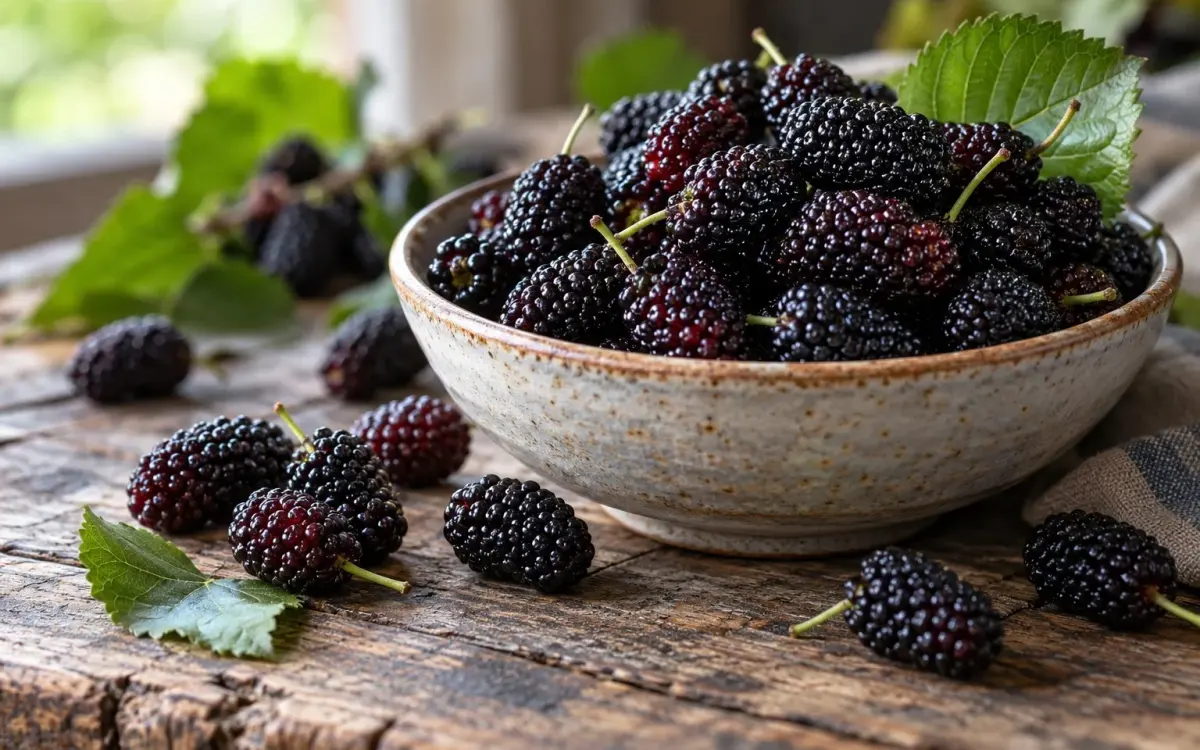
Black mulberries are dark, juicy berries with a sweet-tart taste. They grow widely in Iran, Turkey and the Mediterranean, where they are eaten fresh in early summer, dried, or cooked into syrup and jam. Here is their real nutrition, what we know (and do not know) about their health effects, and how to enjoy them.
Mulberry nutrition (100 g fresh)
- About 43 kcal and 10 g carbohydrate, with 1.7 g fiber and about 8 g natural sugars
- Vitamin C: about 36 mg, around 40% of the daily value
- Iron: about 1.9 mg, plus vitamin K and potassium
- Anthocyanins, the pigments that give the deep purple color
Dried mulberries are much more concentrated in sugar and calories, so a portion is a small handful.
What we know about the health effects
Like other dark berries, mulberries are rich in anthocyanins, which act as antioxidants. Most research on mulberries has been done in the laboratory or in animals, or uses extracts of mulberry leaves rather than the fruit. Some studies of white mulberry leaf extract show a lower rise in blood sugar after meals, but that is not the same as eating the fruit. So mulberries are a healthy, colorful fruit, but there is no strong evidence that they treat diabetes, heart disease or any other illness.
Benefits you can count on
- A good source of vitamin C, which helps the body absorb iron from plant foods.
- Low in calories when fresh, with fiber for digestion.
- A naturally sweet alternative to sugary snacks, especially dried mulberries in small amounts.
How to enjoy mulberries
- Eat fresh mulberries within a day or two; they are very delicate. Rinse gently just before eating.
- Add dried mulberries to a nut mix, oatmeal or yogurt, or include them on a Persian ajil platter.
- Cook fresh mulberries into a quick sauce for yogurt or pancakes.
- Freeze extra berries on a tray, then bag them for smoothies.
Who should be careful
- Unripe berries: unripe mulberries and the milky sap of the tree can upset the stomach; eat only fully ripe fruit.
- Diabetes medicines: mulberry leaf extracts and teas can lower blood sugar; if you take medicine for diabetes, talk to your doctor before using them.
- Dried mulberries: they are high in natural sugar; keep portions small if you watch your weight or blood sugar.
- Stains: black mulberry juice stains clothes and hands; wear an apron.
Sources
This article is general information, not medical advice. If you have a health condition, talk to your doctor or a registered dietitian.