



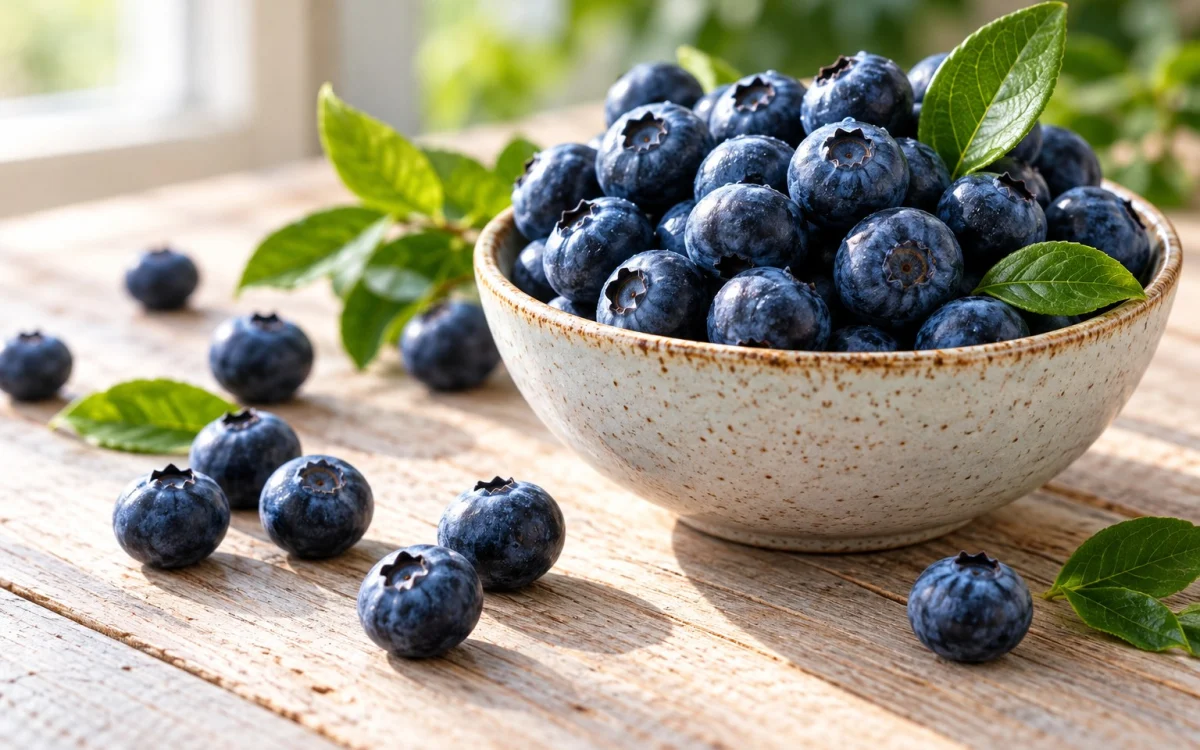
Blueberries are small, sweet and easy to love, and they have become a symbol of “superfoods”. They really are a nutritious fruit, rich in fiber, vitamin C, vitamin K and colorful plant compounds called anthocyanins. But some popular claims go too far. Here is what blueberries offer, what research suggests, and simple ways to eat more of them.
Blueberry nutrition (1 cup, about 148 g, raw)
- Energy: about 84 kcal
- Carbohydrate: 21 g, of which fiber 3.6 g and natural sugars about 15 g
- Vitamin C: about 14 mg, around 16% of the daily value
- Vitamin K: about 28 mcg, around a quarter of the daily value
- Manganese and small amounts of other vitamins and minerals
What research suggests
Brain and memory
In a long-running study of more than 16,000 older women, those who ate more blueberries and strawberries showed a slower decline in memory and thinking over time. Small clinical trials have found short-term improvements in some memory tests after eating blueberries. These results are encouraging, but they do not show that blueberries prevent Alzheimer’s disease.
Heart and blood vessels
Population studies link higher intakes of anthocyanin-rich berries with a lower risk of heart attack, and some trials show modest improvements in blood vessel function and blood pressure. The effects are small and work best as part of an overall healthy diet.
Skin and “anti-aging”
Antioxidants in food help protect cells, but there is no good evidence that eating blueberries reduces wrinkles. Sun protection, not smoking and a balanced diet matter far more for skin.
Immunity
Blueberries add vitamin C to your diet, which the immune system needs, but no single fruit prevents colds. Other foods such as oranges, kiwi and bell peppers contain more vitamin C per serving.
Fresh or frozen?
Frozen blueberries are picked ripe and frozen quickly, so they keep their nutrients well and are often cheaper, especially in winter. They are perfect for smoothies, oatmeal and baking.
How to eat more blueberries
- Stir them into yogurt or overnight oats, like our overnight oats.
- Blend frozen blueberries with banana and milk for a quick smoothie.
- Scatter them over pancakes, such as our buttermilk pancakes, instead of syrup.
- Add them to green salads with nuts and feta.
- Rinse just before eating, and keep them dry in the fridge for up to a week.
Who should be careful
- Blood thinners (warfarin): large changes in vitamin K intake can affect the medicine; keep your intake of vitamin K foods steady and talk to your doctor.
- Diabetes: blueberries are a good fruit choice, but count them as carbohydrate, and prefer whole berries to juice or sweetened dried berries.
- Young children: cut large berries in half for toddlers to reduce choking risk.
Sources
- Devore EE et al. Dietary intakes of berries and flavonoids in relation to cognitive decline. Annals of Neurology, 2012 (PubMed)
- Kalt W. et al. Recent research on the health benefits of blueberries and their anthocyanins. Advances in Nutrition, 2020 (PMC)
- Effects of berry anthocyanins on cognitive performance, vascular function and cardiometabolic risk markers: a systematic review of randomized trials (PMC)
- USDA FoodData Central: blueberries, raw
This article is general information, not medical advice. If you have a health condition, talk to your doctor or a registered dietitian.