




🔊 Cook mode: big steps, timers and voice control (say “next”), hands-free.
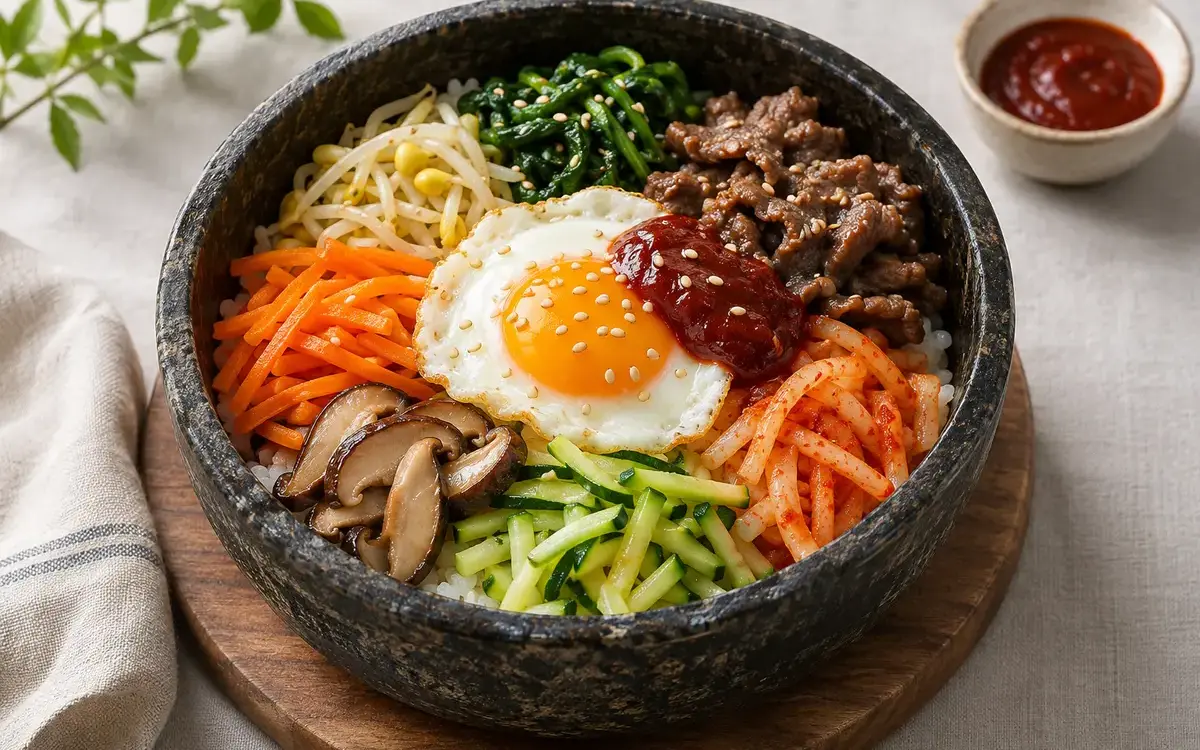
Bibimbap means mixed rice, and that is exactly what it is: a bowl of warm rice topped with colorful seasoned vegetables, a little marinated beef and a fried egg, all stirred together with a spicy-sweet gochujang sauce. It looks complicated, but each topping is simple and most can be made ahead.
The gochujang sauce
Gochujang is a Korean fermented chili paste that is savory, mildly sweet and spicy. Stir it with sesame oil, a little sugar or honey, rice vinegar and a spoonful of water until it is spoonable. Taste and adjust: add more water for a gentler sauce or more gochujang for heat. Look for it in the international aisle or an Asian market.
Toppings
Traditional bibimbap uses several vegetables, each cooked separately so they keep their own flavor and color: sauteed spinach, carrots, zucchini and mushrooms, plus blanched bean sprouts. Season each with a little sesame oil, garlic and salt. Thinly sliced beef cooks quickly after a short marinade of soy sauce, sugar, garlic and sesame oil.
The rice and the egg
Short-grain or medium-grain rice works best. For a crispy bottom, serve in a hot stone bowl, or press the rice into a hot oiled skillet for a few minutes. Top each bowl with a fried egg, runny yolk and all. Beef should be fully cooked, and eggs should be cooked to your preferred safety level.
Make it ahead
- Cook all the toppings up to three days ahead and store in the refrigerator.
- Rewarm the rice and toppings, fry the egg fresh and assemble.
- For a vegetarian bowl, use tofu or extra mushrooms instead of beef.
Recipe
Bibimbap with Gochujang Sauce
- Prep
- 30 min
- Cook
- 25 min
- Total
- 55 min
- Calories
- 560
Ingredients
Rice
Beef
Vegetables
Sauce
To serve
Method
Marinate the beef with the soy sauce, sugar, garlic and a little sesame oil for 15 minutes.
Cook each vegetable separately in a little oil for 2 to 4 minutes with garlic and salt, blanching the bean sprouts for 2 minutes. Keep them in separate piles.
Cook the beef in a hot pan for 2 to 3 minutes until browned and cooked through.
Whisk the gochujang, vinegar, honey, sesame oil and a spoonful of water into a sauce.
Divide the rice among four bowls, arrange the toppings and a fried egg on top and serve with the sauce. Mix everything before eating.
Tips
- Cook each vegetable separately for color and flavor.
- Press rice in a hot skillet for a crispy bottom.
- Make toppings ahead and fry the egg fresh.
Nutrition per serving
- Calories
- 560
- Protein
- 28 g
- Carbs
- 72 g
- Fat
- 18 g
- Fiber
- 5 g
Estimated values, for information only.
Vitamins and minerals per serving
- Vitamin K100%+
- Vitamin B1271%
- Vitamin A57%
- Zinc45%
- Folate40%
- Vitamin C32%
Share of an adult’s daily value (FDA). Estimated from the main ingredients using USDA data, ignoring cooking losses; for information only. What do I need each day?


Comments