




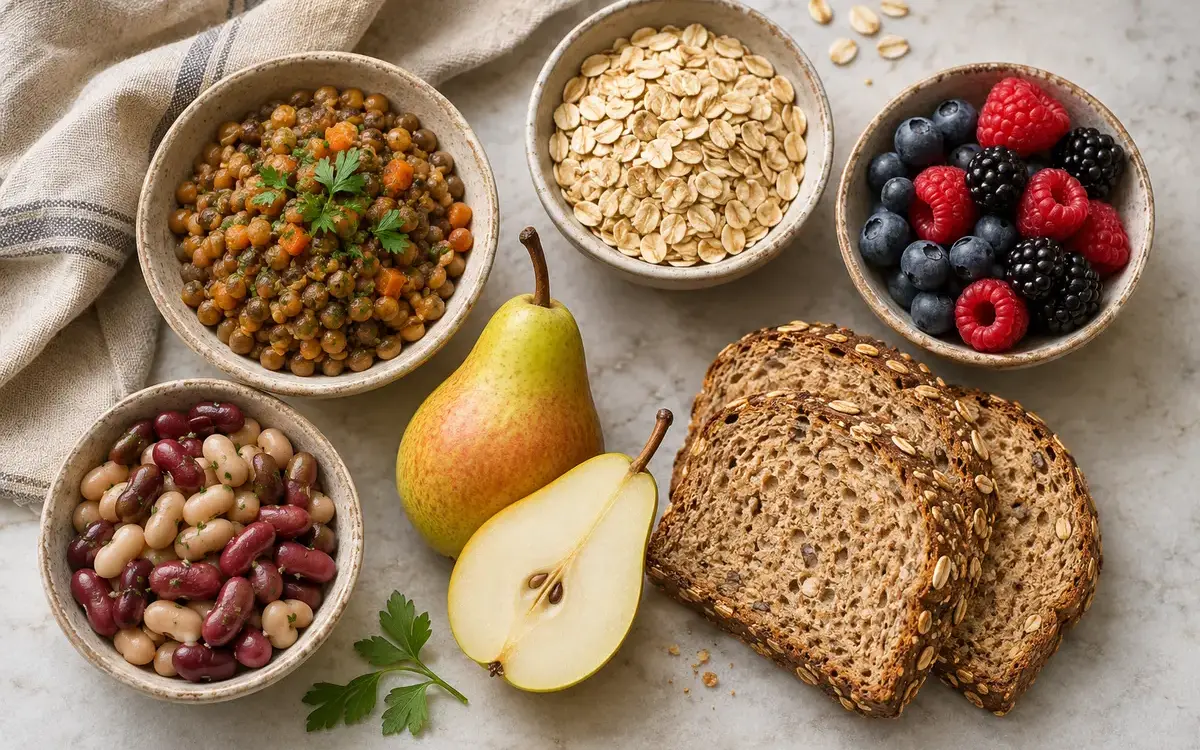
Fibermaxxing is the latest name for an old, sensible idea: eat more fiber. Dietary guidelines in many countries suggest roughly 25 to 38 grams per day for adults, yet most people eat well under that. Fiber supports digestion and helps you feel full, and foods rich in it are usually also rich in vitamins and minerals. This guide shows how to raise your intake without a sudden, uncomfortable jump.
Where fiber comes from
Fiber is found only in plant foods. Good sources include beans, lentils and chickpeas, whole grains such as oats and barley, berries, pears and apples with the skin, vegetables like broccoli and carrots, and nuts and seeds. Chia and flax seeds are especially concentrated. Fiber supplements are not needed for most healthy people if the diet includes these foods.
Increase slowly
Adding a lot of fiber overnight can cause gas and bloating. Raise your intake by about 5 grams every few days, and drink enough water, because fiber absorbs fluid. Most people adapt within a couple of weeks.
Easy swaps
- Choose oatmeal or whole-grain cereal instead of refined cereal at breakfast.
- Swap white rice or pasta for brown rice, quinoa or whole-wheat pasta, or mix half and half.
- Add a can of rinsed beans to soups, salads and tacos.
- Eat the fruit instead of drinking the juice, and keep the skin on when it is edible.
- Snack on nuts, popcorn or raw vegetables with hummus.
A sample day
Oatmeal with berries and chia seeds at breakfast, a lentil soup with a side salad at lunch, an apple with peanut butter as a snack, and a dinner of salmon with roasted broccoli and quinoa. That combination reaches about 30 grams without any special products.
A note on caution
If you have a digestive condition or take medications, ask your doctor or a registered dietitian before making large changes. This article is general information and not medical advice.
What fibermaxxing means
Fibermaxxing is a trend of deliberately eating more dietary fiber, with the aim of reaching or exceeding the daily recommendation of roughly 25 to 38 grams for adults. Fiber supports digestion and helps you feel full.
Practical ways to eat more
- Choose whole grains such as oats, barley and brown rice.
- Add beans, lentils or chickpeas to soups and salads.
- Eat fruit with the skin, plus vegetables at every meal.
- Snack on nuts, seeds and popcorn.
Go slowly
Increase fiber gradually over a few weeks and drink plenty of water; a sudden jump can cause bloating and gas. People with digestive conditions or medical questions should ask their doctor or a dietitian.
Frequently asked questions
Can you get too much fiber? Very high intake without enough fluid can cause discomfort. Do supplements count? They help, but whole foods also provide vitamins and other nutrients.


Comments