



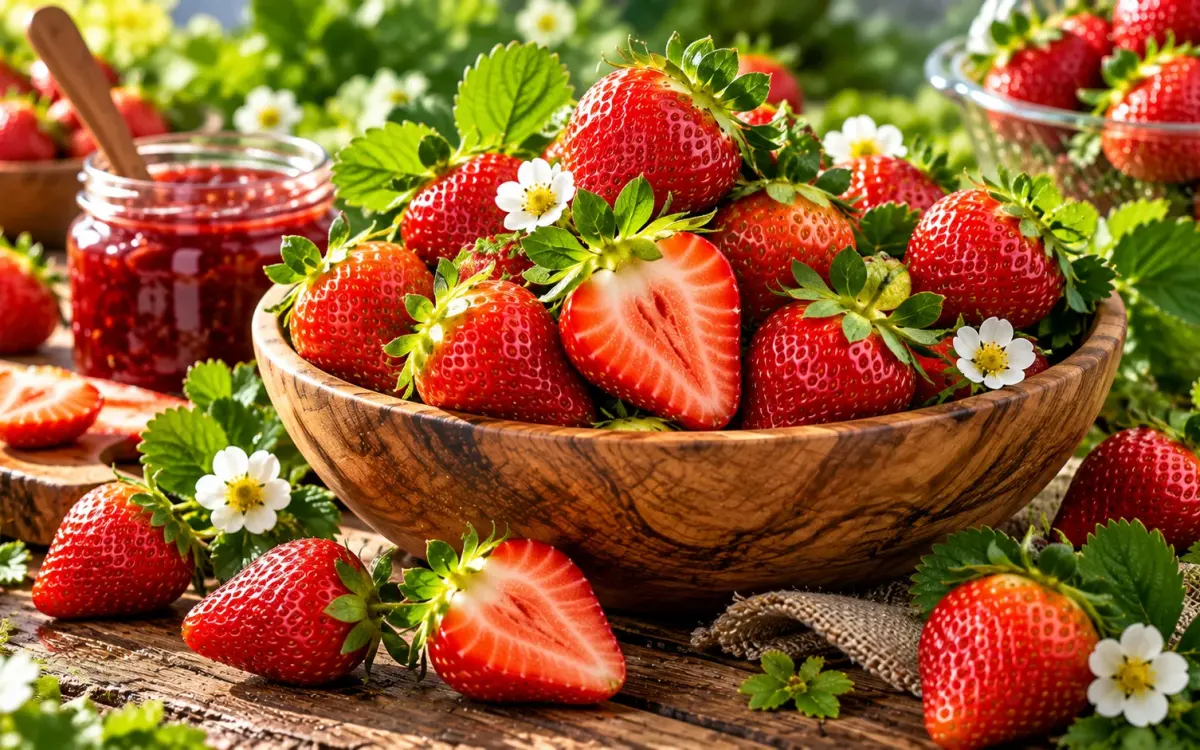
Strawberries are one of the most popular fruits in the world and one of the easiest ways to add vitamin C to your day. They are low in calories, rich in fiber and full of colorful plant compounds. Here is what strawberries offer, what research suggests, and how to choose and store them.
Strawberry nutrition (1 cup of halves, about 150 g)
- About 49 kcal and 12 g carbohydrate, with 3 g fiber and 7 g natural sugars
- Vitamin C: about 89 mg, roughly a full day’s needs for an adult
- Folate: about 36 mcg, and manganese
- Anthocyanins and other polyphenols, which give the red color
What research suggests
- Heart health: in large population studies, women who ate more strawberries and blueberries had a lower rate of heart attack. Short trials show small improvements in cholesterol and markers of inflammation. These are modest effects within an overall healthy diet.
- Blood sugar: strawberries have a low glycemic load, and eating berries with a carbohydrate-rich meal may slightly reduce the rise in blood sugar. They are a good fruit choice for people with diabetes.
- Immunity and skin: vitamin C is needed for the immune system and for making collagen, so strawberries help you meet your needs. They are not a cure for colds or wrinkles.
How to choose and store strawberries
- Look for bright red berries all the way to the top, with fresh green caps and a sweet smell. Strawberries do not ripen after picking.
- Store unwashed in the fridge, in a single layer on paper towel, and eat within 2 to 3 days.
- Rinse under running water just before eating, then remove the caps. Washing removes dirt and some pesticide residue.
- Frozen strawberries are picked ripe and are great for smoothies and baking.
Easy ways to eat more
- Slice into yogurt or oatmeal, or add to a spinach salad with walnuts.
- Blend frozen strawberries with milk or yogurt for a quick smoothie.
- Serve with a little dark chocolate for dessert, or try our pavlova with fresh berries.
Who should be careful
- Allergy: strawberry allergy is uncommon but possible, and some people with birch pollen allergy get an itchy mouth from raw strawberries.
- Kidney stones: strawberries contain some oxalate; people with oxalate stones should follow their doctor’s advice on portions.
- Babies: cut strawberries into small pieces for young children to prevent choking.
Sources
- Kalt W. et al. Recent research on the health benefits of blueberries and their anthocyanins (includes berry and heart studies), Advances in Nutrition, 2020
- World Health Organization: Healthy diet fact sheet
- USDA FoodData Central (nutrient data)
This article is general information, not medical advice. If you have a health condition, talk to your doctor or a registered dietitian.