

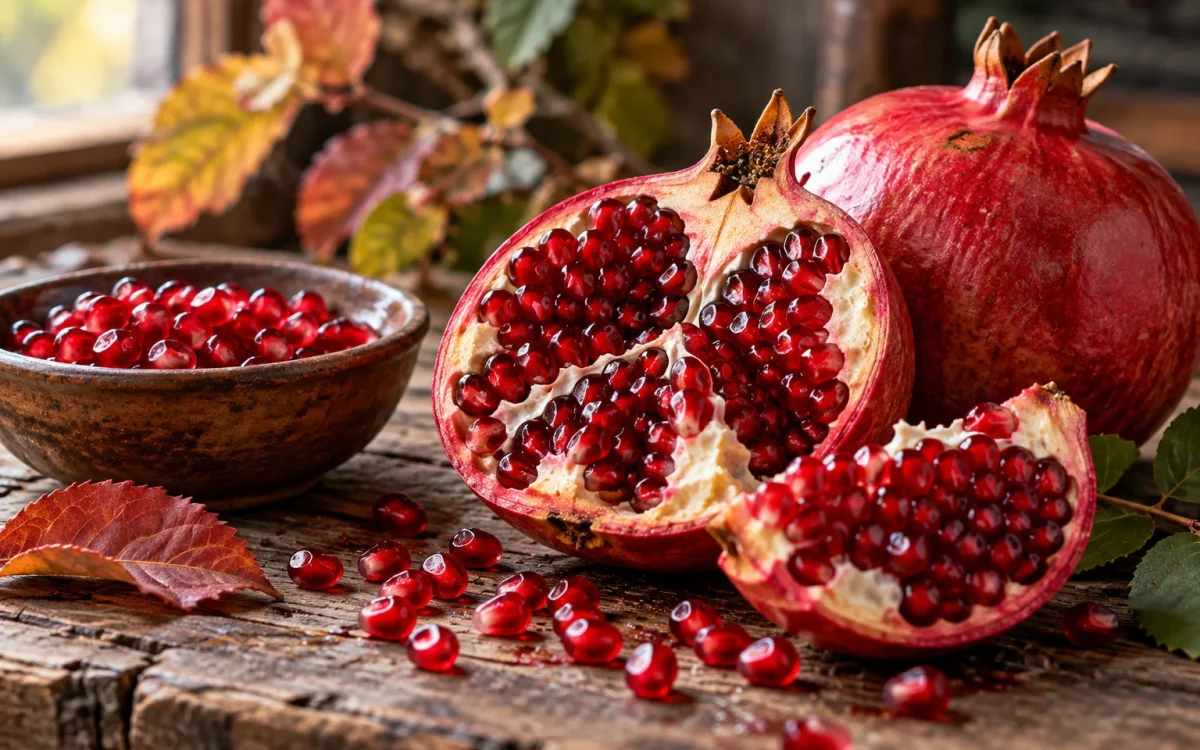
October is pomegranate season, and the ruby fruit is everywhere in markets right now. It is also a staple of Persian tables, from winter salads to the Yalda night spread. Here is what it actually offers, who should be careful, and how to use it beyond eating the seeds plain.
What is inside a pomegranate?
The edible part is the arils, the juicy seeds. A half-cup (about 87 g) of arils provides roughly 70 calories, around 3.5 g of fiber and a good amount of vitamin C and vitamin K, along with some folate and potassium. Pomegranate also contains polyphenols such as punicalagins and anthocyanins, the compounds that give it its deep color and slightly astringent taste.
Studies on these compounds are ongoing, and results in people are mixed. It is fair to say pomegranate is a nutritious, fiber-containing fruit that can be part of a varied diet, but it is not a treatment for any condition.
Whole arils or juice?
Whole arils keep the fiber, which slows sugar absorption and helps you feel full. Juice has less fiber and more sugar per glass, so a small serving (about half a cup) is plenty, and unsweetened juice is the better pick. Pomegranate molasses is very concentrated, so use it by the spoonful as a flavoring, not as a drink.
How to open a pomegranate without the mess
- Cut off the crown (top) and shallow-score the skin from top to bottom along the ridges in four or five places.
- Submerge the fruit in a bowl of cold water and break it apart gently with your hands.
- Rub the arils loose underwater. The seeds sink and the white pith floats.
- Skim off the pith, drain the seeds and pat them dry.
Ingredients for 4 servings: pomegranate, walnut and herb salad
- 1 cup (about 170 g) pomegranate arils
- 150 g mixed salad greens or baby spinach
- 1/2 cup chopped walnuts, lightly toasted
- 1/4 cup fresh mint leaves, torn
- 1/4 small red onion, thinly sliced
- 3 tablespoons olive oil
- 1 tablespoon lemon juice
- 1 teaspoon pomegranate molasses (optional)
- Salt and black pepper to taste
Steps
- Soak the onion slices in cold water for 5 minutes, then drain. This softens their bite.
- Whisk the olive oil, lemon juice, molasses, salt and pepper in a small bowl.
- Place the greens and mint in a large bowl and toss with half the dressing.
- Top with the onion, walnuts and pomegranate arils.
- Drizzle over the remaining dressing just before serving so the greens stay crisp.
More ways to use it
- Sprinkle arils over plain yogurt, oatmeal or cottage cheese for color and crunch.
- Scatter them over roasted vegetables, rice or grilled chicken at the end of cooking.
- Stir into a glass of sparkling water with lime for a light, not-too-sweet drink.
- Use pomegranate molasses in marinades and stews for a sweet-sour finish.
Buying and storing
Choose fruit that feels heavy for its size with firm, taut skin. Color alone is not a reliable sign of ripeness. A whole pomegranate keeps for a few weeks in a cool place or up to two months in the refrigerator. Loose arils keep for about five days in the fridge, or freeze them on a tray and then bag them for several months.
Who should be careful
- People taking blood-pressure medicines, statins or blood thinners such as warfarin should ask their doctor or pharmacist before eating pomegranate regularly or drinking the juice, as interactions have been reported.
- People managing diabetes should count the juice as a source of sugar and prefer whole arils.
- Anyone with a known allergy to pomegranate should avoid it.
For most healthy people, a handful of arils a day is an easy way to add fiber and color to meals. Enjoy it while the season lasts.




Comments