









Heartburn and acid reflux are among the most common digestive complaints. They happen when stomach contents flow back into the esophagus, often because the muscle valve between them (the lower esophageal sphincter) relaxes at the wrong time. Food choices and eating habits will not cure reflux for everyone, but they can reduce how often symptoms appear, and they are the first step recommended by gastroenterologists.
Foods that are often well tolerated
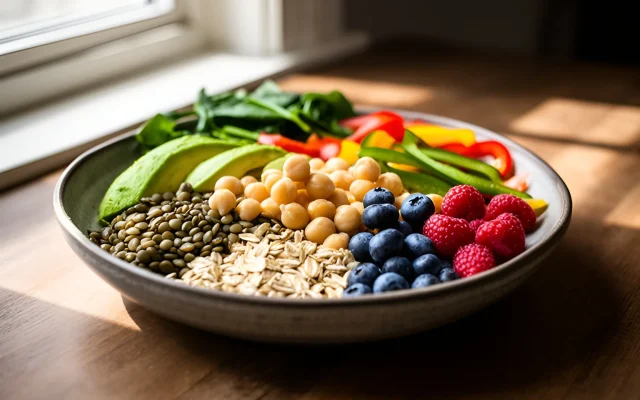
- Oatmeal and whole grains: high in fiber and low in fat, so they tend to sit well in the stomach.
- Non-citrus fruit: bananas, melon, pears and apples are usually gentle.
- Vegetables: broccoli, green beans, carrots, zucchini, potatoes and leafy greens.
- Lean proteins: chicken breast, fish, eggs, tofu and legumes, baked, grilled, poached or steamed rather than fried.
- Healthy fats in small amounts: olive oil, avocado and nuts.
- Low-fat yogurt and milk for many people, although full-fat dairy can be a trigger.
Common triggers
- Fried and very fatty foods, which slow stomach emptying.
- Tomatoes, citrus fruit and their juices.
- Chocolate, peppermint, coffee and other caffeinated drinks.
- Spicy dishes, onions and garlic for some people.
- Carbonated drinks and alcohol.
- Large, late meals.
Triggers differ from person to person. Current guidelines advise avoiding the foods that clearly bring on your symptoms, not cutting out every possible trigger. A short food and symptom diary for two weeks usually shows the pattern.
Habits that help as much as the menu
- Eat smaller meals and stop eating two to three hours before lying down.
- Raise the head of your bed by 15 to 20 cm (6 to 8 inches) with blocks or a wedge if reflux bothers you at night; extra pillows alone do not work as well.
- Lose weight if you are overweight; this is one of the most effective changes, because extra abdominal pressure pushes acid upward.
- Stop smoking, which weakens the valve.
- Avoid tight belts and bending over right after meals.
A reflux-friendly day
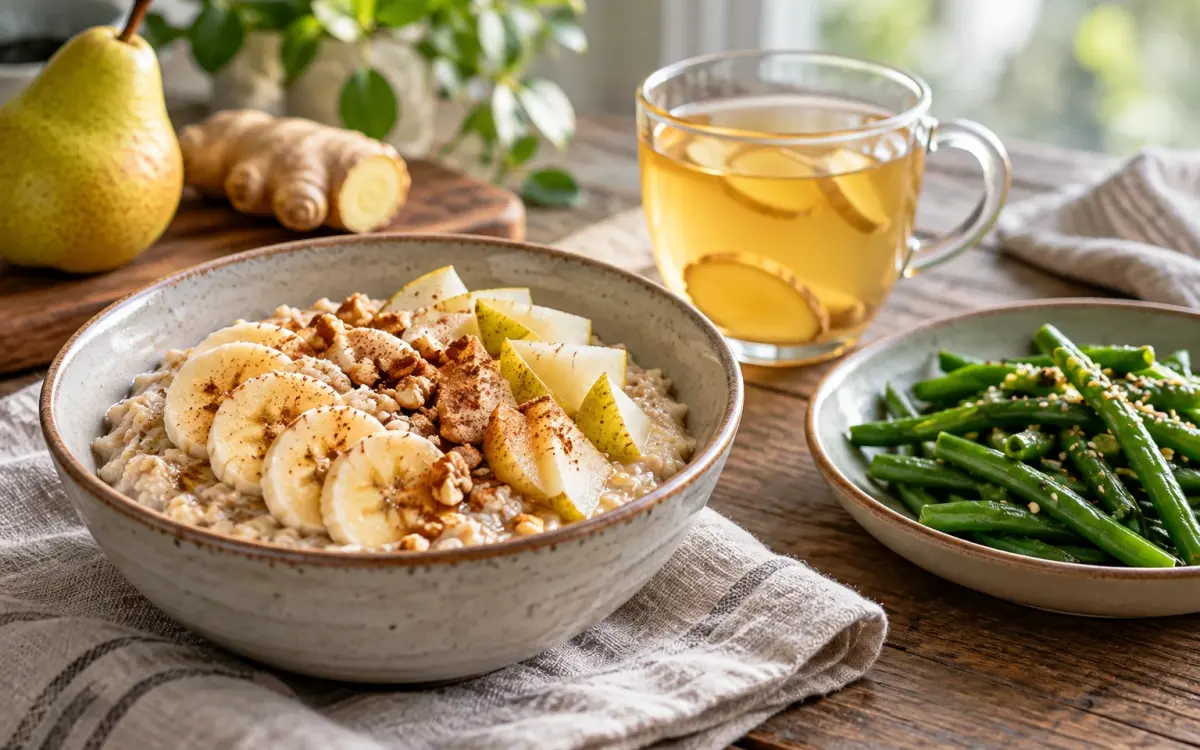
- Breakfast: oatmeal with banana and a few walnuts.
- Lunch: grilled chicken or fish, rice or potatoes and steamed vegetables.
- Snack: a pear, or low-fat yogurt.
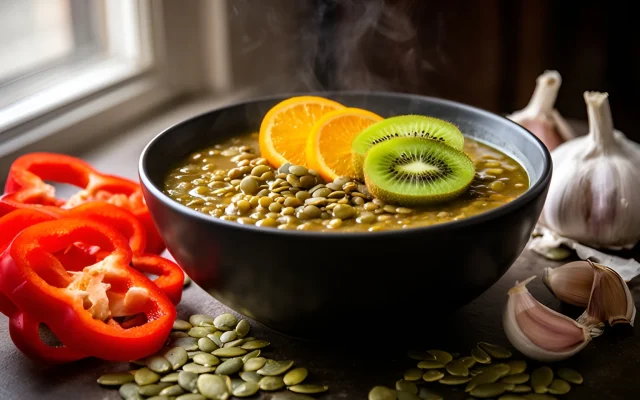
- Dinner (early): a mild vegetable and lentil soup, like our red lentil soup made without chili, with bread.
Common questions
Does milk help heartburn?
Milk may soothe briefly, but its fat and protein can stimulate more acid later. Low-fat milk in small amounts is fine if it does not bother you.
Does apple cider vinegar or baking soda cure reflux?
There is no good evidence for vinegar, and it may worsen symptoms. Baking soda neutralizes acid briefly but is high in sodium and should not be used regularly.
Is ginger good for reflux?
Many people find a mild ginger tea soothing, though evidence is limited; large amounts can cause heartburn in some people.
When to see a doctor
See a doctor if symptoms happen more than twice a week, wake you at night, or do not improve after a few weeks of changes, and urgently if you have trouble or pain swallowing, unexplained weight loss, vomiting, black stools or chest pain. Chest pain should always be checked, because heart problems can feel like heartburn.
Sources
- Katz PO et al. ACG Clinical Guideline for the Diagnosis and Management of Gastroesophageal Reflux Disease. American Journal of Gastroenterology, 2022
- NIDDK (U.S. National Institutes of Health): Eating, diet and nutrition for GER and GERD
This article is general information, not medical advice. If you have a health condition, talk to your doctor or a registered dietitian.
Comments