

Green Banana vs Ripe Banana: Health Benefits, Nutrition, Blood Sugar, and Weight Loss Guide

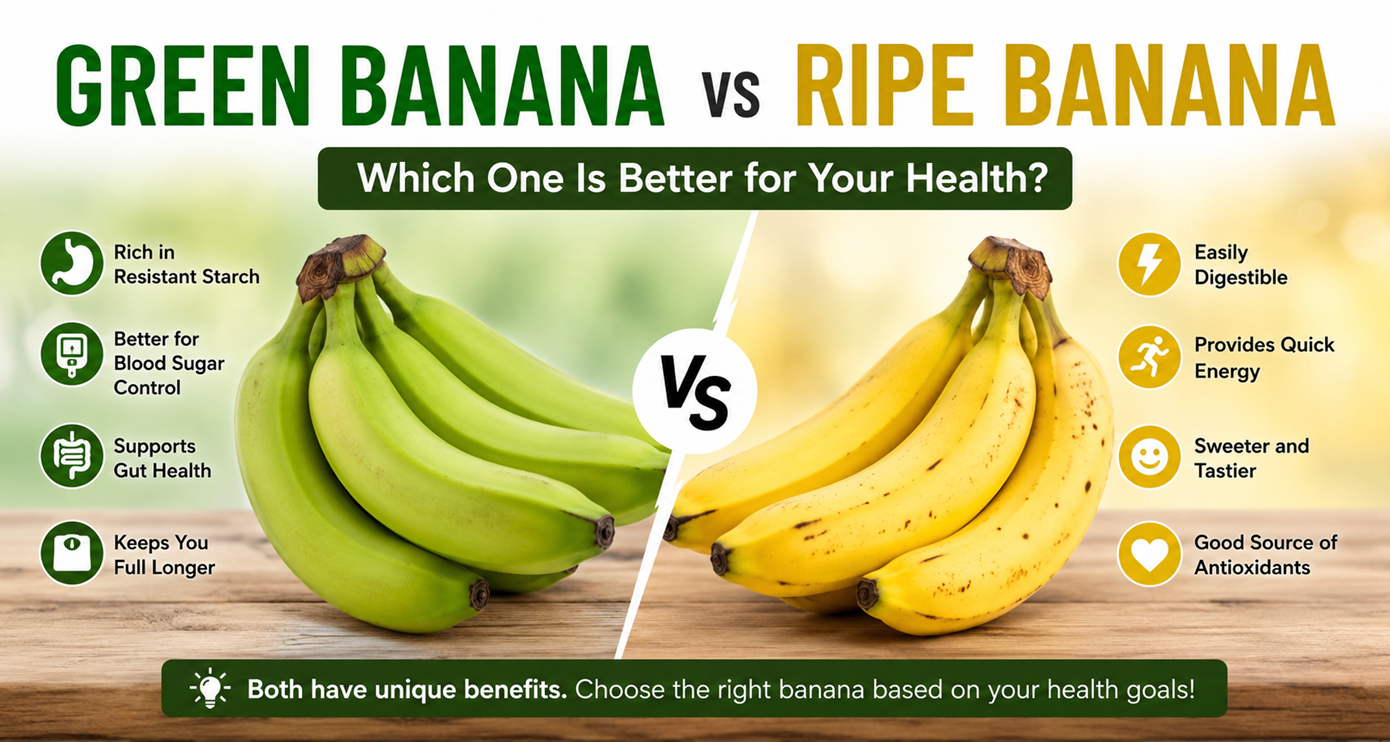
Green Banana vs Ripe Banana:
Are green bananas the same as yellow bananas?
Yes, they are the same fruit at different stages of ripeness.
Which Is Better for Weight Loss, Blood Sugar, and Gut Health?
Bananas are one of the most widely consumed fruits in the world. They are affordable, portable, naturally sweet, and packed with important nutrients. However, not all bananas provide the same health benefits. The nutritional composition of a banana changes as it ripens, which means a green banana and a ripe banana can affect your body differently.
If you're trying to lose weight, manage blood sugar levels, improve gut health, or optimize your energy levels, understanding the differences between green and ripe bananas can help you make a smarter choice.
Green Banana vs Ripe Banana: Key Differences
| Feature | Green Banana | Ripe Banana |
|---|---|---|
| Sugar Content | Lower | Higher |
| Resistant Starch | High | Low |
| Sweetness | Mild | High |
| Texture | Firm | Soft |
| Digestion Speed | Slower | Faster |
| Blood Sugar Impact | Lower | Higher |
| Feeling of Fullness | Higher | Moderate |
| Best for Weight Loss | Yes | Yes, in moderation |
| Best for Quick Energy | Moderate | Excellent |
| Best for Gut Health | Excellent | Good |
What Happens When Bananas Ripen?
As bananas mature, a significant nutritional transformation occurs. The resistant starch found in green bananas gradually converts into natural sugars, including glucose, fructose, and sucrose.
This process makes the fruit:
Sweeter
Softer
Easier to digest
Faster to absorb
While both green and ripe bananas remain nutritious, the balance between starch and sugar changes considerably, affecting digestion, blood sugar response, and energy release.
Nutritional Value of Bananas
A medium-sized banana contains approximately:
105 calories
27 grams of carbohydrates
3 grams of fiber
422 mg of potassium
Vitamin B6
Vitamin C
Magnesium
Manganese
Natural antioxidants
Bananas are naturally free of cholesterol and contain very little fat, making them suitable for most healthy eating plans.
Health Benefits of Green Bananas
Rich in Resistant Starch
Green bananas contain high levels of resistant starch, a type of carbohydrate that behaves similarly to dietary fiber.
Unlike regular starch, resistant starch is not fully digested in the small intestine. Instead, it reaches the colon, where beneficial gut bacteria use it as fuel.
Supports Gut Health
Because resistant starch acts as a prebiotic, green bananas help nourish beneficial microorganisms in the digestive tract.
A healthy gut microbiome may contribute to:
Better digestion
Improved nutrient absorption
Enhanced immune function
Healthier bowel movements
Helps Regulate Blood Sugar
The carbohydrates in green bananas are digested more slowly than those in ripe bananas. As a result, blood sugar levels tend to rise more gradually after consumption.
This makes green bananas an attractive option for individuals looking to maintain stable glucose levels throughout the day.
Promotes Satiety
Foods that digest slowly generally keep you feeling full longer. Green bananas can help reduce hunger between meals and may support healthy eating habits by limiting unnecessary snacking.
Provides Steady Energy
Instead of causing rapid spikes and crashes in energy, green bananas deliver a more gradual release of carbohydrates, helping maintain consistent energy levels.
Health Benefits of Ripe Bananas
Excellent Source of Quick Energy
As bananas ripen, starch converts into natural sugars that can be absorbed rapidly by the body.
This makes ripe bananas an excellent snack before physical activity or during periods when quick energy is needed.
Easier to Digest
The softer texture and reduced starch content of ripe bananas make them easier on the digestive system.
People with sensitive stomachs often find ripe bananas more comfortable to eat than green ones.
Rich in Antioxidants
Ripe bananas contain natural antioxidants that help protect cells from oxidative stress.
Antioxidants support overall health and play a role in protecting the body from damage caused by free radicals.
Supports Exercise Performance
Athletes frequently choose ripe bananas because they provide:
Fast-acting carbohydrates
Potassium for muscle function
Convenient pre-workout fuel
Effective post-workout recovery nutrition
Green Banana vs Ripe Banana for Weight Loss
Many people wonder which banana is better for weight management.
Green bananas may offer a slight advantage because their resistant starch and fiber content can increase feelings of fullness. This may help reduce overall calorie intake throughout the day.
However, ripe bananas can also be included in a weight-loss plan. The key factor is portion control and maintaining an overall calorie deficit.
No single food causes weight loss on its own. Successful weight management depends on consistent healthy eating habits and physical activity.
Green Banana vs Ripe Banana for Blood Sugar Control
Green bananas generally have a lower glycemic impact because they contain less sugar and more resistant starch.
This slower digestion helps prevent rapid spikes in blood glucose levels.
People who are focused on blood sugar management often prefer bananas that are slightly green rather than fully ripe.
Which Banana Is Better Before Exercise?
If your goal is immediate energy before a workout, ripe bananas are usually the better choice.
The natural sugars they contain can be quickly converted into fuel for working muscles, making them popular among runners, cyclists, and gym enthusiasts.
A ripe banana consumed 30 to 60 minutes before exercise can provide a convenient energy boost.
Which Banana Is Better for Gut Health?
For digestive health, green bananas have a clear advantage.
Their resistant starch acts as a prebiotic, helping beneficial bacteria thrive within the digestive system.
Regular consumption may support:
Improved digestion
Better bowel regularity
A healthier gut microbiome
Enhanced digestive comfort
Best Ways to Eat Green Bananas
Green bananas can be prepared in various ways, including:
Boiled
Steamed
Baked
Mashed
Added to savory meals
Ground into green banana flour
Because they are less sweet, they are often used similarly to potatoes or plantains.
Best Ways to Eat Ripe Bananas
Ripe bananas are versatile and easy to incorporate into daily meals.
Popular options include:
Eating them fresh
Blending them into smoothies
Adding them to oatmeal
Mixing them into yogurt bowls
Using them in baked goods
Adding them to protein shakes
Making naturally sweet desserts
Frequently Asked Questions
Are green bananas healthier than ripe bananas?
Not necessarily. Green bananas are generally better for blood sugar control, satiety, and gut health, while ripe bananas are better for quick energy and easier digestion.
Can green bananas be eaten raw?
Yes. Green bananas are safe to eat raw, although they are firmer and less sweet than ripe bananas.
Do ripe bananas contain more sugar?
Yes. During ripening, resistant starch converts into natural sugars, increasing sweetness and sugar content.
Are ripe bananas unhealthy?
No. Ripe bananas remain nutrient-dense and provide vitamins, minerals, antioxidants, and natural carbohydrates.
Which banana is best for gut health?
Green bananas are generally considered the best option because of their high resistant starch content.
Final Verdict
Both green bananas and ripe bananas can be part of a healthy diet. The best choice depends on your personal goals.
Choose green bananas if your priority is appetite control, blood sugar management, digestive health, or sustained energy. Choose ripe bananas when you need quick energy, easy digestion, or a convenient pre-workout snack.
Rather than viewing one as better than the other, consider using both strategically. Matching the ripeness of your banana to your nutritional needs allows you to enjoy the unique benefits that each stage of ripeness offers.
You may also like: 10 Surprising Health Benefits of Orange Peel and Its Nutritional Value