

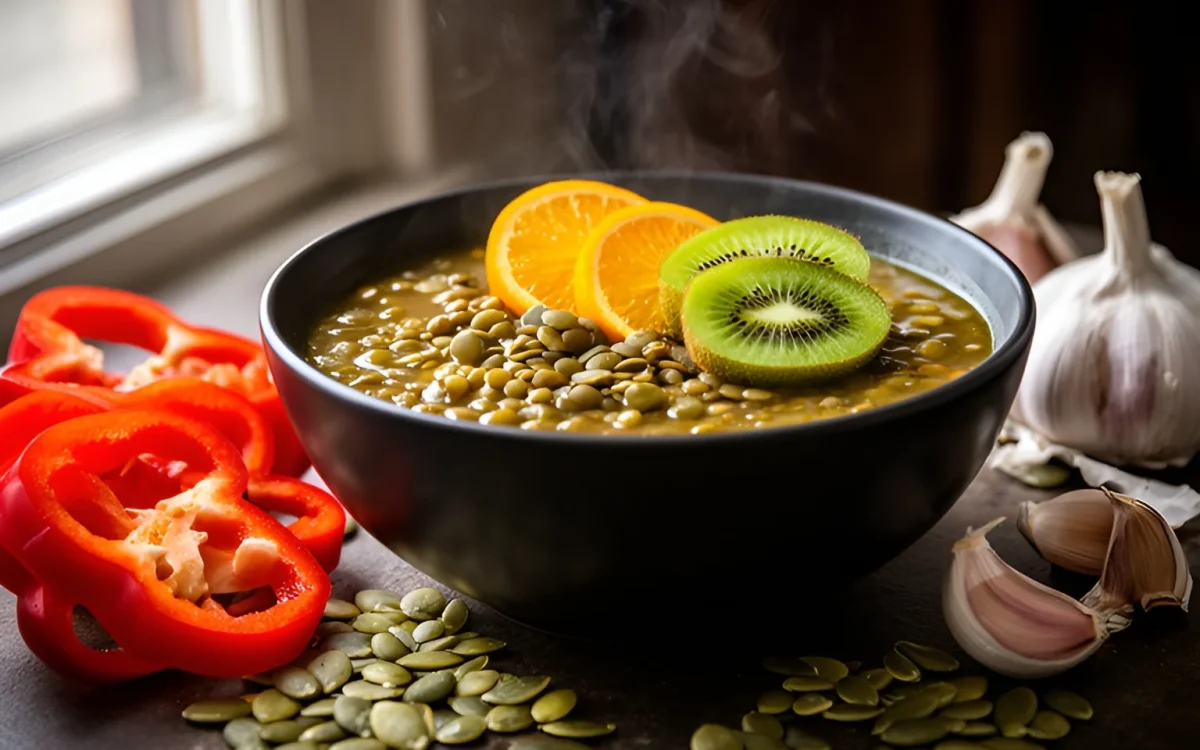
No single food can protect you from colds or flu, and there is no “immune-boosting” superfood. But a diet with enough vitamins, minerals and protein helps the immune system work normally, and in autumn and winter, when days are short and infections spread, a few practical habits can make a difference. These are widely available, affordable options.
Vitamin C from whole foods
Citrus fruit, kiwi, red peppers, broccoli, strawberries and parsley are good sources. Vitamin C is needed for normal immune function, and the body does not store it, so eat some every day. Whole foods bring fiber and other plant compounds. Regular vitamin C supplements do not stop most people from catching colds, but may shorten them slightly. Cooking destroys part of vitamin C, so eat some of these raw or lightly cooked. See our guide to orange peel for ideas.
Zinc and protein
Lentils, chickpeas, pumpkin seeds, eggs, lean meat, fish and dairy provide zinc and protein, both of which the immune system needs to make new cells and antibodies. Older adults and vegetarians may need extra attention to zinc and protein. Try chickpeas or eggs.
Vitamin D
Many people have low vitamin D in winter, when there is less sunshine. Oily fish (salmon, sardines, mackerel), eggs, fortified milk and mushrooms exposed to light help. A doctor can check your levels if you are unsure; supplements are common in winter, but the right dose depends on your blood test.
Vitamin A and iron
Carrots, sweet potatoes, spinach and pumpkin supply vitamin A (as beta-carotene), which keeps the lining of the nose, throat and lungs healthy. Iron from lentils, red meat and leafy greens supports energy and immune cells; see our guide to anaemia and iron-rich foods.
Warm, simple meals
- Vegetable and lentil soups provide fluid, fiber and nutrients in one bowl. Try red lentil soup with lemon or ash reshteh.
- Garlic and onion add flavor and contain compounds studied for their antimicrobial properties; see garlic.
- Yogurt and kefir support gut health, which is closely linked to immunity.
- Ginger, turmeric and honey in warm tea can soothe a sore throat and cough (honey only for children over 1 year).
- Bone broth or chicken soup gives fluid, salt and protein when you are unwell, and warm liquids ease congestion.
- Nuts and seeds provide vitamin E and zinc.
A winter immunity day plate
- Breakfast: oats or eggs with a kiwi or an orange
- Lunch: lentil soup with bread and a salad with lemon and olive oil
- Snack: yogurt with walnuts or pumpkin seeds
- Dinner: baked salmon or chicken with roasted vegetables
What matters as much as food
- Sleep: 7 to 9 hours supports immune defenses.
- Movement: regular moderate exercise, such as a daily walk, lowers the number of infections.
- Handwashing with soap for 20 seconds and staying home when sick.
- Vaccines: staying up to date with recommended vaccines, including the flu vaccine, has a much larger effect on your risk than any single food.
- Stress and smoking: chronic stress and smoking weaken defenses.
- Alcohol: heavy drinking lowers immunity.
Myths to skip
- Mega-doses of vitamin C or herbal “immune boosters” do not prevent illness and can upset the stomach.
- Sugary drinks and very processed foods do not “feed” a cold, but they displace nutritious foods.
- Cold weather itself does not cause colds; indoor crowding does.
When to see a doctor
If you have a fever that lasts more than three days, trouble breathing, chest pain, confusion or severe dehydration, see a doctor promptly. Young children, older adults, pregnant women and people with chronic illness should seek care earlier.
This article is for general information only and is not medical advice. If you have a medical condition or take medication, talk to your doctor or a registered dietitian before changing your diet.
Comments