

🔊 Cook mode: big steps, timers and voice control (say “next”), hands-free.
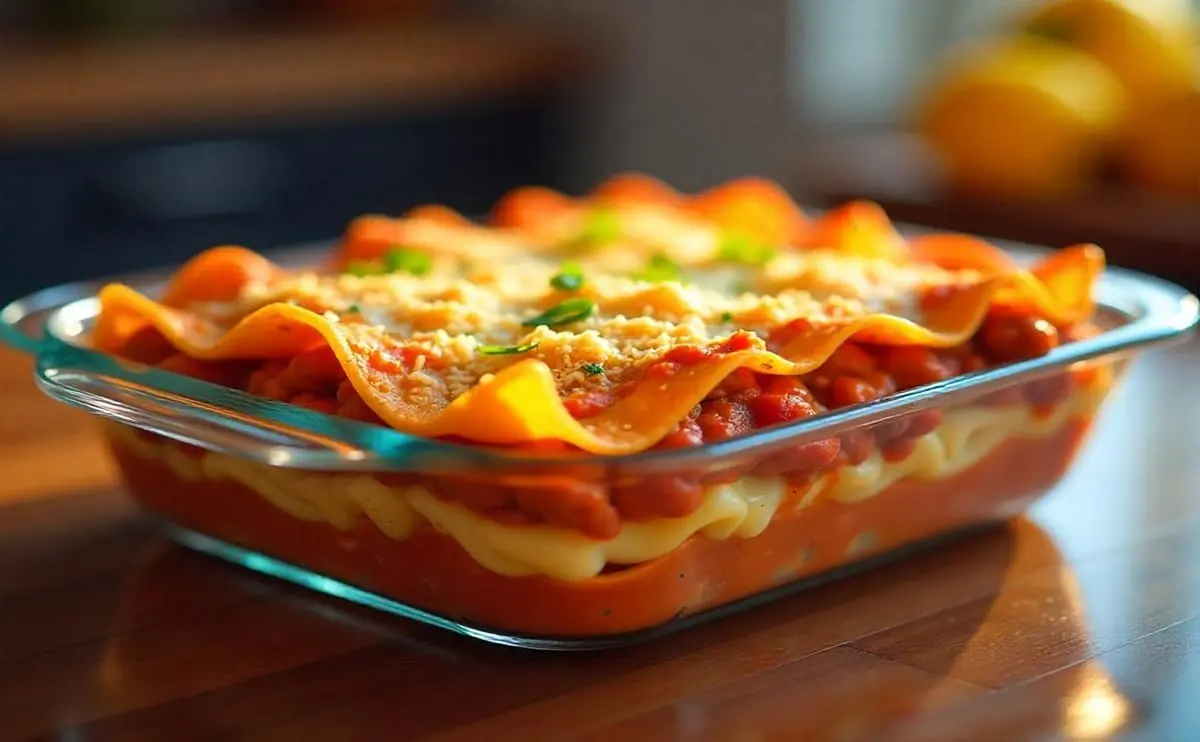
Lasagna is the dish you make when you want the table to go quiet: tender pasta sheets, a savory meat sauce, melted mozzarella and a golden top. This version is built for a regular weeknight or a relaxed weekend dinner. It uses a short list of everyday ingredients, a sauce that cooks in about ten minutes, and a bake of 25 to 30 minutes, so it fits into roughly 50 minutes of cooking and about four servings.
The recipe card above lists the ingredients and steps. Here is what the card cannot tell you: why the layers work, where lasagna usually goes wrong, and how to adapt it to what you have in the kitchen.
Why this lasagna works
Each layer has a job. The sauce brings savory depth from the browned onion and beef, and the tomato adds acidity that keeps the cheese from feeling heavy. The pasta sheets absorb some of the sauce as they bake, which is how the layers become one tender block instead of loose pasta and filling. Mozzarella supplies the stretch and Parmesan the salty, nutty flavor. The bell pepper adds a little sweetness and moisture to the meat sauce.
The 10-minute rest after baking matters as much as any ingredient. Straight from the oven the cheese and sauce are still loose; after resting they set enough to cut into neat squares.
Practical tips
- Thicken the sauce first. The sauce should coat a spoon and leave a trail when you drag it across the pan. If it is runny, simmer it a few more minutes. A thin sauce is the number one cause of watery lasagna.
- Brown the beef properly. Let it sit undisturbed for a minute or two between stirs so it colors instead of steaming. Make sure it is cooked through before it goes into the dish.
- Season every stage. Salt, pepper, thyme and garlic powder go into the meat, but taste the sauce before layering. Cheese and pasta are mild, so the sauce should taste slightly bold.
- Start and finish with sauce. A thin layer on the bottom keeps the first sheets from sticking, and a final layer of mozzarella on top gives the browned, bubbly surface.
- Use a deep dish and cover loosely with foil for the first part of baking if the top browns faster than the middle heats through, then uncover to finish.
Common mistakes
- Overcooking the sheets before assembly. They finish cooking in the oven, so cook them only until pliable if you boil them first. Our guide to cooking pasta al dente explains the timing, and how to keep pasta from sticking helps when handling flat sheets.
- Skipping the rest time and cutting right away.
- Layering too much cheese in the middle, which can make the center greasy rather than saucy.
Variations and substitutions
- No-boil sheets: keep the sauce slightly looser so the pasta has enough liquid to soften, and cover the dish with foil while baking.
- Vegetable version: replace the beef with sautéed mushrooms; see our mushroom lasagna for a full meatless approach.
- Lighter version: try the cottage cheese lasagna if you want a creamier, higher-protein layer.
- Extra flavor: add a pinch of oregano or basil to the sauce, or a little red pepper flake if your family likes heat.
Storage and make-ahead
Assemble the lasagna a day ahead, cover it tightly and refrigerate it; add a few extra minutes to the baking time since it starts cold. Baked leftovers keep in the refrigerator in a covered container and should be put away within two hours of leaving the oven. Cut into portions, wrap them well and freeze for easy lunches, then reheat until steaming hot all the way through.
Serving ideas
A crisp green salad with a sharp lemon or vinegar dressing balances the richness. Warm bread is welcome for the last of the sauce, and a few fresh basil or parsley leaves on top make the plate look finished.
FAQ
Why is my lasagna watery?
Usually the sauce was too thin, the pasta was fully boiled and wet, or the lasagna was cut too soon. Reduce the sauce until thick, drain the sheets well and let the dish rest 10 minutes.
Can I make it without a bell pepper?
Yes. The pepper adds mild sweetness and moisture, but you can use more onion, grated carrot or finely chopped mushrooms instead.
How do I know when it is done?
The edges should bubble, the top should be golden, and the center should be hot when you insert a knife. Let it rest before slicing.
Recipe
The Ultimate Comfort Food: How to Make Classic Beef Lasagna in 50 Minutes
- Prep
- 20 min
- Cook
- 30 min
- Total
- 50 min
- Calories
- 604
Ingredients
Method
Preparing the Ingredients: - Chop the onion and bell pepper.
- Cook the lasagna sheets according to the package instructions or soften them in hot water.
- Grate the cheeses and set all ingredients aside.
Making the Meat Sauce: - In a pan, sauté the onion in olive oil until golden.
- Add the ground beef and season with salt, pepper, thyme, and garlic powder.
- Add the chopped bell pepper and tomato sauce, and cook for 10 minutes.
Layering the Lasagna: Spread a layer of meat sauce at the bottom of an oven-safe dish.
- Place a layer of lasagna sheets on top.
- Add some meat sauce, mozzarella, and Parmesan cheese.
- Repeat the layers until all ingredients are used, finishing with a layer of mozzarella cheese on top.
Baking the Lasagna: - Preheat the oven to 350°F (180°C).
- Bake the dish for 25-30 minutes until the top is golden.
- Let it rest for 10 minutes after removing it from the oven, then serve.
Tips
- 1. Prevent a watery lasagna: Ensure the meat sauce is not too runny before layering. If using no-boil lasagna sheets, keep the sauce slightly thinner so the pasta absorbs enough moisture to cook properly.
- 2. Finish with butter and extra cheese: Before the final bake, brush the top with melted butter and sprinkle extra Parmesan for a beautifully golden crust.
- To learn more about the benefits of mozzarella cheese: Benefits of Mozzarella Cheese
Nutrition per serving
- Calories
- 604
- Protein
- 44 g
- Carbs
- 34 g
- Fat
- 35 g
- Fiber
- 4 g
Estimated values, for information only.
Vitamins and minerals per serving
- Vitamin B12100%+
- Zinc59%
- Vitamin C32%
- Calcium31%
- Iron21%
- Vitamin E19%
Share of an adult’s daily value (FDA). Estimated from the main ingredients using USDA data, ignoring cooking losses; for information only. What do I need each day?