

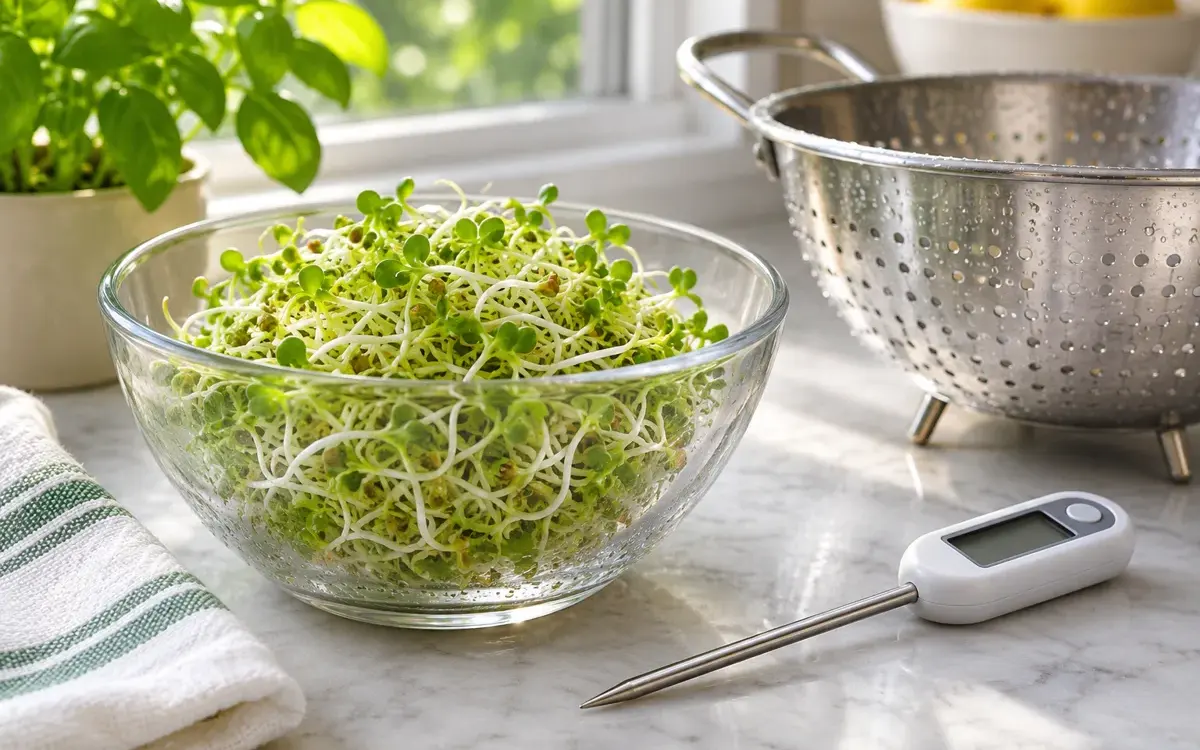
Short answer: On November 4, 2026, the FDA said its investigation into a Salmonella outbreak linked to broccoli sprouts and microgreens is complete and the outbreak has ended. Recalled sprouts are past their expiry date, but recalled broccoli seeds have a long shelf life, so anyone who bought sprouting seeds this year should check their pantry.
What happened
The FDA and CDC, with state and local partners, investigated illnesses caused by Salmonella Bovismorbificans. According to the FDA’s November 4 update, 34 people in six states (Idaho, Minnesota, Montana, Oregon, Utah and Washington) became ill, with symptoms starting between July 7 and September 11, 2026. Three people were hospitalized and no one died.
Of the 30 people interviewed, 29 (97%) said they had eaten sprouts or microgreens, and 25 named broccoli sprouts specifically. Samples of Evergreen Fresh Sprouts-brand broccoli sprouts, collected by Washington and Montana health officials, tested positive and matched the outbreak strain by whole genome sequencing. Seed samples taken from the domestic seed supplier matched too. Traceback showed the broccoli seeds were originally imported from New Zealand.
Which products were recalled
The FDA lists these recalled broccoli seed products, sold nationwide through company websites, Amazon, Walmart, eBay, Etsy and TikTok Shop:
- Gardeners Basics Waltham 29 Broccoli Sprouting Seeds, 1 lb (454 g) white and green resealable pouch, UPC 848137042889, marked “Packed for 2027”.
- Eden Brothers calabrese broccoli seeds in packets and 1-oz and 1-lb sizes (Eden Brothers lots 1022067 and 1022068; supplier lot W4105).
- Home Grown green sprouting calabrese broccoli seeds, 8 oz, sold on Amazon, lot code AUG172026 embossed on the top seal.
- Evergreen Fresh Sprouts broccoli sprouts (Moyie Springs, Idaho). These are past expiration and no longer for sale.
What you can do
- Check your seeds. If you grow sprouts at home, compare your packet with the list above and the FDA page. Do not use recalled seeds; throw them away.
- Clean what they touched. The FDA advises carefully cleaning and sanitizing surfaces and containers that recalled sprouts or seeds came into contact with, following its safe food handling guidance. For sanitizing, the FDA’s Salmonella page describes one tablespoon of chlorine bleach per gallon of hot water, then drying with a clean cloth or paper towel.
- Know the symptoms. Salmonella illness usually begins 12 to 72 hours after eating contaminated food and lasts four to seven days: diarrhea, fever and abdominal cramps. Contact your health care provider if you have symptoms after eating recalled sprouts or handling recalled seeds.
Who is more at risk
The FDA says children younger than five, older adults and people with weakened immune systems are more likely to have severe infections. Its general advice is that children, the elderly, pregnant women and people with weakened immune systems should avoid eating raw sprouts of any kind.
A separate sprout outbreak
The FDA notes this outbreak was investigated separately from another outbreak of Shiga toxin-producing E. coli and Salmonella linked to alfalfa sprouts. Check the FDA’s outbreak investigations page for the current status of any open investigation.
Bottom line
There is no ongoing risk from the recalled sprouts themselves, but long-lived seeds are the loose end. A two-minute check of your pantry is the useful step. For other food-safety basics this season, see our guides on thawing a turkey safely, keeping Thanksgiving leftovers safe and our Thanksgiving countdown plan.
Sources
- Outbreak Investigation of Salmonella: Sprouts (September 2026), U.S. Food and Drug Administration
- Investigations of Foodborne Illness Outbreaks, U.S. Food and Drug Administration
- Salmonella (Salmonellosis), U.S. Food and Drug Administration
Kommentare