



🔊 Cook mode: big steps, timers and voice control (say “next”), hands-free.
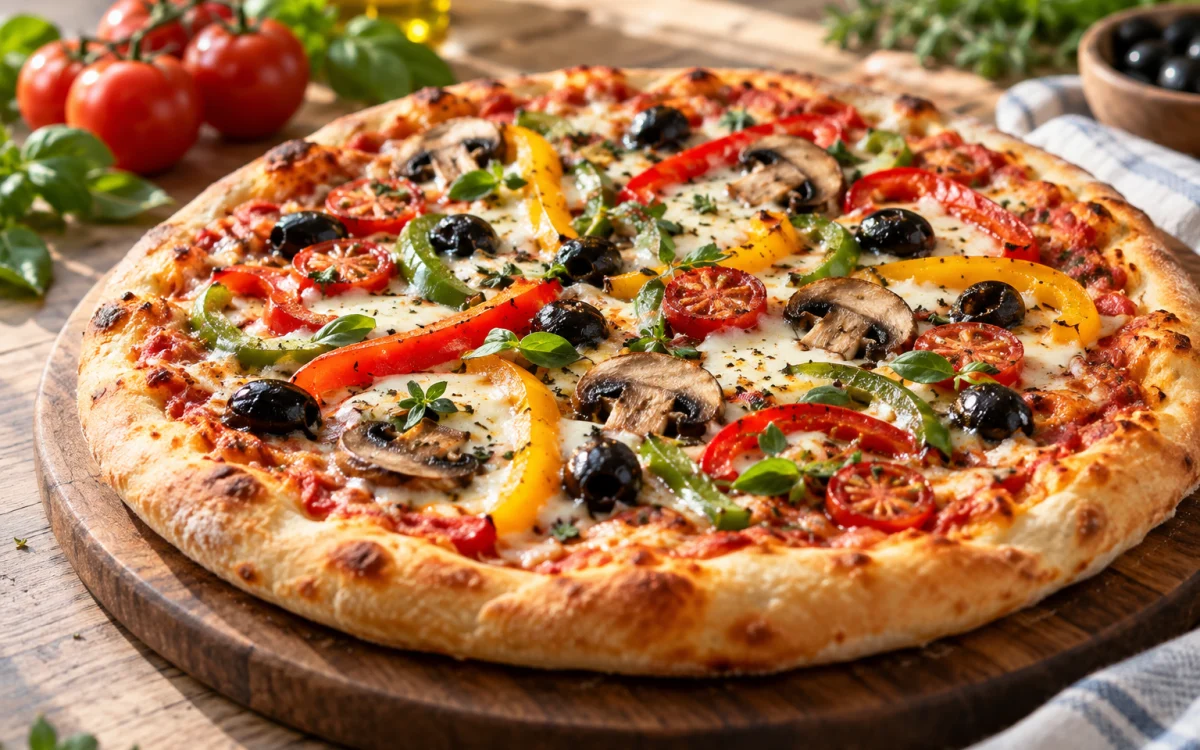
Vegetable pizza is a colorful Mediterranean-style pizza loaded with bell peppers, mushrooms, olives, spinach, red onion and corn on a tomato base. It is easy enough for a weeknight and flexible enough to adapt to whatever vegetables you have. This guide is for home cooks who want a lighter, fresher pizza that still comes out crisp on the bottom and melted on top.
Why it works
A thin layer of tomato sauce, a modest amount of cheese and plenty of vegetables gives a pizza with more color and texture than a cheese-heavy one. Mozzarella melts to bind the toppings, olive oil adds richness, and oregano or thyme gives the classic Mediterranean aroma. Using whole-grain dough adds extra fiber and a nutty taste, and low-fat mozzarella keeps the pizza from feeling too heavy.
Practical tips
- Preheat properly. A hot oven, and ideally a hot baking sheet or pizza stone, helps the crust cook through and crisp on the bottom.
- Pierce the dough. Poking a few holes with a fork keeps the base from puffing up too much under the toppings.
- Do not overload the pizza. Too many toppings releases moisture and makes the middle soggy. Slice vegetables thinly and spread them in a single layer.
- Pre-cook wet vegetables. Mushrooms and spinach hold a lot of water. Sautéing them briefly, or patting them dry, prevents a watery pizza.
- Use less sauce than you think. A thin layer is enough; a thick one steams the dough.
- Finish with fresh basil. Add it after baking so it stays green and fragrant.
Common mistakes
The biggest problem is a soggy center, caused by too many wet toppings, too much sauce or an oven that is not hot enough. Another is burnt cheese with raw dough, which happens when the pizza is baked too high or too close to the heat. If the crust is pre-baked or thin, check it at 12 to 15 minutes. Bake until the cheese is melted and golden and the crust is fully cooked.
Variations and substitutions
- No oven? Cook the pizza in a covered cast-iron pan on the stovetop over medium-low heat until the base is crisp and the cheese has melted.
- Make your own dough for more control over ingredients. See our guide to soft pizza dough.
- Gluten-free: use a gluten-free crust and check the labels of the other ingredients.
- More protein: add grilled chicken or low-fat ricotta, which athletes in particular may appreciate.
- Extra flavor: chili flakes, pesto stirred into the tomato sauce, or a drizzle of balsamic glaze after baking.
- For children: use extra cheese and the vegetables they like best, chopped small.
- Softer for seniors: choose a softer crust and cook the vegetables first so they are easier to chew.
A note on diet and salt
Pizza can be high in calories and salt, depending on the amount of cheese, olives and sauce. People with diabetes, heart conditions or high blood pressure may prefer whole-grain dough, less cheese, fewer olives and olive oil instead of heavy oils, and should check with their doctor or dietitian about what suits them.
Serving ideas
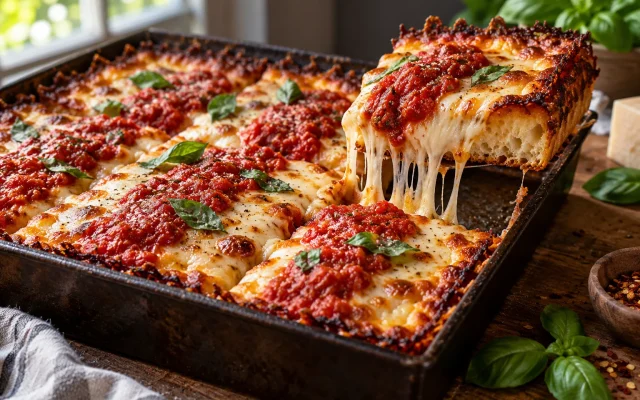
Cut into wedges and serve hot, with a simple green salad. Leftover slices are good the next day for lunch. If you are cooking for a crowd, our sheet pan pizza is a good way to feed more people from one tray, and the history of pizza is an enjoyable read while it bakes.
Storage and make-ahead
Leftover pizza keeps in the fridge in an airtight container for two to three days. Reheat on a hot pan or in the oven rather than the microwave to restore the crisp base. You can prepare the toppings a few hours ahead, but assemble the pizza just before baking so the sauce does not soak into the dough. Unbaked dough can be made ahead and kept covered in the fridge.
Frequently asked questions
Can I use frozen vegetables?
Yes, but thaw and drain them well, then pat dry, since extra moisture will make the pizza soggy. Fresh vegetables usually give the best flavor and texture.
What cheese works best?
Low-fat mozzarella melts well and keeps the pizza lighter. Regular mozzarella gives a stretchier result, and a little feta or Parmesan adds a saltier note.
How do I keep the crust crisp?
Preheat the oven and baking tray, use a thin layer of sauce and avoid overloading the pizza. Baking on the lowest rack also helps the base brown.
Rezept
Vegetable Pizza: Easy Mediterranean Veggie Pizza Recipe
- Vorbereitung
- 10 Min.
- Garzeit
- 20 Min.
- Gesamt
- 30 Min.
- Kalorien
- 280
Zutaten
Zubereitung
Heat the oven to 200°C (400°F).
Place the pizza dough on a baking sheet and poke a few small holes in it with a fork.
Evenly spread the tomato sauce over the dough.
Sprinkle mozzarella cheese over the sauce, then layer the vegetables (mushrooms, bell peppers, olives, spinach, onions, and corn) on top.
Sprinkle oregano, salt, and black pepper, and drizzle olive oil over the pizza.
Bake the pizza in the oven for 15–20 minutes, or until the cheese is melted and golden, and the crust is fully cooked.
Serve the pizza hot, garnished with fresh basil leaves if desired.
Tipps
- Use fresh and seasonal vegetables for the best flavor.
- If you don’t have an oven, cook the pizza in a cast-iron pan on the stovetop.
- Make your own dough for more control over ingredients.
- For a unique flavor, add a sprinkle of chili flakes or pesto to the tomato sauce.
Nährwerte pro Portion
- Kalorien
- 280
- Eiweiß
- 10 g
- Kohlenhydrate
- 35 g
- Fett
- 9 g
- Ballaststoffe
- 5 g
Geschätzte Werte, nur zur Information.
Vitamine und Mineralstoffe pro Portion
- Vitamin C42%
- Vitamin K36%
- Vitamin B1227%
Share of an adult’s daily value (FDA). Estimated from the main ingredients using USDA data, ignoring cooking losses; for information only. Was brauche ich täglich?