



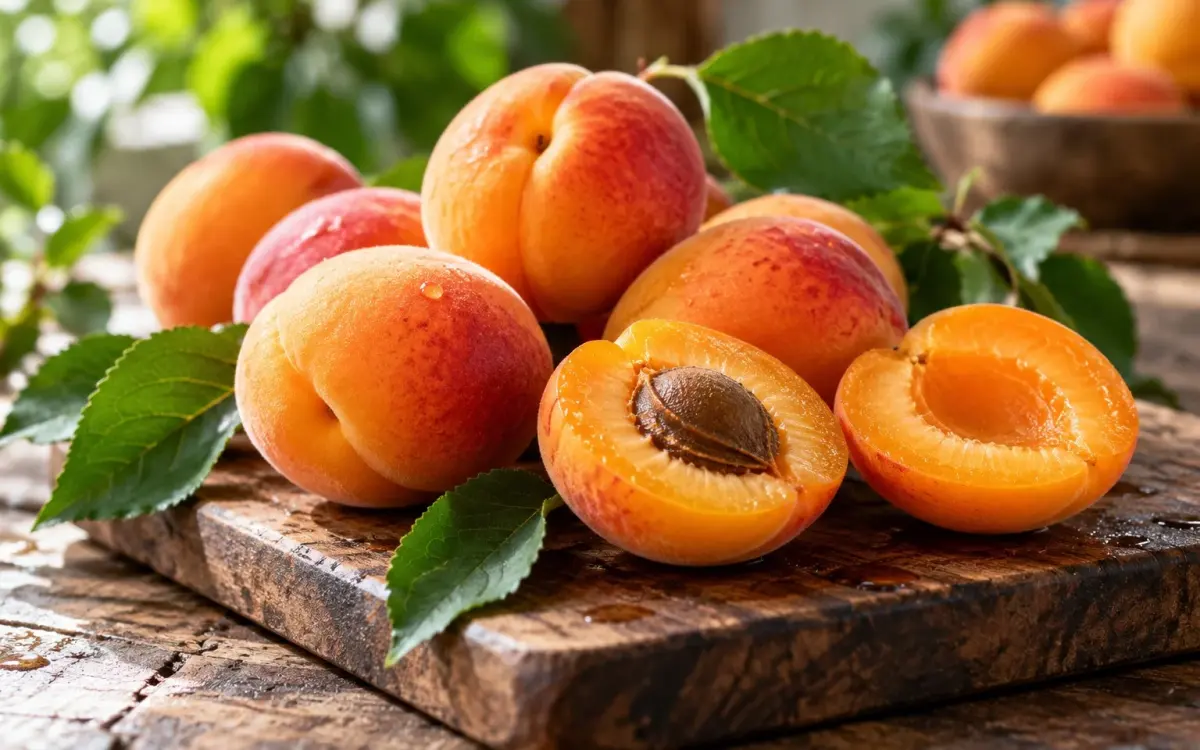
Apricots are a small stone fruit with a sweet, slightly tangy flavor. Fresh in early summer and dried all year round, they are a good source of beta-carotene, fiber and potassium. Here is what apricots offer, what is realistic to expect, and the one part of the apricot you should not eat.
Apricot nutrition
Fresh apricots (100 g, about 3 fruits)
- About 48 kcal and 11 g carbohydrate, with 2 g fiber
- Beta-carotene, which the body turns into vitamin A (about 10% of the daily value)
- Vitamin C (about 10 mg) and potassium (about 260 mg)
Dried apricots (100 g)
- About 240 kcal, with 7 g fiber and around 53 g natural sugars
- Potassium (about 1,160 mg) and iron (about 2.7 mg)
Drying concentrates both nutrients and sugar, so a portion of dried apricots is small: about 4 to 6 halves (30 g).
What apricots can do for you
- Eyes: vitamin A is needed for normal vision, and apricots help you get enough. They do not cure or reverse eye disease.
- Digestion: the fiber, especially in dried apricots, helps regular bowel movements, much like prunes.
- Heart and blood pressure: fruits rich in potassium and fiber are part of heart-healthy eating patterns, but apricots are not a treatment.
- Skin: vitamins A and C support normal skin, but no fruit is a “miracle” for wrinkles.
Do not eat apricot kernels
The kernel inside the stone contains amygdalin, which turns into cyanide in the body. They are sometimes sold as a “natural cancer cure”, which is false and dangerous. EFSA estimates that even three small kernels can reach the safe limit for an adult, less than half of a large kernel can exceed it, and for a toddler half of one small kernel is too much. Eating the fruit itself is perfectly safe.
Who should be careful
- Sulfite sensitivity or asthma: bright orange dried apricots are often treated with sulfur dioxide; choose unsulfured (brown) ones.
- Diabetes: fresh apricots are a fine choice; keep dried apricot portions small.
- Kidney disease: dried apricots are very high in potassium; ask your doctor.
- Sensitive stomach: large amounts of dried fruit can cause gas or loose stools.
How to enjoy apricots
- Eat fresh apricots ripe, when they smell fragrant and give slightly to gentle pressure.
- Chop dried apricots into oatmeal, rice dishes and stews, or add them to a nut and dried fruit platter like our Yalda ajil.
- Halve and grill fresh apricots, then serve with yogurt and a drizzle of honey.
Sources
- European Food Safety Authority (EFSA): Apricot kernels pose risk of cyanide poisoning
- NIH Office of Dietary Supplements: Vitamin A fact sheet
- USDA FoodData Central (nutrient data)
This article is general information, not medical advice. If you have a health condition, talk to your doctor or a registered dietitian.