






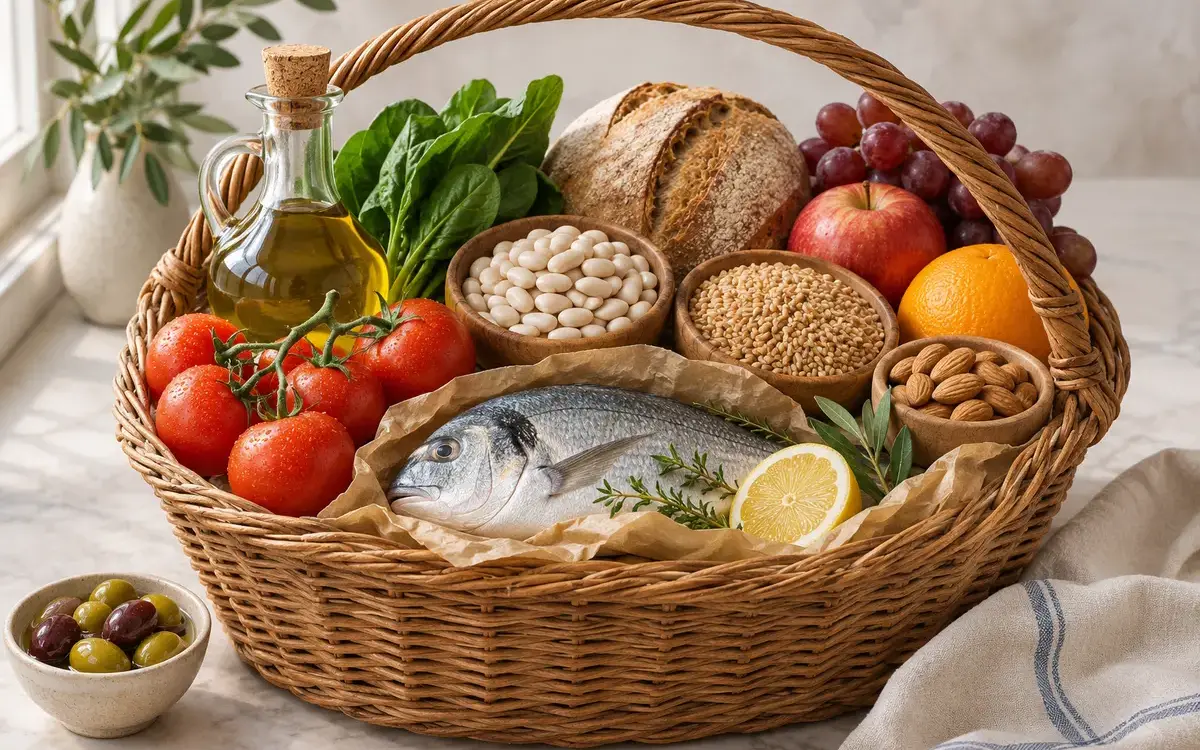
The Mediterranean diet is built on simple, mostly plant-based foods, with olive oil, fish and legumes at the center. A good shopping list makes it easy to follow without thinking about it every day. This one is organized by aisle so you can shop quickly.
Produce
- Leafy greens, tomatoes, cucumbers, peppers, onions and garlic.
- Seasonal vegetables such as zucchini, eggplant and cauliflower.
- Lemons, oranges, apples, berries and grapes.
- Fresh herbs: parsley, basil, oregano and mint.
Pantry staples
- Extra virgin olive oil for cooking and dressings.
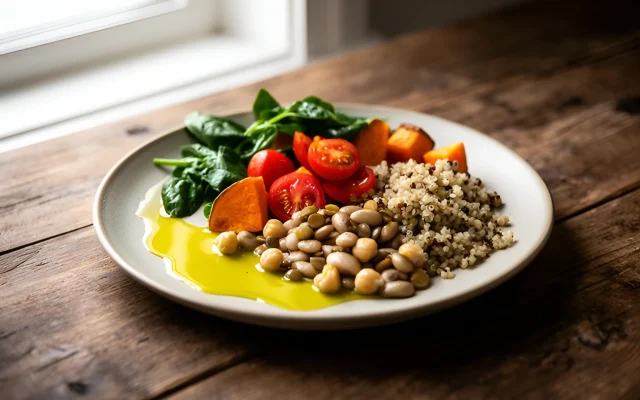
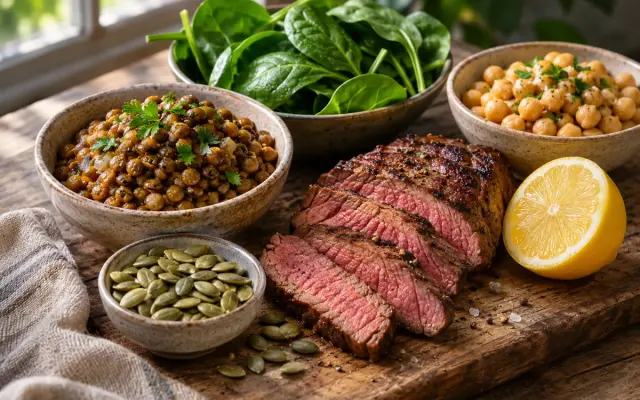
- Canned chickpeas, lentils and white beans.
- Whole grains such as farro, bulgur, brown rice and whole wheat pasta.
- Canned tomatoes, olives, capers and tomato paste.
- Nuts and seeds: almonds, walnuts and pistachios.
Protein and dairy
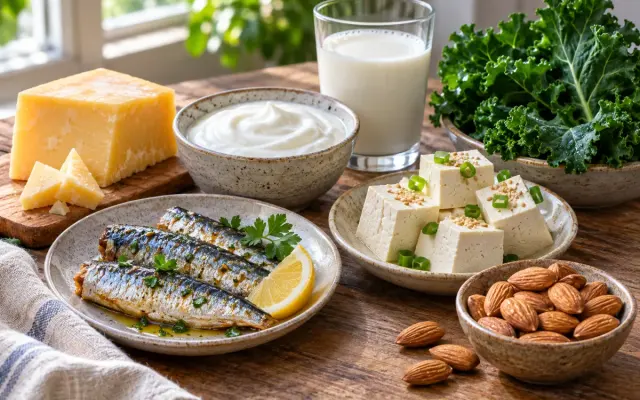
- Fish and seafood, especially salmon, sardines and shrimp, once or twice a week.
- Eggs and moderate amounts of poultry.
- Plain Greek yogurt and a small amount of feta or Parmesan.
- Red meat only occasionally.
Easy meal ideas
Greek salad with chickpeas, lentil soup with lemon, baked fish with roasted vegetables, whole wheat pasta with tomatoes and olives, and yogurt with fruit and nuts all draw from this list.
Tips for shopping
Choose frozen vegetables and canned beans to save time and money. Buy olive oil in dark bottles and keep it away from heat. Cook in batches so several meals can be built from the same ingredients.
This is general food information, not personal medical advice. If you have a medical condition or allergies, ask a doctor or registered dietitian before changing your diet.
A sample week
- Monday: lentil soup, whole grain bread and a big salad.
- Tuesday: baked salmon with lemon, roasted vegetables and farro.
- Wednesday: chickpea and vegetable stew with yogurt.
- Thursday: whole wheat pasta with tomatoes, olives and capers.
- Friday: shrimp with garlic, tomatoes and rice.
- Weekend: grilled vegetables, white beans and eggs for brunch.
Keep fruit, nuts and yogurt for snacks and desserts. Water and herbal tea are the usual drinks, and a small glass of wine with meals is optional, not required.
Why the Mediterranean diet is worth trying
The Mediterranean way of eating is one of the most studied eating patterns in the world. Large studies have linked it with better heart health and a lower risk of type 2 diabetes. It is not a strict diet with forbidden foods; it is a pattern built on plants, olive oil, legumes, whole grains and fish, with meat and sweets as occasional foods.
Budget-friendly swaps
- Canned sardines, mackerel and salmon are cheaper than fresh fish and just as nutritious.
- Frozen vegetables and berries are picked ripe and keep for months.
- Dried lentils, chickpeas and beans cost less than canned and cook easily in batches.
- Buy nuts and seeds in larger bags and store them in the freezer so they stay fresh.
- Choose seasonal produce; it is cheaper and tastes better.
How to read labels
When you buy bread, pasta or crackers, look for “whole wheat” or “whole grain” as the first ingredient. For yogurt, choose plain varieties and add your own fruit. For canned beans and tomatoes, low-sodium options help keep salt in check; rinsing canned beans also removes some of the salt.
A weekly prep routine
- Cook a large pot of a whole grain such as farro or brown rice.
- Roast two trays of mixed vegetables.
- Make a jar of lemon and olive oil dressing.
- Cook a pot of lentils or chickpeas.
- Wash salad greens and herbs and store them with a paper towel.
With these ready, you can assemble grain bowls, salads and quick dinners in minutes all week.
Frequently asked questions
Is the Mediterranean diet expensive?
It does not have to be. Beans, lentils, oats, frozen vegetables, canned fish and seasonal produce are some of the cheapest foods in the store, and they form the base of this way of eating.
Comments