Dandruff, flaking skin on the scalp, affects about half of all adults at some point. It is not a sign of poor hygiene. The main causes are a yeast-like fungus that lives on every scalp (Malassezia), natural scalp oils, dry skin and, in more serious cases, seborrheic dermatitis. Food alone does not cure dandruff, but a balanced diet supports healthy skin, and some nutrient shortages are linked with flaky, irritated scalps.
What really causes dandruff
- Malassezia yeast: feeds on scalp oils and can irritate sensitive scalps.
- Seborrheic dermatitis: red, greasy, itchy skin with yellow flakes.
- Dry skin: cold weather, dry heating and washing hair with very hot water.
- Not washing often enough: oil and skin cells build up.
- Stress, tiredness and illness, which can trigger flare-ups.
- Reactions to hair products (contact dermatitis).
The role of diet
Diets high in processed foods and low in essential nutrients can harm skin and scalp health. Eating a diet rich in healthy whole foods supports skin barrier, immunity and normal skin cell renewal, which may help manage or reduce dandruff. The evidence is limited and mostly indirect, so diet should support, not replace, a proper dandruff treatment.
Nutrients linked with scalp and skin health
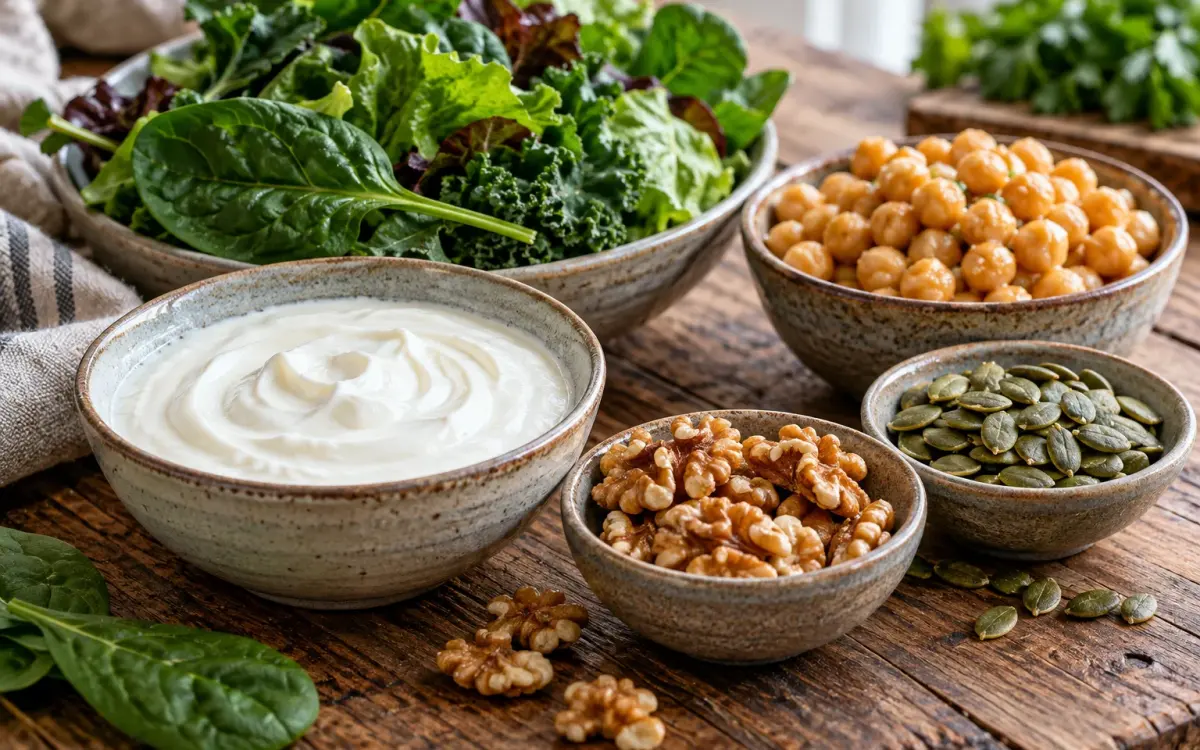
- Zinc: supports skin cell turnover and immune function. Low zinc is linked with seborrheic dermatitis and flaking in some studies. Sources: pumpkin seeds, beef, lentils, chickpeas, cashews, eggs and yogurt.
- B vitamins: including biotin (B7), riboflavin (B2), B6 and niacin, important for skin and hair regeneration. Sources: whole grains, nuts, eggs, avocado, mushrooms and dairy.
- Omega-3 fatty acids: help reduce inflammation and improve skin hydration. Sources: oily fish (salmon, sardines), flaxseeds, chia seeds and walnuts.
- Vitamin D: supports immune function and skin health. Sources: fatty fish, fortified dairy, eggs and sensible sun exposure. Many people have low vitamin D in winter.
- Vitamin A, C and E: protect skin cells and support repair. Sources: carrots, sweet potato, citrus, peppers, almonds and sunflower seeds.
- Probiotics: yogurt, kefir and fermented foods support gut health; some small studies link gut and skin health, but evidence for dandruff is limited.
- Water: staying hydrated supports skin moisture.
A scalp-friendly day of eating
- Breakfast: yogurt with walnuts, chia seeds and berries
- Lunch: red lentil soup with a leafy salad and olive oil
- Snack: pumpkin seeds or a handful of almonds
- Dinner: grilled salmon or chicken with vegetables and brown rice
Foods that may make flaking worse for some people
There is no proven dandruff-causing food, but a few people notice flare-ups with large amounts of sugar, refined carbohydrates, alcohol or very greasy foods. These can feed inflammation, but the link is not firm. Keep a food diary if you suspect a trigger.
What actually treats dandruff
- Shampoos with ketoconazole, zinc pyrithione, selenium sulfide, salicylic acid or coal tar, used 2 to 3 times a week and left on the scalp for 3 to 5 minutes.
- Alternating two different anti-dandruff shampoos if one stops working.
- Washing hair regularly with lukewarm (not hot) water, and rinsing out all shampoo.
- Brushing gently and avoiding scratching.
- Managing stress and getting enough sleep.
When to see a doctor
See a doctor or dermatologist if dandruff does not improve after 4 weeks of an anti-dandruff shampoo, if the scalp is red, painful, crusted or bleeding, if you lose hair, or if the flaking spreads to your face or body (it may be psoriasis, eczema or a fungal infection that needs different treatment).
Do not use supplements without advice
Zinc, biotin and vitamin D supplements are only useful if you are low. Too much zinc causes nausea and affects copper levels; biotin can interfere with blood tests. A doctor can check your levels first.
Frequently asked questions
Can dandruff be cured by diet alone?
No. Diet helps, but medicated shampoo is the main treatment.
Does oiling hair help?
Oil can feed the yeast in some people and make flaking worse; if you use it, wash it out well.
For more information on diet and health, see credible sources such as the World Health Organization, Harvard T.H. Chan School of Public Health’s Nutrition Source and the FDA. This is general information, not medical advice.