









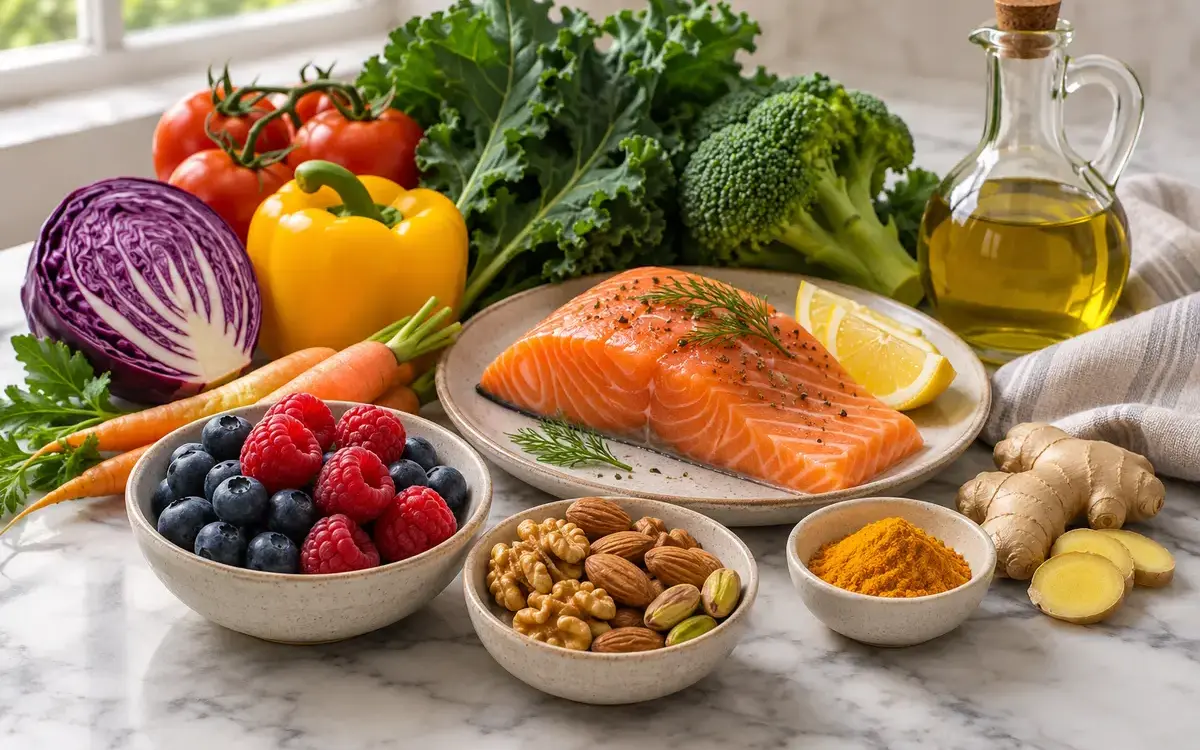
Few food phrases are as common as anti-inflammatory. Research does suggest that certain eating patterns are linked with lower markers of inflammation, but headlines often promise far more than the evidence supports.
What the research supports
- Fatty fish such as salmon and sardines provide omega-3 fats studied for their role in inflammation.
- Olive oil, nuts, vegetables, fruit, legumes and whole grains are the core of Mediterranean-style eating, which is consistently associated with better health outcomes.
- Berries and leafy greens contain polyphenols and other compounds that are being studied.
- Spices such as turmeric and ginger are used widely, though results from studies on supplements are mixed.
Where claims go too far
No single food can reverse inflammation or cure disease. Many studies are small, observational or use concentrated extracts that differ from normal food portions. Words like detox or miracle are a good reason to be skeptical.
A practical approach
Rather than hunting for superfoods, build meals around vegetables, whole grains, legumes and fish, cook with olive oil, and go easy on ultra-processed foods, sugary drinks and excess alcohol. Regular movement, sleep and not smoking matter as much as diet.
A simple day of eating
Breakfast: oats with berries and walnuts. Lunch: lentil soup with a large salad. Dinner: baked salmon with roasted vegetables and brown rice. Snacks: fruit, yogurt or a handful of almonds.
If you have a medical condition, take medicine or are thinking about supplements, talk with a doctor or registered dietitian. This article is general food information and not medical advice.
Frequently asked questions
Is turmeric worth taking? Culinary amounts are safe for most people, but the evidence for supplements is mixed and they can interact with medicines, so ask a professional first. Should I avoid nightshades? There is no good evidence that tomatoes, peppers or potatoes cause inflammation in most people. Do I need to cut out gluten or dairy? Only if you have a diagnosed sensitivity or allergy.
A realistic goal is steady, enjoyable eating rather than perfection. Small changes you can keep up, like adding a serving of vegetables or swapping butter for olive oil, are worth more than a short strict plan.
Comments