









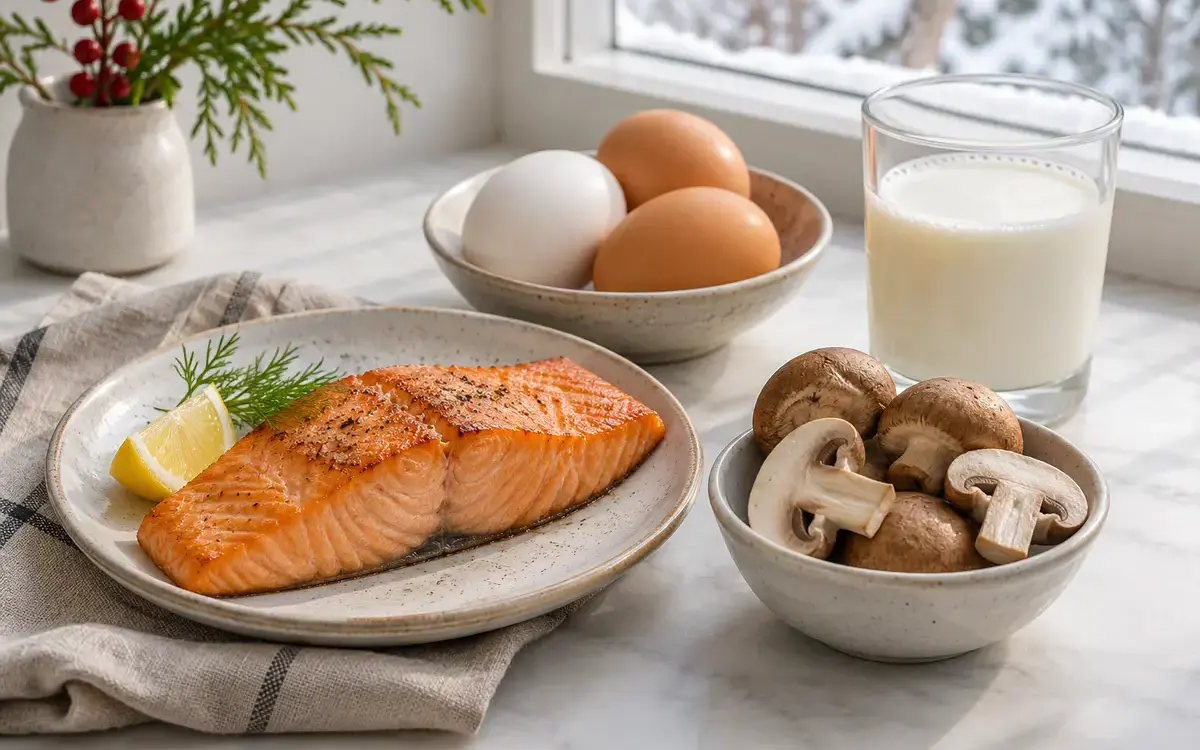
In winter, shorter days and less sun mean many people get less vitamin D from sunlight. Food will not replace sunshine for everyone, but a few ingredients contain useful amounts and are easy to work into everyday cooking.
Fatty fish
Salmon, trout, mackerel and sardines are among the richest natural sources. A single portion of cooked salmon provides a large share of a typical daily target. Canned salmon and sardines count too and are budget-friendly.
Eggs and mushrooms
Egg yolks contain a modest amount of vitamin D, and eggs from hens given vitamin D-enriched feed may contain more. Mushrooms exposed to ultraviolet light, often labeled as UV-treated, also provide vitamin D2; check the package label.
Fortified foods
Many milks, plant milks, yogurts, cereals and orange juices are fortified. Fortification varies by country and brand, so read the nutrition label to see how much a serving provides.
Easy ways to use them
- Bake salmon with lemon and herbs for a weeknight dinner.
- Make a mushroom and egg scramble for breakfast.
- Stir sardines into pasta with garlic and parsley.
- Choose a fortified milk or plant milk for your morning oatmeal.
A note on supplements
Needs differ by age, skin tone, location and health. If you are considering a supplement or have a medical condition, talk with a doctor or registered dietitian rather than guessing at a dose. This article is general food information, not medical advice.
The practical takeaway: aim for a fatty-fish meal once or twice a week, use eggs and fortified foods regularly, and keep the label in view when you shop.
How much do you need?
Official daily targets vary by country and by age, and some people have higher needs than others. Rather than chase a number, think in terms of habits: oily fish on the menu weekly, eggs and fortified foods in regular rotation, and a doctor’s guidance if you suspect a shortfall.
Shopping tips
- Canned salmon with the bones is inexpensive and works well in patties and salads.
- Look for the words fortified with vitamin D on milk, plant milk and cereal labels.
- UV-treated mushrooms are sometimes sold next to regular ones; compare the labels.
- Cod liver oil is very high in vitamin A as well, so ask a professional before using it.
A simple winter week might include salmon on Tuesday, a mushroom omelet on Thursday, sardines on toast on Saturday, and fortified yogurt or milk at breakfast daily. Small repeated choices add up more than a single perfect meal.

Comments