


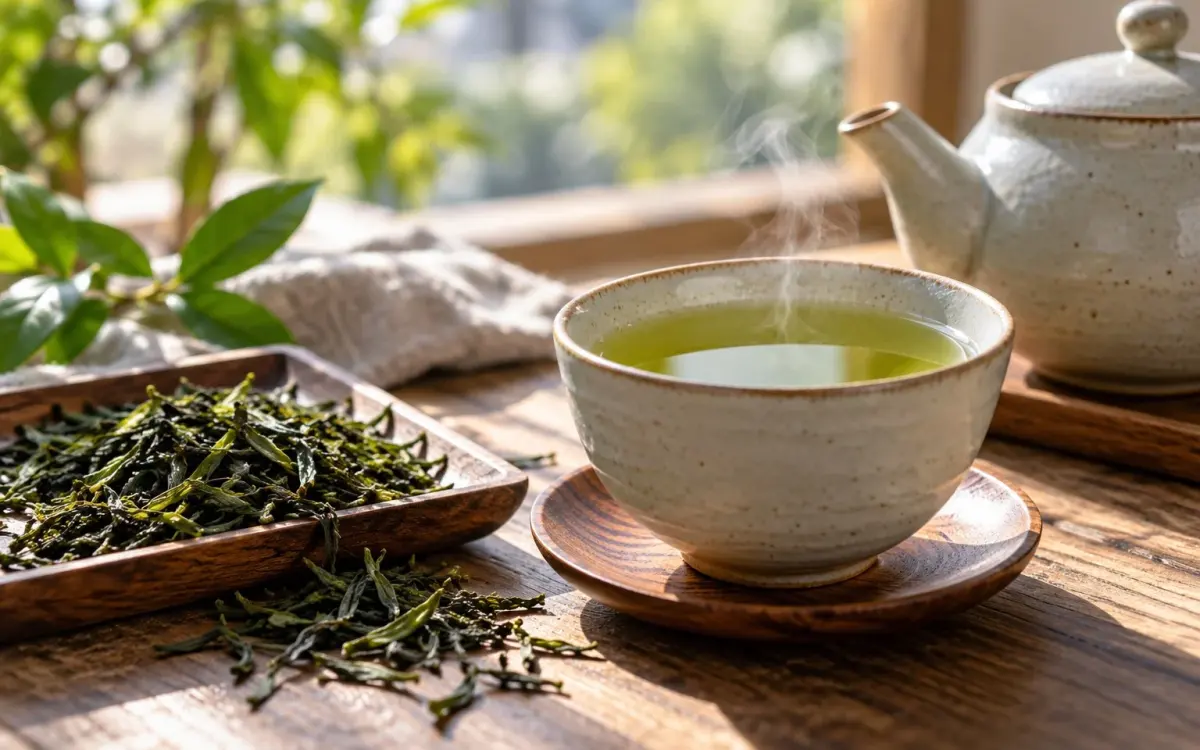
Green tea is one of the most studied drinks in the world. It is rich in plant compounds called catechins, especially EGCG, and contains a little caffeine and the amino acid L-theanine. You will often read that it “protects the heart” or “shields against cancer”. Here is what the evidence really supports, how much to drink, and when to be careful.
What is in a cup of green tea?
- Almost no calories when drunk without sugar or milk.
- Catechins (polyphenols), mainly EGCG, which act as antioxidants in the lab.
- About 25 to 45 mg of caffeine per cup, roughly a third to a half of a cup of coffee.
- L-theanine, which may give a calmer kind of alertness together with the caffeine.
Heart health: modest but promising
Large population studies, mostly in Japan and China, have found that people who drink green tea regularly tend to have a somewhat lower risk of heart disease and stroke. Short clinical trials show that green tea or its catechins can slightly lower LDL (“bad”) cholesterol. These are small effects, and population studies cannot prove that tea itself is the cause, because tea drinkers may also have other healthy habits.
Cancer: the evidence is not clear
Laboratory studies are interesting, but research in people has given mixed results. According to the U.S. National Center for Complementary and Integrative Health, there is not enough evidence to say that green tea prevents cancer. Green tea is a healthy drink, but it should never be seen as a “shield” against cancer or a replacement for screening and medical care.
Weight
Green tea is sometimes called a fat burner. Studies show at most a very small effect on weight, too small to matter on its own. Its real benefit is as a calorie-free replacement for sugary drinks.
How much is sensible?
For most healthy adults, 2 to 4 cups of brewed green tea a day is a reasonable amount. Keep your total caffeine from all sources under about 400 mg a day, and under 200 mg if you are pregnant or breastfeeding.
How to brew it well
- Use water just off the boil, around 70 to 80 C (160 to 175 F); boiling water makes green tea bitter.
- Steep for 2 to 3 minutes, then remove the leaves or bag.
- A slice of lemon is a nice addition; skip sugar or keep it small.
- For a cozy twist, try it with fresh mint, or see our ginger lemon honey tea.
Who should be careful
- Green tea extract supplements: high-dose extracts (not brewed tea) have been linked to rare cases of liver injury. EFSA found that 800 mg or more of EGCG a day from supplements can raise liver enzymes. Brewed tea is considered safe.
- Iron deficiency: tea reduces the absorption of iron from plant foods; drink it between meals rather than with them.
- Medicines: green tea can interact with some drugs, including the blood pressure drug nadolol and the blood thinner warfarin (because of vitamin K in large amounts). Ask your doctor or pharmacist.
- Caffeine sensitivity, anxiety or poor sleep: drink less, and avoid it late in the day.
Sources
- NIH National Center for Complementary and Integrative Health (NCCIH): Green Tea
- European Food Safety Authority (EFSA): Scientific opinion on the safety of green tea catechins, 2018
- U.S. FDA: Spilling the Beans: How Much Caffeine is Too Much?
This article is general information, not medical advice. If you have a health condition, talk to your doctor or a registered dietitian.