

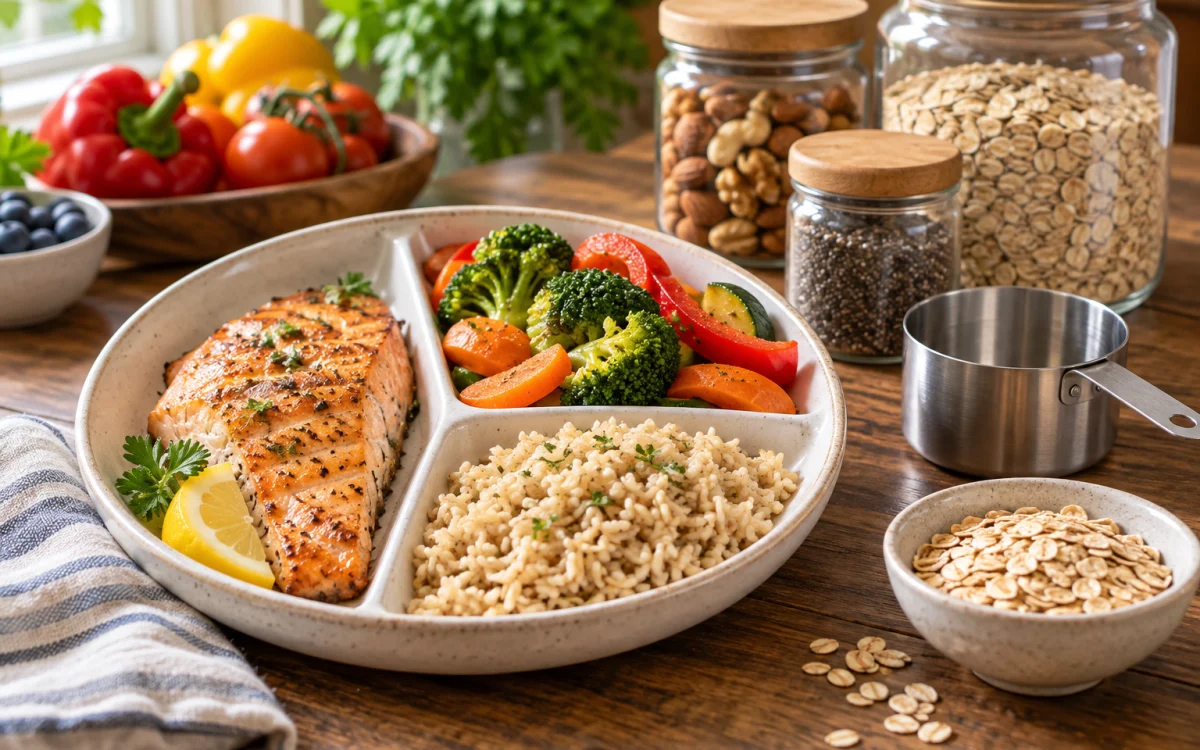
A savory snack plate, also called a snack board, is a simple way to eat something satisfying when you would otherwise reach for sweets. You arrange small portions of protein, vegetables, something crunchy and something tangy on one board, and everyone picks what they like. It is for anyone who wants an afternoon snack, a light lunch for one, or a relaxed spread for guests, with almost no cooking.
Why it works
A good snack plate balances four things. Protein such as cheese, eggs or chickpeas keeps you feeling full. Fresh vegetables and whole-grain crackers add fibre and volume. Nuts and olives bring crunch and richness in small amounts. A tangy item, like pickles or hummus, wakes up the palate and makes the plate feel complete, so you are less likely to crave something sweet afterwards. Because the portions are small and varied, you can enjoy several flavours without overeating.
Building blocks and ideas
- Protein: cheese cubes, boiled eggs or roasted chickpeas. If you want to cook the eggs well, see our guide to flawless hard-boiled eggs.
- Fibre: cucumber, carrot sticks, cherry tomatoes or whole-grain crackers.
- Fat and crunch: almonds, walnuts or olives.
- Tang: pickles, pickled onions or a small bowl of hummus. Our quick pickled cucumbers are ready in an hour and fit perfectly.
Tips for a plate that looks and tastes good
- Pick one protein, two vegetables, one crunchy item and one pickled item. A short list keeps the plate balanced and easy to prepare.
- Group items in small piles rather than mixing them, so each item is easy to pick up and flavours stay separate.
- Use colour. Red tomatoes, orange carrots and green cucumbers make the board appealing without any extra work.
- Keep portions small. A snack of around 250 calories is a reasonable target; a handful of nuts and a few cheese cubes go a long way.
- Add a dip in a small bowl, so it does not make the crackers soggy.
- Cut vegetables just before serving so they stay crisp.
Common mistakes
- Making the plate too large. A big board encourages mindless eating; a small plate is enough for a snack.
- Choosing only salty items. Include fresh vegetables so the plate is not heavy on salt.
- Putting the pickles and dip directly on crackers, which makes them soft.
- Leaving the board out in the heat. Cheese and eggs should stay cold until serving.
Variations and substitutions
Swap cheese for a handful of roasted chickpeas for a dairy-free plate, or use labneh or plain yogurt as a dip. Replace the crackers with sliced bell pepper or celery for a lighter version. Use seeds, such as sunflower or pumpkin seeds, if you want a nut-free plate. For a more filling version, add a slice of whole-grain bread or a small portion of cooked grains. A fruit slice, such as apple or pear, can add a touch of sweetness without turning it into dessert. For a party-sized spread, see our nut and dried fruit platter guide.
Storage and make-ahead
You can wash and cut the vegetables, boil the eggs and portion the nuts a day ahead; keep them in separate covered containers in the refrigerator. Assemble the plate just before eating. Store leftover cheese, eggs and dips in the fridge and eat them within a day or two.
Who should be careful
Cheese, olives and pickles can be high in salt, so those on a low-sodium diet should limit them or choose lower-salt versions and ask their doctor or dietitian what suits them. People with nut, dairy or egg allergies should leave out the items they react to. Whole nuts are not suitable for very young children because of the choking risk. This article is for general information and does not replace advice from your doctor or dietitian.
FAQ
Is a snack plate healthy?
It depends on what you put on it and how much. A plate based on vegetables, a source of protein and a small amount of nuts is a balanced choice, while one dominated by salty or processed items is less so.
Can I prepare it for guests?
Yes. Prepare the parts ahead, keep them cold, and assemble just before serving. Use a larger board and increase the quantities rather than adding new item types.
How do I keep it low in salt?
Choose fresh vegetables, unsalted nuts and a smaller amount of cheese and olives, and look for pickles with less added salt and sugar.

Comments