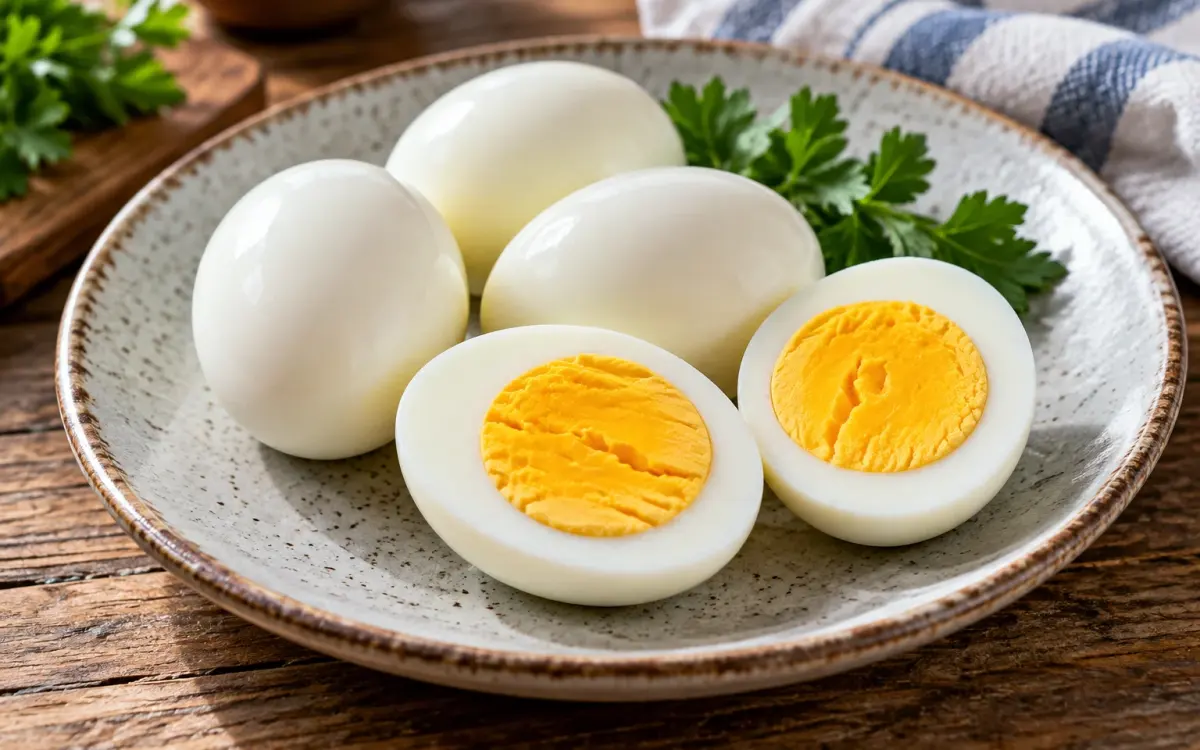
Hard-boiled eggs sound simple, but cracked shells, gray-green yolk rings and shells that tear half the white off are common problems. They all have the same causes: sudden temperature changes, too much time and slow cooling. These seven tricks and a timing chart give you perfect eggs every time.
Timing chart (large eggs, from the moment boiling water covers them)
- 5 to 6 minutes: soft-boiled, runny yolk and just-set white
- 7 minutes: jammy, soft and glossy center, good for ramen and toast
- 8 to 9 minutes: medium, creamy center
- 10 to 11 minutes: firm, fully set but still tender yolk
- 12 to 13 minutes: very firm, best for egg salad and deviled eggs
Add 1 minute for extra-large eggs, subtract 1 for medium, and add 1 to 2 minutes at high altitude.
7 tips for flawless hard-boiled eggs
- Do not crack the shell: if eggs are lowered straight from the fridge into very hot water, they are more likely to crack. Take the eggs out for 10 to 15 minutes first, or use the hot-start method below.
- Start gently: lower the eggs with a spoon into simmering (not fiercely boiling) water, or cover them with cold water and bring to a gentle boil. Violent boiling bumps eggs against the pot and cracks them.
- Add a little salt or vinegar to the water (1 teaspoon of vinegar). If a shell cracks, the egg white sets quickly and does not stream out.
- Use a gentle heat: keep the water at a steady simmer with small bubbles.
- Prick the rounded end: a tiny pinhole in the fat end (where the air pocket sits) lets the air escape and reduces cracking. It also makes peeling easier for some people.
- Time it: use a timer. Overcooking makes the yolk dry and chalky and creates a gray-green ring around it, a harmless reaction between iron and sulfur.
- Chill immediately: move the eggs to a bowl of ice water for 5 to 10 minutes. This stops the cooking, prevents the green ring and makes the shells easier to peel.
Two foolproof methods
- Hot start (easiest to peel): boil water, lower cold eggs in gently with a spoon, set a timer, then cool in ice water. Older eggs and this method peel the best.
- Cold start: put eggs in a pot, cover with cold water by 2 cm, bring to a boil, then cover, turn off the heat and leave for 10 to 12 minutes; cool in ice water. Gentle, but peeling can be harder.
How to peel easily
- Use eggs that are 7 to 10 days old; very fresh eggs stick to the shell.
- Tap the egg all over on the counter, roll it under your palm to crackle the shell, and start peeling from the fat end under a little running water.
- For stubborn eggs, shake them in a jar with a little water.
How to store boiled eggs
- Keep hard-boiled eggs in the refrigerator within 2 hours of cooking.
- In the shell, they keep about 1 week. Peeled eggs keep 3 to 5 days in a closed container with a damp paper towel.
- Do not freeze whole hard-boiled eggs; the whites turn rubbery.
- If a boiled egg smells sulfurous or feels slimy, throw it away.
Ways to use hard-boiled eggs
- Egg salad sandwiches, with yogurt instead of mayonnaise for a lighter version
- Deviled eggs and potato salad
- Chopped over Caesar salad or our classic Caesar
- With herbs and bread as a quick Persian breakfast
- Sliced on toast with avocado, sumac or chives
Egg safety
Fully cooked eggs are safe for everyone. Wash your hands after touching raw eggs, keep eggs refrigerated and discard cracked ones. See our guide to egg health benefits and risks.
Frequently asked questions
Why does my egg yolk have a green ring?
It is from overcooking. It is harmless but looks and tastes less pleasant. Use the timer and ice bath.
Why are some eggs so hard to peel?
Very fresh eggs stick to the membrane. Use week-old eggs and the ice bath.