



🔊 Cook mode: big steps, timers and voice control (say “next”), hands-free.
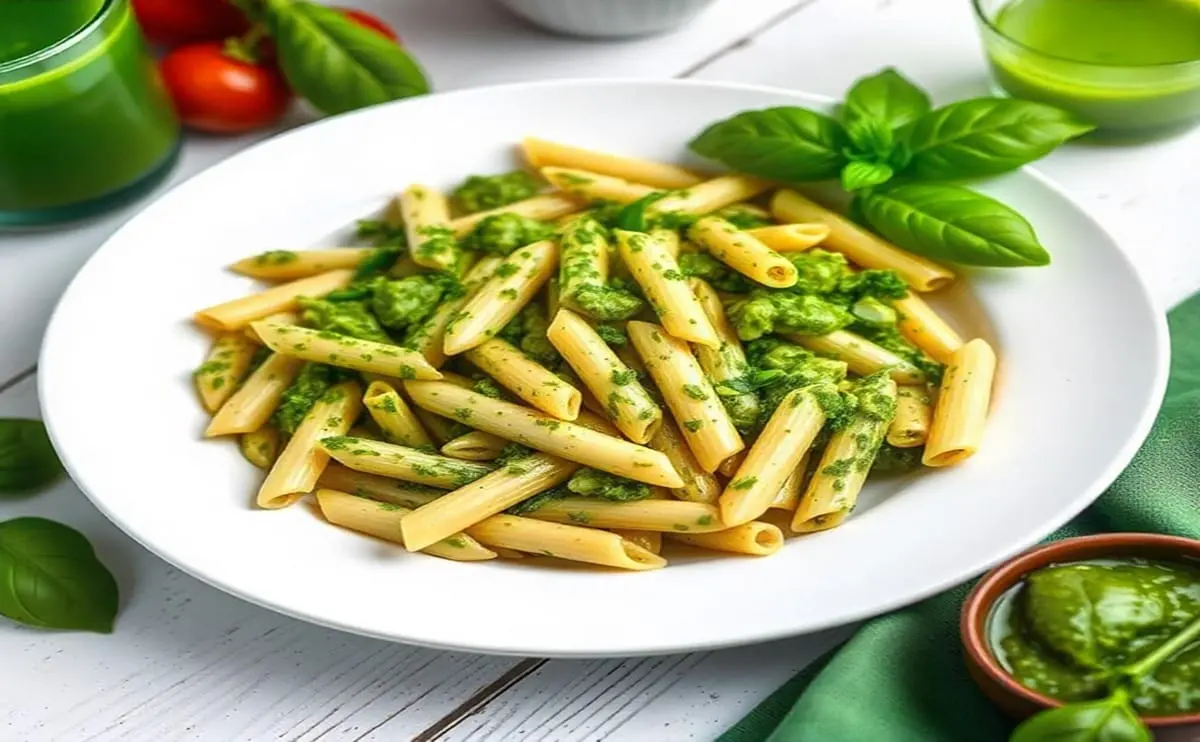
Pesto pasta is one of Italy’s best-known quick dinners. The sauce comes from Liguria in the north-west of the country and is built from fresh basil, garlic, Parmesan, nuts and olive oil, blended into a bright green paste that coats hot pasta. This version suits busy evenings: the sauce needs no cooking and the whole dish is done in about fifteen minutes. The ingredients and method are in the recipe card above; this article covers the details that keep the sauce vivid and the pasta silky.
Why it works
- Raw, fresh sauce. Basil is never cooked in the pan, so its aroma and colour stay bright.
- Fat carries flavour. Olive oil and nuts make the sauce creamy and rich without any cream.
- Salty cheese and lemon. Parmesan adds depth and a little lemon juice lifts the flavour and helps keep the colour.
Tips for a better pesto pasta
- Save pasta water. Before draining, keep a cupful of the starchy cooking water. A few spoonfuls loosen the pesto so it coats every strand instead of clumping.
- Never heat the sauce in the pan. Toss the pesto with the drained pasta off the heat. Direct heat dulls the basil and can make the sauce bitter.
- Use fresh, dry basil. Pat the leaves dry after washing. Wet leaves make a watery sauce.
- Do not over-blend. Pulse until smooth but still slightly textured, and stop before the blades warm the basil.
- Salt carefully. Parmesan is already salty, so taste before adding more.
- Toast the nuts lightly if you want a deeper flavour.
Common mistakes
- Overcooking the pasta. It should stay al dente, because it will soften slightly when tossed with the sauce. See our guide on cooking pasta al dente.
- Rinsing the pasta, which washes away the starch that helps the sauce cling.
- Using too much garlic. Raw garlic is strong, so start with the amount in the recipe.
Variations and substitutions
- Nuts: traditional pesto uses pine nuts, but walnuts, almonds and pistachios all work and are often easier to find.
- Cheese: use Parmesan, or a different hard cheese. For a dairy-free version, use nutritional yeast or leave the cheese out.
- Add protein: grilled chicken or fish makes it a fuller meal for people who need more protein.
- Add vegetables: cherry tomatoes, peas or roasted vegetables go well.
- Lighter pesto: use a little less oil and nuts, and thin the sauce with pasta water. This suits people watching fat intake.
- Allergies: if you avoid nuts, use sunflower or pumpkin seeds instead, and check labels carefully.
Storage and make-ahead
Pesto can be made ahead. Pour a thin layer of olive oil over the surface, cover it and keep it in the fridge, and use it within a few days. Because it contains raw garlic in oil, keep it cold and do not leave it at room temperature for long periods. It also freezes well in small portions, for example in an ice cube tray. Leftover dressed pasta keeps in the fridge for a day or two; add a splash of water when reheating.
Serving ideas
Serve with extra Parmesan, a squeeze of lemon and cracked black pepper, or alongside a green salad. If you enjoy fast pasta dinners, try miso butter pasta or learn how to keep pasta from sticking. For some background, read about the origins of pasta.
Nutrition note
Pesto is calorie-dense because of the oil, nuts and cheese, so a little goes a long way. People watching their fat or salt intake, or with a medical condition, can use smaller amounts and should follow their doctor’s or dietitian’s advice.
FAQ
Why did my pesto turn dark?
Basil darkens when exposed to air or heat. A little lemon juice and a layer of oil on top help keep it green.
Can I use a mortar instead of a blender?
Yes, that is the traditional method. It gives a more textured sauce and takes longer.
Why is my pesto bitter?
Over-blending, very strong olive oil or heated basil can taste bitter. Blend briefly and use a mild oil.
Rezept
Pasta with Pesto Sauce: Quick Italian-Style Pesto Pasta with Nuts
- Vorbereitung
- 5 Min.
- Garzeit
- 10 Min.
- Gesamt
- 15 Min.
- Kalorien
- 370
Zutaten
Zubereitung
Cooking the Pasta: Boil the pasta in salted water for 8-10 minutes until it reaches an “al dente” texture.
Making the Pesto Sauce: In a blender or food processor, combine basil, garlic, Parmesan cheese, walnuts or pistachios, olive oil, salt, and pepper until a smooth sauce forms.
Mixing Pasta and Sauce: Toss the cooked pasta with the pesto sauce and mix well.
Serving: Plate the pasta and optionally sprinkle additional Parmesan cheese on top.
Tipps
- Substitute almonds, pistachios, or even walnuts in the pesto for a unique flavor.
- Use fresh, high-quality basil for the best taste.
- Avoid overcooking the pasta to maintain its texture and avoid stickiness.
- Enhance the flavor by garnishing the pasta with freshly squeezed lemon juice or grated lemon zest before serving.
Nährwerte pro Portion
- Kalorien
- 370
- Eiweiß
- 10 g
- Kohlenhydrate
- 40 g
- Fett
- 24 g
- Ballaststoffe
- 4 g
Geschätzte Werte, nur zur Information.