
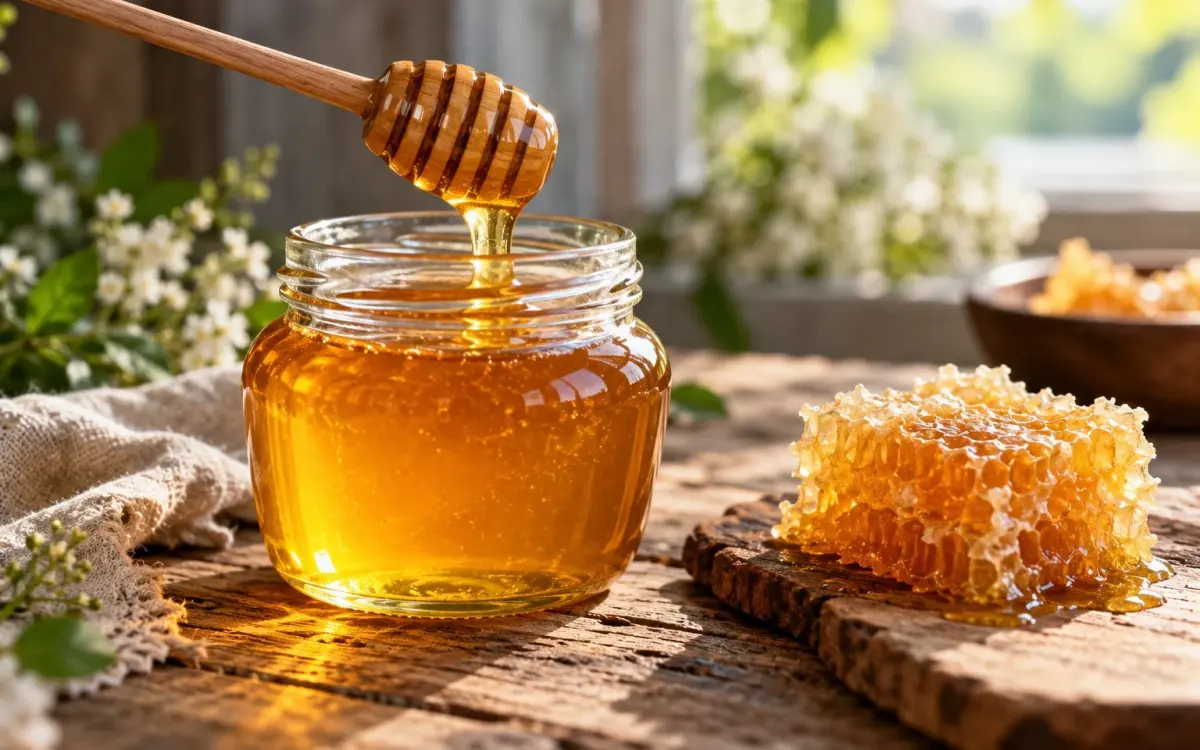
Honey, the sweet natural substance made by bees from flower nectar, has been valued for its culinary and medicinal uses for thousands of years, from ancient Persia and Egypt to Greece and China. Below is a clear look at its benefits, nutrition, risks and how to choose and use it well.
Nutrition (1 tablespoon, about 21 g)
- About 64 calories
- 17 g of sugar, mostly fructose and glucose
- No fat, fiber or protein
- Traces of vitamins and minerals such as vitamin C, calcium, potassium and iron, too small to count as a source
- Plant compounds: flavonoids and phenolic acids, higher in darker honeys such as buckwheat, thyme or forest honey
Possible benefits
- Cough and sore throat: honey coats the throat, and studies suggest 1 to 2 teaspoons can ease night-time cough in children over 1 year about as well as common cough medicines. Stir a spoon into warm (not boiling) water or tea with lemon.
- Wound care: medical-grade honey, such as Manuka honey in sterile dressings, is used by doctors for burns and wounds. Do not put kitchen honey on serious wounds.
- Antioxidants: honey contains antioxidant compounds that help fight free radicals, especially dark honey.
- A better sweetener choice: honey is sweeter than sugar, so you may use a little less. But it is still added sugar and it raises blood sugar.
- Quick energy: its natural sugars are quickly absorbed, useful for athletes.
These benefits are modest. Honey is not a cure for any disease and it should not replace medical treatment.
Risks and drawbacks
- Infant botulism: honey may contain spores of Clostridium botulinum. Never give honey to babies under 12 months, including in foods and on pacifiers. Adults and older children can safely eat it.
- Sugar and weight: a tablespoon has 17 g sugar. Health authorities advise counting honey as added sugar, within 25 to 36 g a day.
- Tooth decay: honey is sticky and feeds mouth bacteria; brush after sweet foods.
- Blood sugar: people with diabetes should count honey as carbohydrate and talk to their doctor.
- Allergies: rare reactions to pollen in honey cause itching, swelling or breathing trouble. People with severe pollen or bee allergies should be careful.
- “Mad honey”: honey from certain rhododendrons in the Black Sea region can cause dizziness and low blood pressure.
Raw vs regular honey
Raw honey is unheated and lightly strained, so it keeps more pollen and enzymes. Regular supermarket honey is usually heated and filtered for a clear, long-lasting texture. Both have similar sugars. Raw honey is not safer; the same botulism and sugar warnings apply to both.
How to choose and spot fake honey
- Read the label: it should say 100% honey with no added syrups. Prefer local beekeepers or trusted brands, with the country and type of flower.
- Real honey crystallizes over time; this is natural. Warm the jar in a bowl of warm water (below 40°C) to make it liquid again.
- Very cheap, perfectly clear honey that never crystallizes may be diluted with syrup. Home tests (water, flame or thumb tests) are unreliable; lab tests are needed.
Storage
Keep honey in a tightly closed jar at room temperature, away from heat and water. It does not need the fridge and keeps for years. Do not heat above 40 to 45°C if you want to keep its aroma and enzymes.
Ways to use honey in the kitchen
- Drizzle on yogurt, oatmeal, toast or pancakes
- In dressings and marinades with mustard, lemon or garlic
- In baking and desserts such as the Persian sohan or sweets with nuts and cardamom
- With ginger and lemon in warm tea for a sore throat
- With walnuts on baked pears with yogurt
Frequently asked questions
Is honey healthier than sugar?
Slightly, because of antioxidants and a lower glycemic index in some types, but it is still sugar.
Can I give honey to a child with a cough?
Yes, from 1 year of age; never under 12 months.
This is general information, not medical advice.