
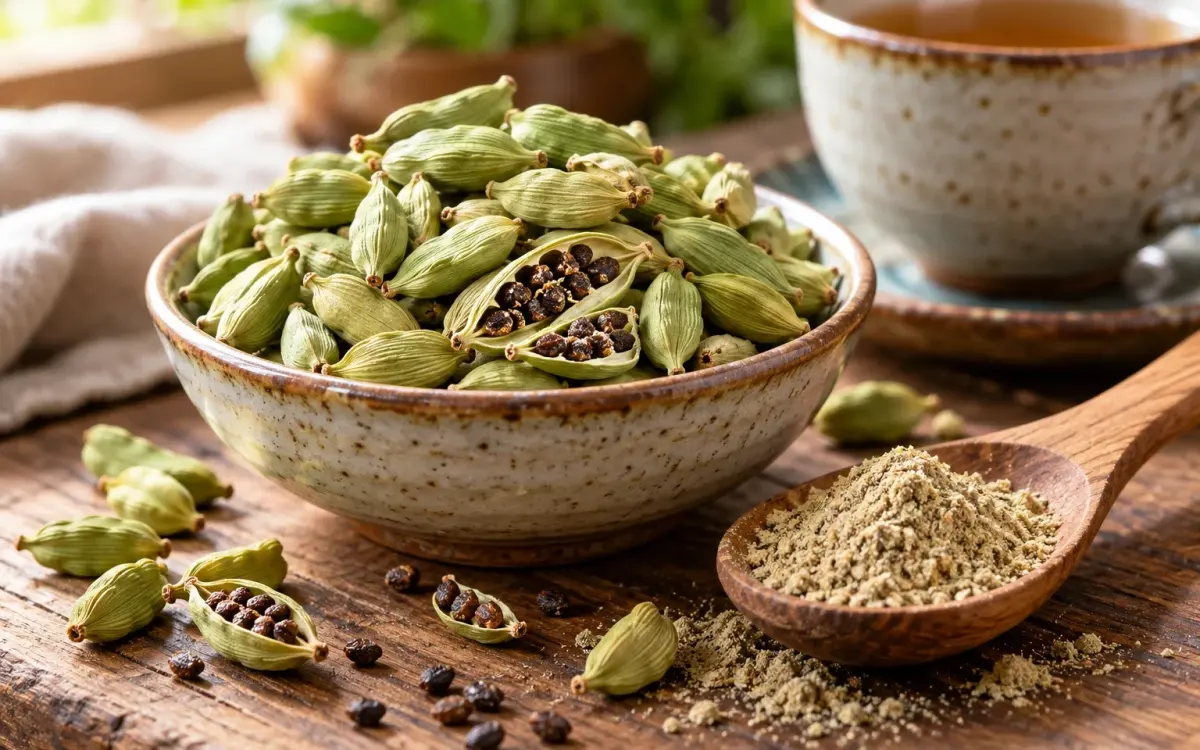
Cardamom, often called the “queen of spices”, is the dried seed pod of a plant in the ginger family, native to southern India. It has a warm, sweet, slightly citrusy and minty aroma, and it is one of the most loved spices in Persian, Arab, Indian and Scandinavian cooking. It is also one of the most expensive spices by weight, after saffron and vanilla, because the pods are picked by hand.
Green vs black cardamom
- Green cardamom: small, pale green pods with a sweet, floral aroma. This is the cardamom used in tea, coffee, rice and desserts.
- Black (brown) cardamom: large, dark, wrinkled pods dried over fire, with a smoky, camphor-like taste. Used in savory Indian and Chinese dishes, not in sweets.
- White cardamom: green pods that have been bleached; milder in flavor.
Possible benefits
- Digestion: traditionally used to ease bloating, indigestion and heartburn; a pod after a heavy meal is a common habit in Iran and India.
- Fresh breath: chewing a pod freshens the mouth, and its oils may help with odor-causing bacteria.
- Antioxidants: it contains plant compounds such as cineole and terpinene that help protect cells.
- Blood pressure and blood sugar: small studies using cardamom powder suggest possible modest effects, but evidence is limited and doses were larger than normal cooking amounts.
- A warming, relaxing aroma: popular in teas for colds and for relaxing in the evening.
The amounts we eat in cooking are small, so cardamom is a flavorful addition to a healthy diet rather than a medicine.
Cardamom in Persian cooking
- Tea: one or two pods in the teapot give Persian tea its famous aroma.
- Rice: a few pods in the pot with polo, or ground with saffron in sholeh zard.
- Sweets: ground cardamom flavors Persian love cake, pumpkin halva, nan-e berenji and many cookies, often with rose water.
Easy ways to use cardamom
- Add 1 to 2 lightly crushed pods to black tea or coffee while it brews (Arabic coffee is spiced with cardamom).
- Simmer pods in milk for chai, rice pudding or hot chocolate.
- Use ground cardamom in cakes, cinnamon rolls, banana bread and oatmeal.
- Add it to spice blends such as garam masala, curries and biryani.
- Stir a pinch into yogurt with honey, or into fruit salad.
How much to use
Cardamom is strong. Start with 2 to 3 pods or ¼ to ½ teaspoon of ground cardamom for a dish for four people, or a cake. One teaspoon of ground cardamom equals about 12 to 15 pods. Too much tastes medicinal and bitter.
How to buy and prepare it
- Buy whole green pods; they keep their aroma far longer than powder, which loses flavor within weeks.
- Choose plump, bright green pods without splits.
- For the best flavor, crack the pods, remove the small black seeds and grind them in a mortar just before using. Discard the papery husks or add them to tea.
- Lightly toasting the pods in a dry pan for 1 minute deepens the aroma.
Storage
Store whole pods in an airtight jar away from light and heat; they keep good flavor for up to a year. Ground cardamom is best used within 2 to 3 months.
Who should be careful?
- Culinary amounts are safe for most people.
- People with gallstones should avoid large amounts, since cardamom seeds may trigger gallbladder spasms.
- Pregnant and breastfeeding women should keep to normal food amounts and avoid supplements.
- Talk to a doctor before taking cardamom supplements if you take medicines such as blood thinners.
Frequently asked questions
Can I eat the whole pod?
It is safe, but the husk is fibrous. Usually only the seeds are eaten, or the pod is removed before serving.
What can I use instead of cardamom?
No spice tastes the same. A mix of cinnamon and a little nutmeg or ginger is the closest in sweets.
This is general information, not medical advice.