
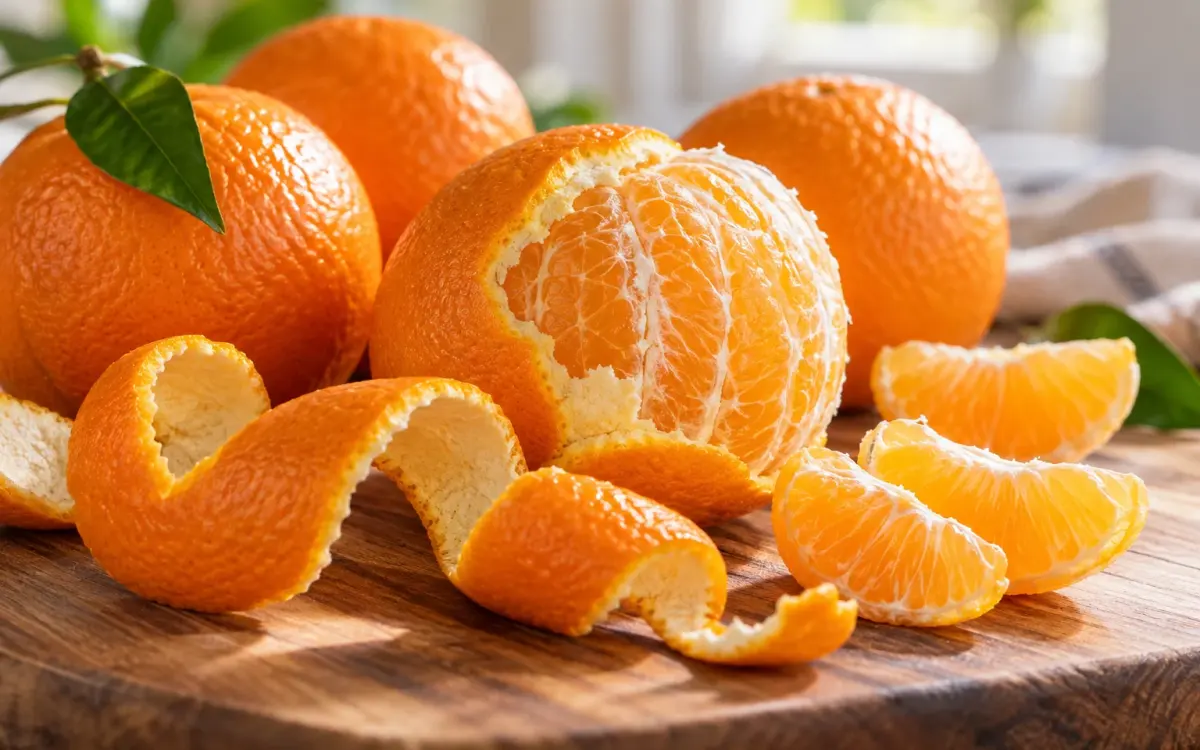
Orange peel is often thrown away because of its bitter taste, but it holds more fiber, vitamin C and plant compounds than the juicy fruit inside. In Persian cooking it is a treasured ingredient: candied and slivered orange peel (nargas or khalal-e porteghal) crowns jeweled rice, and dried peel flavors stews and teas. Used carefully, it is a flavorful, low-waste way to get more from an orange.
What orange peel contains (per 100 g, approximate)
- About 97 calories
- 10.6 g of fiber, much more than the flesh
- Vitamin C: about 136 mg, nearly 3 times more than the flesh, per gram
- Flavonoids such as hesperidin and naringin, and polyphenols
- Limonene, the essential oil that gives zest its aroma
- Calcium, potassium and magnesium in small amounts
A typical serving is only a teaspoon of zest or a few slivers of peel, so the real nutrition you get is small; peel adds flavor first and a little extra nutrition second.
Possible benefits
- Antioxidants: flavonoids and polyphenols help protect cells from oxidative stress.
- Anti-inflammatory effects: lab and animal studies show anti-inflammatory activity; human evidence is limited.
- Antimicrobial effects: peel extracts have shown activity against some microbes in the lab; this does not mean peel treats infections.
- Digestive support: the fiber, including pectin, supports digestion and the gut microbiome.
- Cholesterol: small studies on citrus peel flavonoids (such as polymethoxylated flavones) suggest a possible lowering of LDL; more research is needed.
- Immune support: vitamin C contributes to normal immune function.
Orange peel is a flavorful addition to a healthy diet, not a medicine.
Safety first: wash and choose well
- Citrus peel can carry pesticide residues and wax. Choose organic or unwaxed oranges when you plan to eat the peel.
- Scrub the whole orange under warm running water with a brush and a drop of dish soap, then rinse and dry; or soak in a bowl of water with a spoon of baking soda for 10 minutes.
- Remove only the colored zest. The white pith is bitter, and large amounts of peel are hard to digest.
- Eat peel in small amounts, such as a teaspoon of zest or a few slivers.
How to use orange peel
- Zest: grate the orange part with a microplane into cakes, cookies, yogurt, salad dressings and rice. See our Persian yogurt cake.
- Dried peel: dry strips in the oven at 80 to 100°C for 1 to 2 hours, or in the sun, then grind into powder for spice mixes, stews and tea.
- Tea: steep a strip of dried peel with cinnamon and ginger in hot water for 10 minutes.
- Candied peel (nargas): boil strips 3 times in fresh water to remove bitterness, simmer in sugar syrup until translucent, then dry. Use on rice, desserts and cakes.
- Orange sugar: blend zest with sugar and use in baking and tea.
- Cleaning: citrus peel in vinegar makes a natural kitchen cleaner (not for food).
Storage
Freeze zest in a small bag for up to 6 months and grate straight from the freezer. Store dried peel in an airtight jar away from light for up to a year.
Who should be careful?
- People with citrus allergy or contact dermatitis from citrus oils
- Those who take certain medicines; bitter orange (Seville) peel and grapefruit can interact with medicines. Ask a pharmacist; sweet orange is generally less of a concern
- People with reflux, since citrus can worsen heartburn
- People who are sensitive to fiber or with sensitive guts; start with small amounts
- Do not eat peel from unknown, heavily sprayed or waxed oranges
Frequently asked questions
Can I eat the whole orange peel?
It is edible but tough and bitter. Use small amounts of zest or candied peel instead.
Is dried orange peel good for weight loss?
There is no proof. It adds flavor with few calories, nothing more.
This is general information, not medical advice.