

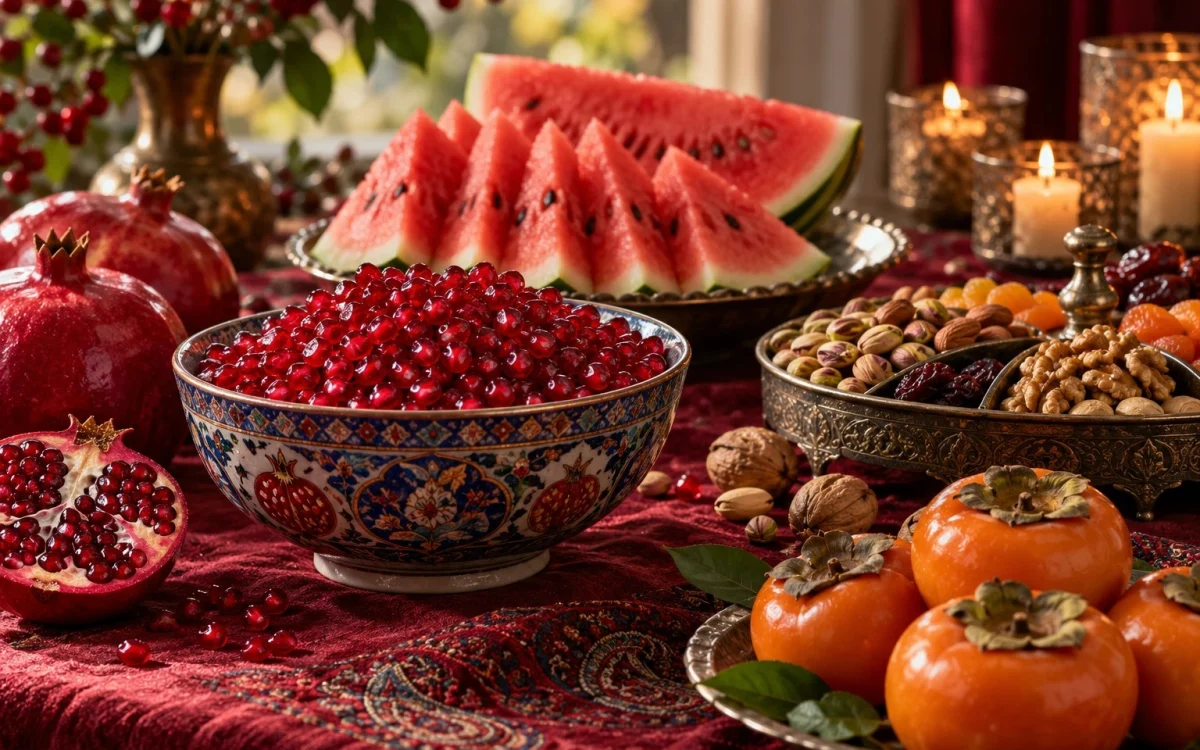
Yalda Night, the longest night of the year, is Persian hospitality at its warmest: family gathered around a korsi or a crowded table, fruit and nuts passed from hand to hand, and poetry read late into the evening. This year it falls on December 21, and planning a few weeks ahead turns a stressful host into a relaxed one. Here is a practical plan for a Yalda table that looks generous, tastes balanced and does not keep you in the kitchen all night.
The classic Yalda foods and what they mean
- Pomegranate: the red jewel of the night, a symbol of life and dawn. Serve the seeds in a bowl with a little sugar or a squeeze of lime, or sprinkle them over salads and rice.
- Watermelon: traditionally kept from summer to bring its warmth into winter. If you cannot find a good one, a platter of persimmon, oranges and pomegranate does the job beautifully.
- Ajil (mixed nuts and dried fruit): roasted almonds, pistachios, hazelnuts, walnuts, raisins, dried mulberries and apricots. Buy the nuts raw and roast them yourself for much better flavour.
- Sweets: dates, halva, noghl and baklava, plus honey-sweetened pastries to go with tea.
A simple menu plan
- Starter: a plate of fresh herbs (sabzi khordan), feta, walnuts and warm flatbread, with a yogurt and cucumber dip.
- Main: chicken fesenjan with saffron rice. It tastes better when made a day ahead, so it takes the pressure off the evening.
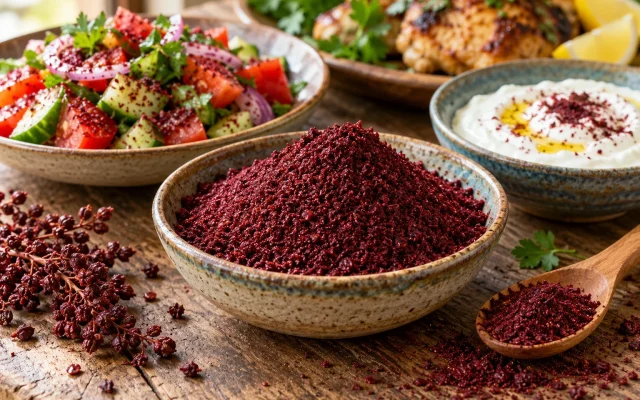
- Side: a pomegranate, orange and red onion salad with olive oil, mint and a little sumac to cut the richness of the stew.
- Dessert and fruit: watermelon or persimmon, pomegranate, dates, plus tea or a spiced hot drink.
Make-ahead timeline
- One week before: buy nuts, dried fruit, tea and decorations. Pomegranates and persimmons keep well in a cool place.
- Two days before: roast and cool the nuts; store them in airtight jars. Seed the pomegranates and refrigerate in a covered container.
- The day before: cook the stew, cool it quickly and refrigerate. Wash and dry herbs and wrap them in a clean towel.
- On the night: reheat gently, steam the rice, assemble the salad just before serving and arrange the fruit.
Setting the table
Keep the colours warm: red pomegranates, orange persimmons and green herbs against a plain cloth already look festive. Place nuts and fruit in several small bowls rather than one large one, so guests can reach them easily. A few candles and a book of Hafez poetry finish the scene.
Tips from the kitchen
- To seed a pomegranate without mess, score the skin, break it open under a bowl of water and the seeds will sink while the white pith floats.
- Roast nuts at 160 °C (320 °F) for 8 to 12 minutes, stirring once; they keep crisping as they cool.
- Offer a non-sugary choice too: unsweetened tea, sliced citrus and plain nuts suit guests who prefer lighter foods.
- Check for nut allergies before the evening and keep a small nut-free dish aside if needed.
Storage
Seeded pomegranate keeps 4 to 5 days in the fridge. Roasted nuts last about two weeks in a sealed jar. Leftover fesenjan keeps 3 days refrigerated and freezes well for up to 2 months.

دیدگاهها