
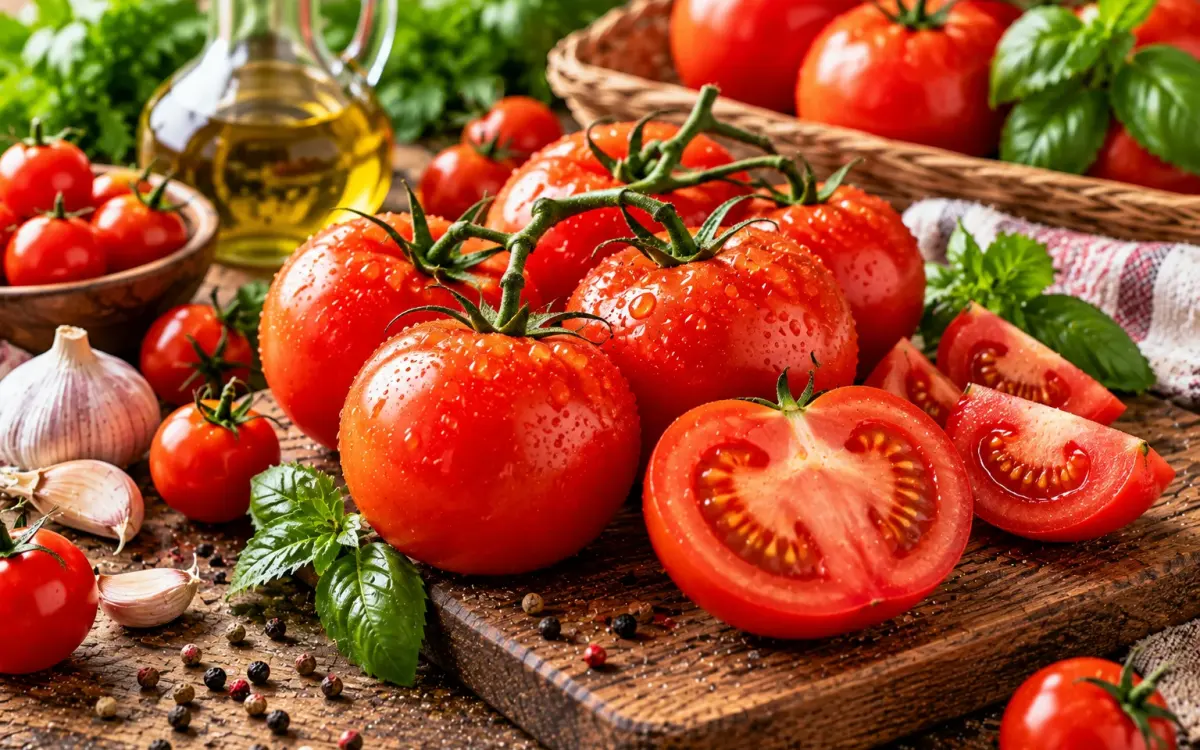
Lycopene is the red pigment in tomatoes and one of the most studied antioxidants in food. Tomatoes and tomato products such as paste, passata and sauce are the main source of lycopene in most diets, so they are a simple way to add it. Persian cooking uses tomato paste in countless stews and rice dishes, which makes it an easy habit to build on.
What is in a tomato (per 100 g, raw, approximate)
- About 18 calories and 95% water
- Lycopene: about 2.5 mg raw, up to 15 to 30 mg in tomato paste
- Vitamin C, vitamin K, potassium and folate
- Beta-carotene (a vitamin A precursor), naringenin and chlorogenic acid
- 1.2 g fiber
What research suggests
- Antioxidant action: lycopene helps neutralize free radicals, which are linked to cell damage and aging.
- Heart and vessels: diets rich in tomatoes are associated with better blood pressure, healthier cholesterol levels and lower inflammation, though most evidence comes from observational studies.
- Cancer risk: some studies link lycopene-rich diets with a lower risk of certain cancers, especially prostate cancer. Results are mixed and more research is needed, so tomatoes are not a treatment.
- Skin: lycopene may offer mild protection against sun damage, but it never replaces sunscreen.
- Eyes: lycopene and other carotenoids support eye health as part of a balanced diet.
How to absorb more lycopene
- Cook the tomatoes. Heat breaks down the cell walls and changes lycopene into a form the body absorbs better. Cooked tomatoes, paste and sauce give 2 to 4 times more usable lycopene than raw ones.
- Add a little fat. Lycopene dissolves in fat, so olive oil in the sauce or salad helps your body absorb it.
- Choose ripe, deep-red tomatoes. They have more lycopene than pale ones. Tomatoes ripened on the vine are better than hard, pale winter tomatoes.
- Use tomato paste. Fry the paste in oil for 2 minutes to deepen flavor and lycopene availability.
- Pair with other carotenoid foods such as peppers and carrots.
Easy ways to eat more
- Tomato soup, such as our tomato soup with fresh tomatoes, or a simple tomato sauce with olive oil
- Tomato and egg breakfast (nargesi or omelet), or roasted tomatoes on toast
- Fresh tomato salad dressed with olive oil, such as Shirazi salad
- Stews and rice dishes made with tomato paste, like pasta sauces and Persian khoresh
- Grilled tomatoes (kabab-e gojeh) next to kebab
- Sun-dried tomatoes in salads and sandwiches
How to store tomatoes
Keep ripe tomatoes at room temperature, stem side down, away from direct sun and use within a few days; cold slows ripening and dulls flavor. Refrigerate only fully ripe, cut or very soft tomatoes and bring to room temperature before eating. Freeze whole or chopped tomatoes for sauces, and homemade passata for up to 6 months.
Who should be careful
- Tomatoes are acidic and can worsen heartburn or acid reflux in some people.
- A few people are allergic or sensitive to them, including those with oral allergy syndrome to grass pollen.
- If you have kidney disease and a potassium limit, ask your doctor about tomato products, because paste is rich in potassium.
- Canned tomato products can be high in salt; choose “no salt added” and check labels.
- Very large amounts of lycopene (over many weeks) can tint the skin orange, which is harmless.
Frequently asked questions
Are lycopene supplements as good as tomatoes?
Food is the better choice. Studies of supplements have been less promising, and tomatoes provide fiber and other nutrients.
Are canned tomatoes healthy?
Yes. They are rich in lycopene, as long as you choose low-salt versions.
Tomatoes support a healthy diet, but they work best as part of a varied diet with other vegetables, fruit and whole grains. This is general information, not medical advice.