

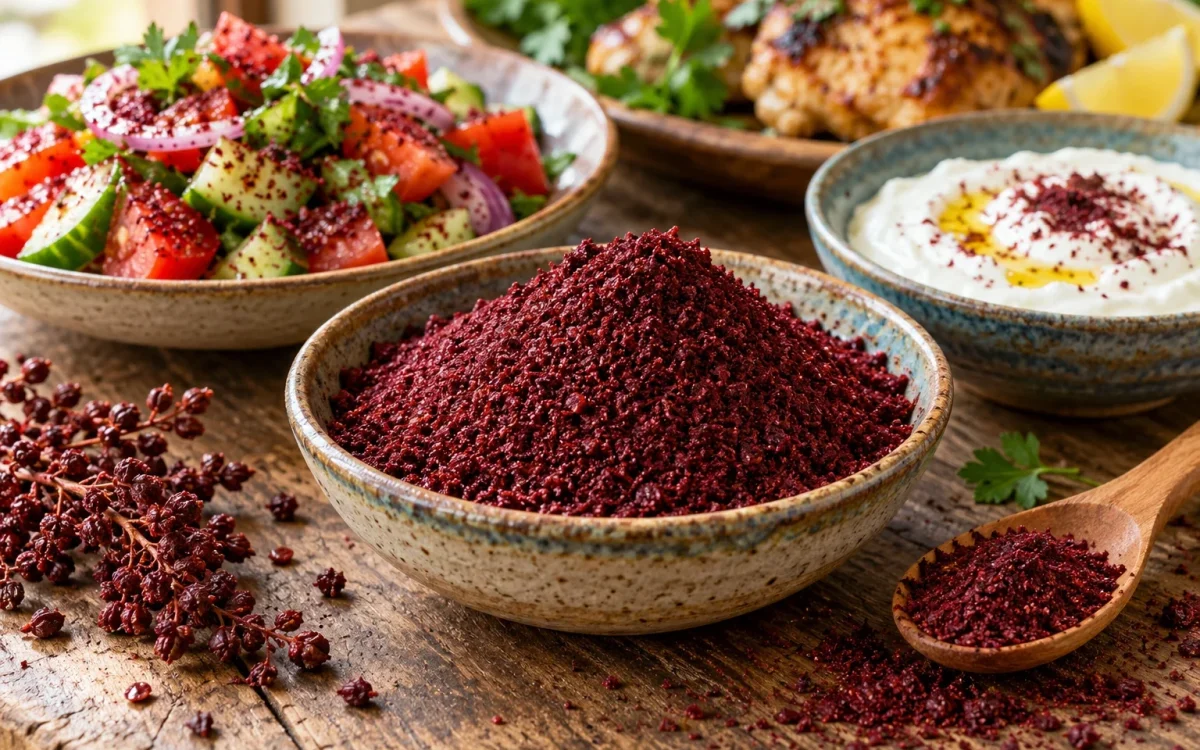
Sumac is a deep red spice made from the dried, ground berries of the sumac bush (Rhus coriaria). It has a bright, lemony tang and a light fruity note, and it is one of the most important seasonings in Persian, Turkish, Lebanese and other Middle Eastern kitchens. Because it is dry, it adds sourness without making food wet or soggy, which is why cooks sprinkle it over salads, grilled meat and rice at the very end.
What does sumac taste like?
Good sumac tastes tart and slightly fruity, a little like lemon zest mixed with red berries. It is not hot or spicy. Most ground sumac sold in shops also contains a little salt, which helps it keep its color, so taste your dish before adding more salt.
How sumac is used in Persian cooking
In Iran, a small bowl of sumac sits on the table next to almost every plate of kebab. People sprinkle it over kebab koobideh, joojeh kebab and the buttery saffron rice served with them. The tang cuts through the richness of grilled meat and butter. Sumac is also mixed with sliced raw onion and parsley as a quick side for kebab.
Where to use sumac
- Salads: Sprinkle over cucumber, tomato and onion salad such as Shirazi salad, or over a green salad with olive oil. It is the signature spice in Lebanese fattoush.
- Chicken: Rub into chicken thighs with garlic, olive oil and lemon before grilling or roasting.
- Yogurt: Stir a pinch into thick plain yogurt with a little grated garlic for a quick dip.
- Vegetables: Finish roasted eggplant, cauliflower or potatoes with a dusting of sumac.
- Eggs: Sprinkle over fried or scrambled eggs instead of black pepper.
- Rice and grains: Mix into rice, bulgur or couscous for color and a mild sour note.
- Onions: Toss thin red onion slices with sumac and salt; serve with grilled meat or in wraps.
How much sumac to use
Start with about 1 teaspoon for a salad for four people, or 1 to 2 teaspoons per 500 g of meat in a marinade. For finishing grilled meat or rice, a light pinch per plate is enough. You can always add more at the table.
Sumac in a marinade: simple chicken
- Mix 3 tablespoons olive oil, 2 grated garlic cloves, the juice of half a lemon, 2 teaspoons sumac, 1 teaspoon salt and some black pepper.
- Coat 600 g of boneless chicken thighs and leave in the fridge for 1 to 4 hours.
- Grill or roast at 220°C for about 20 to 25 minutes, until the inside reaches 74°C.
- Finish with another light sprinkle of sumac and chopped parsley.
A simple sumac salad
Combine chopped tomatoes, cucumber, red onion and parsley. Dress with olive oil and lemon juice, then finish with 1 teaspoon of sumac and salt to taste. Serve right away so the vegetables stay crisp.
Sumac substitutes
If you have no sumac, use finely grated lemon zest with a little salt. It gives a similar fresh sourness, though without the red color and fruity depth. A few drops of lemon juice also work in wet dishes, but not as a dry finishing spice.
How to buy good sumac
Good sumac is vivid red or deep burgundy and smells tart and fresh. Pale, brown or dusty powder is old and has lost its flavor. Buy from a Middle Eastern or Persian grocery or a spice shop with fast turnover. Check the label: some cheap blends add a lot of salt or color.
How to store sumac
Keep sumac in a sealed glass jar in a cool, dark cupboard. Light and heat fade its color and tang. It keeps its best flavor for about 6 months to a year.
Is sumac safe?
Culinary sumac (Rhus coriaria) is a common, safe food spice. It is not the same plant as poison sumac, which has white berries and is never sold as food. People with an allergy to cashews or mangoes, which belong to the same plant family, should ask their doctor before trying it.
Frequently asked questions
Is sumac spicy?
No. Sumac is sour and fruity, not hot.
Can I cook sumac or only sprinkle it?
Both. It works in marinades and dressings, but its fresh tang is strongest when you add it at the end.
Is sumac the same as za’atar?
No. Za’atar is a blend that usually contains thyme, sesame seeds and sumac.


Comments