

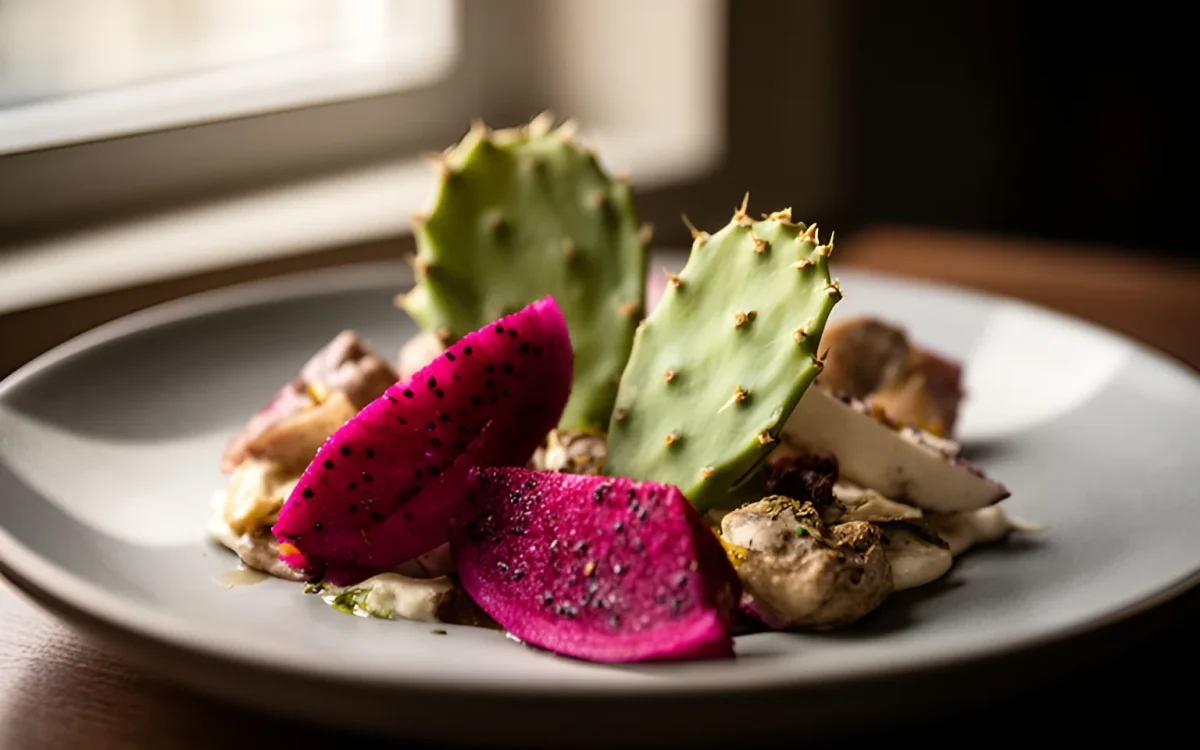
Prickly pear, also called cactus pear or tuna in Spanish, is the fruit of the Opuntia cactus. The flat green pads of the same plant are called nopales and are eaten as a vegetable in Mexico. The fruit is naturally sweet, very colorful and low in calories, which is why it now appears in juices, sorbets, gummies and “superfood” drinks around the world.
What does prickly pear taste like?
The flesh is juicy and mildly sweet, with a flavor somewhere between watermelon, pear and bubblegum. Red and purple fruits are usually sweeter and more aromatic than green or yellow ones. The flesh is full of small hard seeds that are edible but crunchy.
Nutrition (approximate, per 100 g of fruit)
- About 40 to 45 calories
- About 3 to 4 g of fiber, much of it from the seeds
- Vitamin C (roughly 15% of daily needs)
- Magnesium, potassium and calcium in small amounts
- Betalains, the red and yellow plant pigments that act as antioxidants
Possible benefits
- Hydration and low calories: the fruit is mostly water, so it is a light, refreshing snack.
- Fiber: supports digestion and fullness.
- Antioxidants: betalains and vitamin C help protect cells from damage.
- Blood sugar: some small studies on the cactus pads (nopales) suggest a lower rise in blood sugar after meals. Results are early and not strong enough to treat diabetes.
- Hangover claims: one small study found fewer hangover symptoms with a prickly pear extract, but this is not proven and is no reason to drink more.
Possible risks
- Spines: the skin has tiny hair-like spines (glochids) that get into fingers and are hard to remove. Wear gloves when peeling.
- Digestive upset: eating a lot can cause bloating or loose stools. Eating very large amounts of the seeds has, rarely, caused bowel blockage.
- Blood sugar medicine: it may lower blood sugar. If you take diabetes medicine, talk to your doctor before eating it or its supplements regularly.
- Red urine: the pigment can turn urine and stool red. It is harmless but can be confused with blood.
- Supplements: capsules and extracts are less studied than the fruit. Avoid them in pregnancy and while breastfeeding unless your doctor agrees.
How to choose a ripe prickly pear
Choose fruit with deep, even color that gives slightly when pressed, like a ripe avocado. Avoid fruit with soft dark spots or mold. Many shops sell them with the spines already brushed off, but always assume a few are left.
How to peel it safely
- Wear thick gloves and hold the fruit with tongs or a fork.
- Rinse it under running water and rub with a brush to remove loose spines.
- Cut off both ends.
- Make a shallow cut along the length, just through the skin.
- Slide your thumb (in a glove) or a knife under the skin and peel it back in one piece.
- Slice the flesh or chill it first; it tastes best cold.
Easy ways to eat prickly pear
- Fresh: chilled slices with a squeeze of lime and a pinch of salt or chili.
- Juice or agua fresca: blend the flesh with cold water and lime, then strain out the seeds.
- Fruit salad: mix with mango, melon and mint.
- Sorbet or popsicles: blend, strain, sweeten lightly and freeze.
- Syrup: simmer strained juice with a little sugar for drinks, yogurt or pancakes.
How to store it
Keep ripe fruit in the fridge for up to a week. Peeled flesh keeps in a sealed container for 2 to 3 days, and strained juice can be frozen for up to 3 months.
Frequently asked questions
Can you eat the seeds?
Yes, they are edible, but they are hard. Swallow them whole or strain them out for drinks.
Is prickly pear good for diabetes?
It is a low-calorie fruit with fiber, but it is not a treatment. Talk to your doctor if you take blood sugar medicine.
Are nopales and prickly pear the same?
They come from the same cactus. Nopales are the pads, eaten as a vegetable; prickly pear is the fruit.
This article is general information, not medical advice.



Comments