

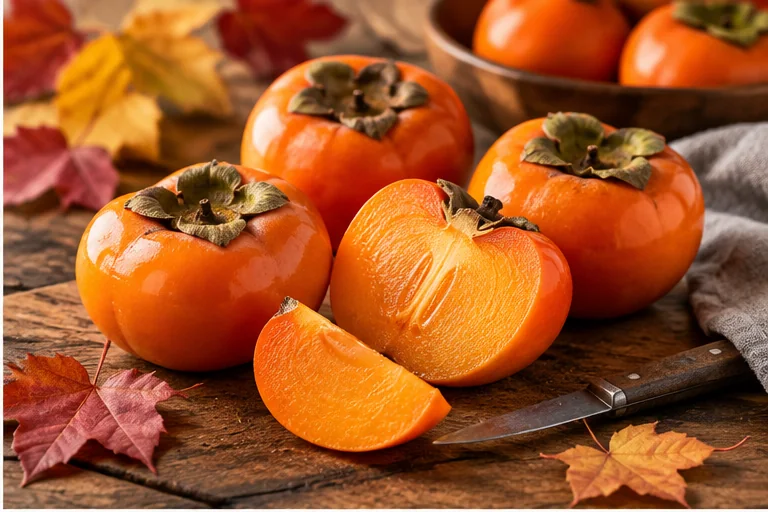
Persimmons are at their best in the cool months, and they are showing up in markets right now. Sweet, honey-like and soft, this orange fruit is easy to enjoy fresh, yet many people are unsure which type to buy, when it is ripe, and who should eat less of it. This guide covers the essentials.
What Is in a Persimmon?
A medium persimmon (about 170 g) provides roughly 120 calories, mostly from natural sugars, along with about 6 g of fiber. It is a good source of vitamin A (from carotenoids such as beta-carotene), contains vitamin C, manganese and potassium, and offers plant compounds called polyphenols. Values vary by variety and size.
Possible Benefits
- Fiber for digestion: the fiber supports regular bowel movements and fullness.
- Carotenoids: the body converts them to vitamin A, which supports normal vision and skin.
- Vitamin C and antioxidants: they contribute to a varied, protective diet, though no single fruit prevents illness.
- Naturally low in fat and sodium: a practical swap for packaged sweets.
Two Main Types
Fuyu (non-astringent): squat and firm, like a tomato. It can be eaten crisp, like an apple.
Hachiya (astringent): acorn-shaped. It is very bitter and mouth-drying until completely soft and jelly-like. Eat it only when fully ripe.
How to Choose and Ripen
- Pick fruit with smooth, glossy skin and a green, intact calyx (leaf cap).
- Firm fuyu are ready to eat. Hachiya must feel like a water balloon.
- To speed ripening, keep fruit in a paper bag with a banana or apple at room temperature for a few days.
- Ripe fruit keeps in the refrigerator for about 3 to 5 days.
Easy Ways to Eat Persimmon
Ingredients for 2 servings: Persimmon Yogurt Bowl
- 2 ripe persimmons (fuyu or soft hachiya)
- 1 cup plain yogurt
- 2 tablespoons chopped walnuts
- 1 teaspoon honey (optional)
- A pinch of cinnamon
Steps
- Wash the persimmons, remove the calyx and slice (fuyu) or scoop out the pulp (hachiya).
- Divide the yogurt between two bowls.
- Top with persimmon, walnuts and a light drizzle of honey.
- Finish with cinnamon and serve right away.
More Ideas
- Add thin fuyu slices to a green salad with arugula, feta and pomegranate.
- Blend soft persimmon into a smoothie with milk or yogurt.
- Bake slices briefly with cinnamon for a warm dessert.
Who Should Be Careful
- People with diabetes: persimmons contain natural sugar. Keep portions modest and pair with protein such as yogurt or nuts; ask your doctor about your own limits.
- People after stomach or intestinal surgery: unripe, tannin-rich persimmons have been linked to rare cases of bezoars (hardened masses in the stomach). Never eat unripe astringent fruit.
- Anyone on a potassium-restricted diet should check with their healthcare provider.
- Do not eat the seeds or calyx, and introduce the fruit gradually if you are prone to digestive upset.
Bottom Line
Persimmon is a sweet, fiber-rich seasonal fruit that works well in breakfasts, salads and light desserts. Choose the right type, eat it fully ripe when astringent, and enjoy it as part of a varied diet.



دیدگاهها