
Onions are one of the most used ingredients in the world. Almost every savory cuisine starts with them, from Persian stews and Indian curries to French soups and Mexican salsas. They add sweetness, depth and aroma, and they are also a cheap source of useful nutrients and plant compounds.
What onions contain (per 100 g, raw, approximate)
- About 40 calories
- 1.7 g fiber, including prebiotic fibers (inulin and fructo-oligosaccharides) that feed healthy gut bacteria
- Vitamin C (about 8% of daily needs), vitamin B6 and folate
- Potassium and manganese
- Antioxidants: quercetin (highest in red and yellow onions, especially in the outer layers) and sulfur compounds that give onions their sharp smell
Possible benefits
- Heart health: quercetin and sulfur compounds are linked with healthier blood pressure and cholesterol in some studies. Effects are modest.
- Gut health: prebiotic fibers support the beneficial bacteria in the gut.
- Blood sugar: onions have a low glycemic load, and some small studies suggest onion compounds may help with blood sugar control.
- Immune support: vitamin C and antioxidants contribute to normal immune function.
- Bones: observational studies link regular onion eating with better bone density in older women, but this does not prove cause and effect.
- Less salt: well-cooked onions add so much flavor that dishes need less salt.
Onions are a healthy part of the diet, not a medicine.
Which onion to use
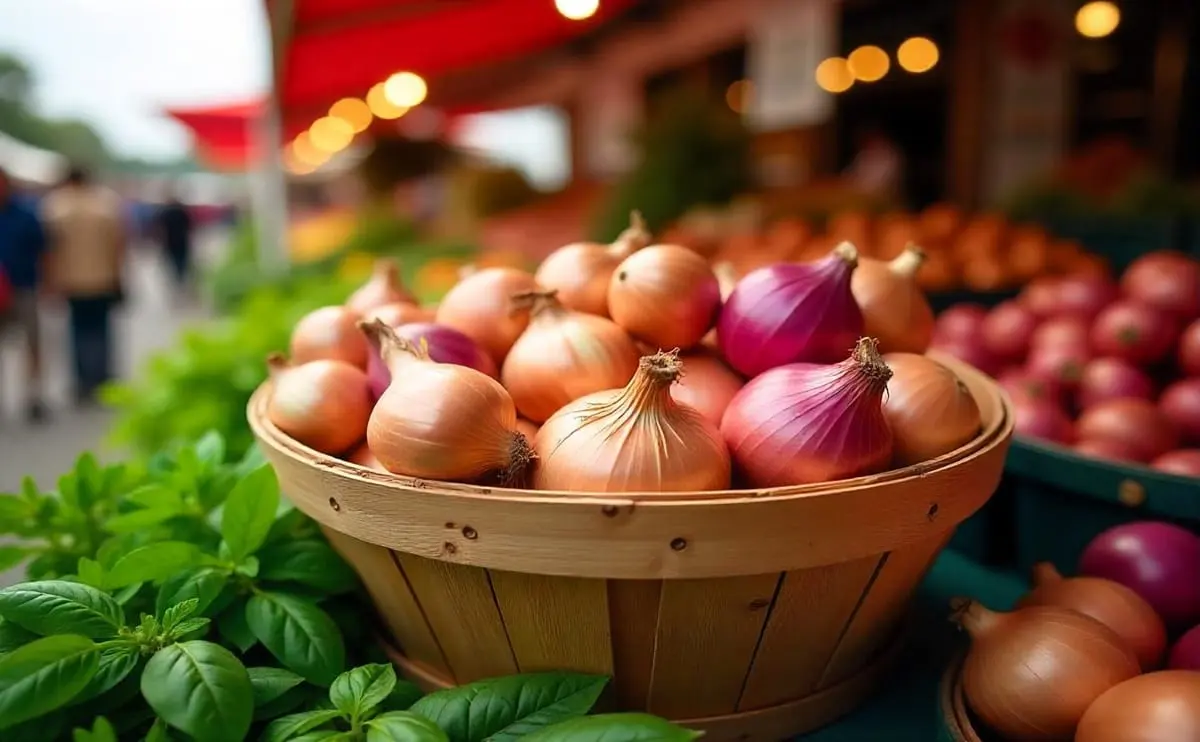
- Yellow (brown) onions: the all-purpose onion; best for stews, soups and caramelizing.
- Red onions: milder and colorful; best raw in salads such as Shirazi salad, on burgers and pickled. They have the most antioxidants.
- White onions: sharp and crisp; common in Mexican food and quick stir-fries.
- Sweet onions: very mild; good raw or grilled.
- Shallots: small and delicate; for sauces and dressings.
Raw vs cooked
Raw onion keeps more vitamin C and sulfur compounds. Cooked onion is sweeter, milder and easier on the stomach, and quercetin survives cooking well. Both are healthy; eat them the way you enjoy most. To soften the bite of raw onion, soak slices in cold water for 10 minutes, or toss them with salt, lemon juice or sumac.
Onions in Persian cooking
Persian cooks use onions in three ways: grated into kebab marinades and koobideh, slowly fried with turmeric as the base of almost every khoresh, and fried crisp as piaz dagh on top of soups and dips. Raw onion wedges are also served with kebab.
How to cut onions without tears
- Chill onions for 15 to 30 minutes before cutting.
- Use a very sharp knife; a dull knife crushes more cells and releases more of the tear gas.
- Leave the root end on until the end; it holds the most irritating compounds.
- Cut near a running exhaust fan or an open window.
Storage
- Store whole onions in a cool, dark, dry and airy place, such as a basket or mesh bag, for 1 to 2 months.
- Keep onions away from potatoes; they make each other spoil faster.
- Sweet onions keep less well; store them in the fridge wrapped in paper.
- Keep cut onions in a closed container in the refrigerator for 7 to 10 days.
- Chopped onions freeze well for cooking for up to 6 months.
Who should be careful
- People with IBS or sensitive digestion may have gas or bloating from onions, because of their fructans. Low-FODMAP diets limit them.
- Onion can worsen heartburn in some people, especially raw.
- Onion breath: chewing fresh parsley or mint can help.
- Onions are toxic to dogs and cats, raw or cooked, so keep them away from pets.
Frequently asked questions
Are red onions healthier than yellow?
Red onions have more anthocyanins, but yellow onions also contain plenty of quercetin. Both are good.
Does cooking destroy the benefits?
Some vitamin C is lost, but most antioxidants and fiber remain.
This is general information, not medical advice.