
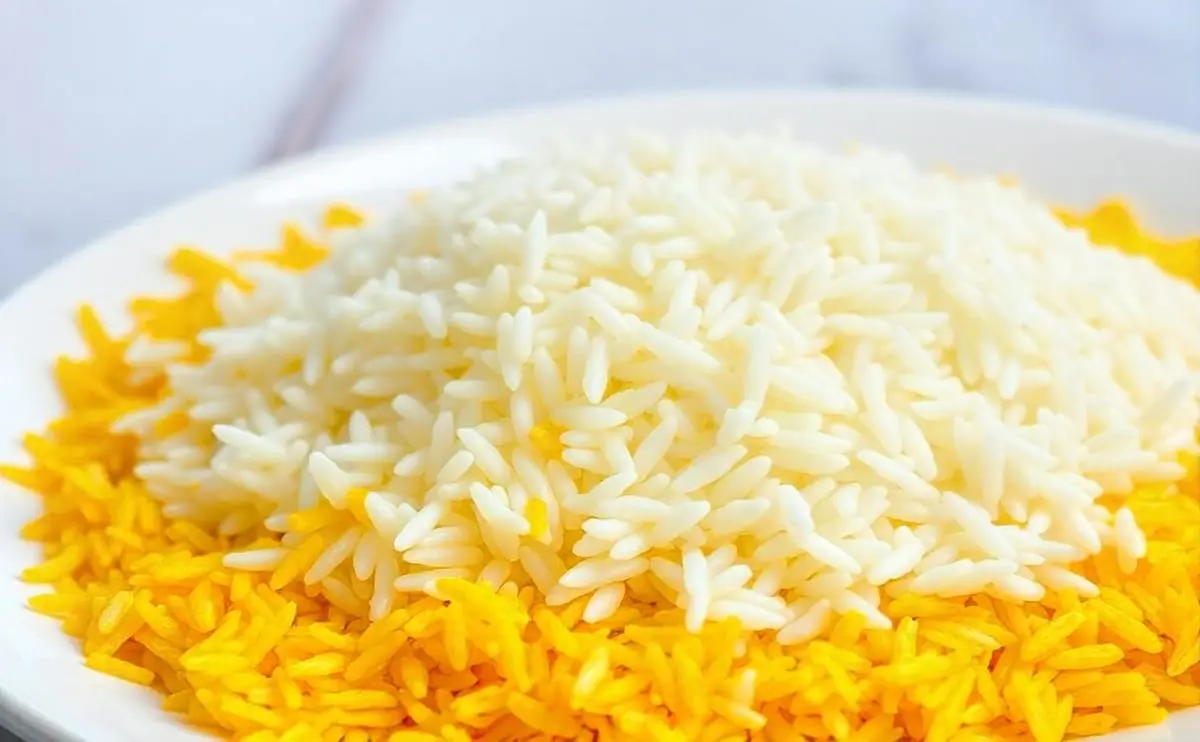
White, separate and fragrant grains are what most of us want from a pot of rice. The good news is that you do not need special rice or tools. A handful of small habits does most of the work, and each one is easy to add to what you already do. These tips work for basmati and other long-grain rice, and they are the basis of Persian-style rice.
1. Rinse the rice well
Rinse the rice in cool water, rubbing gently, until the water runs almost clear (3 to 5 changes). This removes surface starch and dust, which is the main reason grains stick together and look cloudy. Do not rub too hard; long grains break easily.
2. Soak it for 20 to 30 minutes
Soaking lets the grains absorb water evenly, so they cook gently and stay long and unbroken. Basmati also grows longer when soaked. Drain well before cooking. For Persian-style rice, soaking for 2 to 8 hours with a tablespoon of salt gives the best result; rinse the salt off before boiling.
3. Add lemon juice or white vinegar
Add one tablespoon of lemon juice or white vinegar to the cooking water. The mild acidity helps keep the rice bright white and the grains separate and fluffy. You will not taste it in the finished rice.
4. Add cardamom or cinnamon for aroma
For a lovely fragrance, add one cardamom pod or a small piece of cinnamon stick to the pot while the rice steams. Remove it before serving. A pinch of saffron dissolved in hot water, or a few cloves, are other classic choices. See our guide to cardamom.
5. Do not stir while it cooks
Stirring breaks the grains and releases starch. Bring the water to a boil, add the rice, give it one gentle stir, then reduce the heat and cover.
6. Let it rest before serving
When the rice is cooked, turn off the heat and leave the lid on for 5 to 10 minutes. Wrapping the lid in a clean kitchen towel absorbs steam, so the rice does not turn soggy. Fluff with a fork, not a spoon.
Water ratios for the absorption method
- Basmati (soaked): 1 cup rice to 1.25 to 1.5 cups water
- Long-grain white (unsoaked): 1 cup rice to 1.75 to 2 cups water
- Brown rice: 1 cup rice to 2 to 2.5 cups water, 40 to 45 minutes
The Persian way: parboil and steam (polo)
- Boil the soaked rice in plenty of salted water for 6 to 8 minutes until the grains are soft outside but still firm inside (taste one).
- Drain and rinse briefly with lukewarm water.
- Heat oil with a little water in the pot, and optionally lay potato slices or flatbread to make a tahdig crust.
- Pile the rice in a cone, poke steam holes, drizzle with butter and saffron water, wrap the lid in a towel and steam on low for 40 to 45 minutes.
This is the same technique behind dishes like adas polo.
Common mistakes
- Skipping the rinse, which leaves the rice gummy
- Too much water, which makes the rice mushy and yellowish
- Lifting the lid again and again, which lets steam escape
- Using old rice that has dried out; it may need more water
- Stirring hot rice, which breaks the grains
Storing leftover rice
Cool the rice quickly and refrigerate within an hour. Keep it for up to 1 to 2 days and reheat until steaming hot; see our notes on safe storage in rice and nutrition.
Frequently asked questions
Why is my rice yellow?
Old rice, too much water or too long a cooking time can make rice yellowish; use fresh rice and the lemon or vinegar trick.
Does vinegar change the taste?
Not in this small amount.