

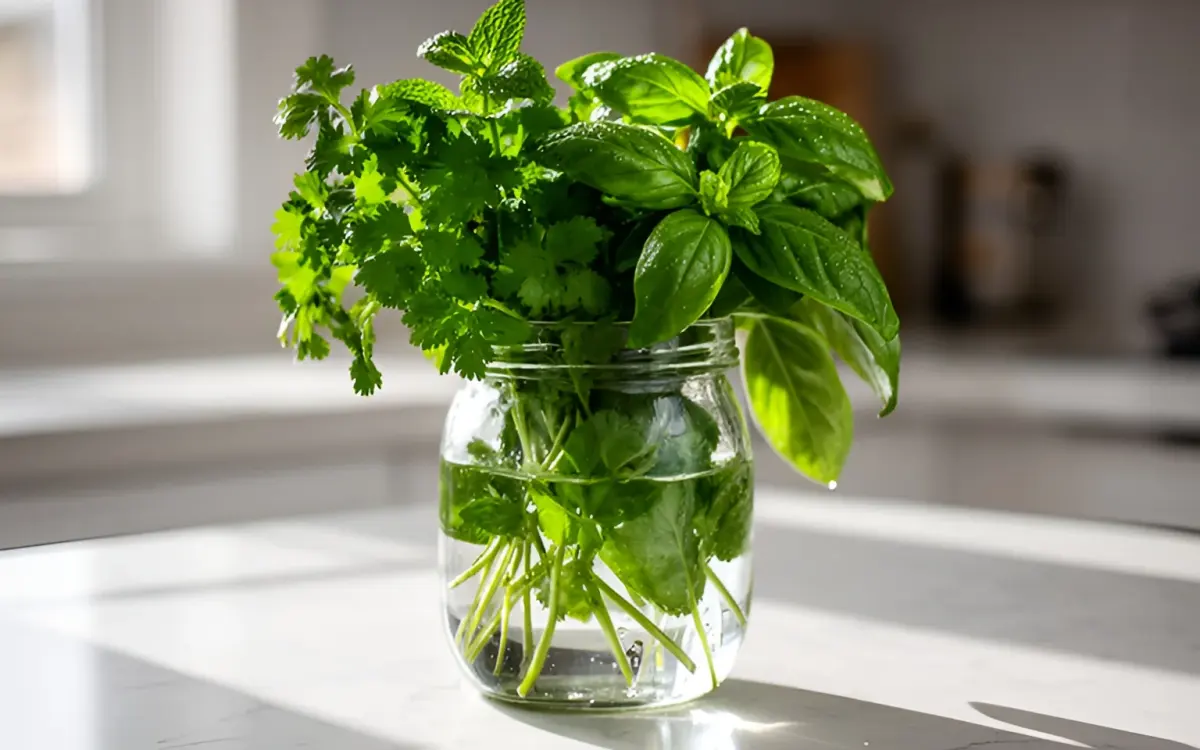
Fresh herbs are one of the best ways to add flavor without extra salt or fat, but they often turn slimy or black within days. The secret is moisture control and the right temperature for each type of herb, not sealing them tightly in a bag. With the methods below, most herbs stay fresh for one to three weeks.
Soft herbs vs woody herbs
Herbs fall into two groups. Soft (tender) herbs such as parsley, cilantro (coriander), mint, dill, tarragon and basil have soft stems and delicate leaves. Woody (hardy) herbs such as rosemary, thyme, sage and oregano have firm stems and tougher leaves. Each group needs different storage.
Soft herbs: parsley, cilantro, mint, dill
- Trim the stem ends and remove any yellow, wilted or damaged leaves.
- Stand the bunch in a glass or jar with about 2 cm of cold water, like a bouquet of flowers.
- Cover loosely with a plastic bag or a reusable produce bag, leaving some air.
- Refrigerate, and change the water every two days.
Parsley and cilantro usually last 1 to 2 weeks this way; mint and dill about 1 week.
Basil
Basil is sensitive to cold and turns black in the fridge. Trim the stems and keep it at room temperature in a glass of water on the counter, away from direct sun, loosely covered with a bag. Use it within 4 to 5 days, or freeze it.
Woody herbs: rosemary, thyme, sage, oregano
These keep longer and do not like standing in water. Wrap them loosely in a slightly damp paper towel, place them in a container or open bag, and refrigerate. They usually last two to three weeks.
Chives and spring onions
Wrap chives in a damp paper towel and keep them in a container in the fridge. Spring onions can stand in a jar of water in the fridge and will even regrow from the roots.
Freeze herbs for cooking
- Ice cubes: chop herbs and pack them into ice cube trays with a little olive oil, melted butter or water. Freeze, then move the cubes to a bag.
- Flat bag: chop herbs, put them in a freezer bag, press out the air and freeze flat. Break off what you need.
- Herb paste: blend basil or parsley with oil and freeze in small portions for sauces.
Frozen herbs keep for 3 to 6 months. They lose their crisp texture, so use them in soups, stews, sauces and rice dishes, not as a fresh garnish. Persian cooks have long frozen chopped herbs for dishes such as ghormeh sabzi and kuku sabzi.
Dry herbs at home
Woody herbs dry well. Tie small bunches and hang them upside down in a dry, airy place out of the sun for 1 to 2 weeks, or dry them on a tray in the oven at the lowest setting (about 50 to 60°C) with the door slightly open. Store the crumbled leaves in a sealed jar. Soft herbs such as mint and dill dry well too; parsley, cilantro and basil lose most of their flavor when dried.
How to revive wilted herbs
Trim the stems and soak the herbs in ice-cold water for 10 to 15 minutes. Dry them gently with a towel. This works for limp herbs, not for slimy or black leaves.
Common mistakes
- Washing before storing: extra moisture speeds up rot. Wash just before using, or dry very well if you wash first.
- Sealed bags with no air: trapped moisture makes herbs slimy.
- Basil in the fridge: cold damages it and turns it black.
- Storing herbs near fruit: apples, pears and bananas release ethylene gas that makes herbs yellow faster.
Frequently asked questions
Should I remove the rubber band?
Yes. A tight band crushes the stems and bruises the leaves, which then rot first.
Can I keep herbs in a container instead of a jar?
Yes. Lay soft herbs on a slightly damp paper towel in a container. The jar method usually keeps them fresh longer.

Comments