

🔊 Cook mode: big steps, timers and voice control (say “next”), hands-free.
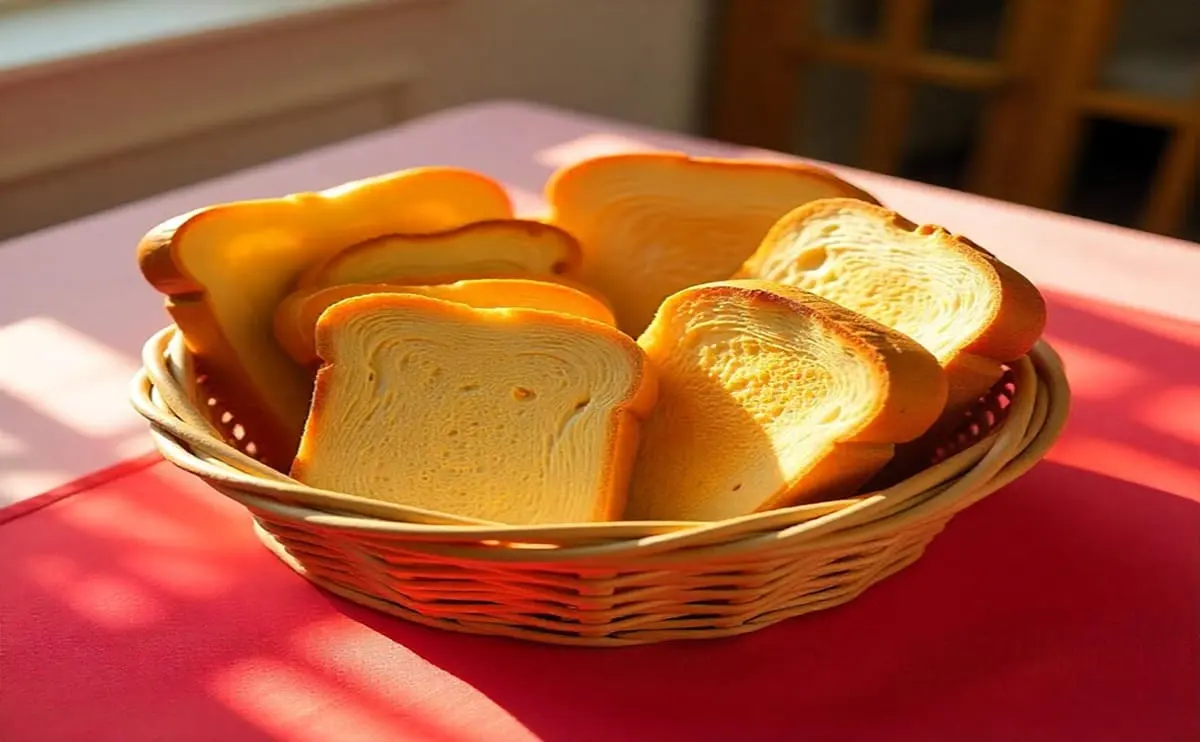
Homemade toast bread is soft, slightly sweet and perfect for sandwiches, French toast and breakfast. Making it yourself means you control the ingredients and avoid the additives of industrial bread. The recipe card below has the exact amounts; here are the tips that make the loaf fluffy.
What makes toast bread soft
- Milk and butter make the crumb tender and the crust golden.
- A little sugar feeds the yeast and gives color.
- Enough kneading builds gluten, which holds the air bubbles and gives a fluffy loaf.
Tips for a better loaf
- Use warm, not hot, milk (about 38 degrees Celsius). Hot milk kills the yeast.
- Knead for 10 minutes by hand, or 6 to 8 minutes in a mixer, until the dough is smooth and springy.
- Let the dough double in size in a warm place, then shape it and let it rise again in the pan.
- Bake when the dough rises just above the rim of the pan.
- Brush the hot loaf with a little melted butter for a softer crust, and cool it on a rack before slicing.
Variations
- Replace half of the flour with whole wheat for more fiber.
- Add seeds, such as sesame or flax, on top.
- Brush with an egg wash for a deeper golden crust.
Storage
Keep the cooled loaf in a bag at room temperature for 2 days, or slice and freeze it for up to a month.
Who should be careful?
This bread contains gluten, milk and, if used, eggs. People with diabetes should watch portions and may prefer whole wheat flour.
Recipe
Homemade Toast Bread: Soft Sandwich Loaf Recipe with Milk and Butter
- Prep
- 20 min
- Cook
- 30 min
- Total
- 50 min
- Calories
- 190
Ingredients
Method
Activating the Yeast: In a bowl, mix the yeast, sugar, and half a cup of warm milk. Let it sit for 10 minutes until the yeast becomes frothy and active. If no froth appears, the yeast is no longer fresh and needs to be replaced.
Making the Dough: In a large bowl, mix the flour and salt. Add the activated yeast mixture, the remaining milk, and melted butter. Knead the dough until it becomes soft and smooth. If the dough is too sticky, gradually add a little flour, being careful not to make the dough too dry.
Letting the Dough Rest: Place the dough in a greased bowl, cover it with a cloth, and let it rest in a warm place for 1 hour until it doubles in size. Then shape the dough into a rectangle and place it in a greased loaf pan. Let it rest again for 30 minutes.
Baking the Bread: Preheat the oven to 180°C (350°F). Bake the loaf in the oven for 30 minutes until the top turns golden. After baking, remove the bread from the pan and let it cool on a wire rack.
Tips
- 1. Proper Kneading:
- Kneading should be done adequately. Push the dough forward with the palm of your hand and fold it back. This ensures a soft and elastic bread texture.
- 2. Using a Humid Oven:
- While baking, place a small bowl of boiling water inside the oven. This helps achieve softer bread.
- 3. Dough Shaping:
- Before placing the dough in the pan, smooth the edges completely to give the bread a professional appearance.
- 4. Baking Temperature and Time:
- High temperatures can burn the crust while leaving the inside undercooked. Always use an oven thermometer to maintain an exact 180°C (350°F).
- 5. Slicing the Bread:
- After the bread has completely cooled, use a serrated bread knife to slice it evenly and neatly.
- By following these tips, you’ll achieve bread with a professional quality!
Nutrition per serving
- Calories
- 190
- Protein
- 5 g
- Carbs
- 35 g
- Fat
- 4 g
- Fiber
- 2 g
Estimated values, for information only.