



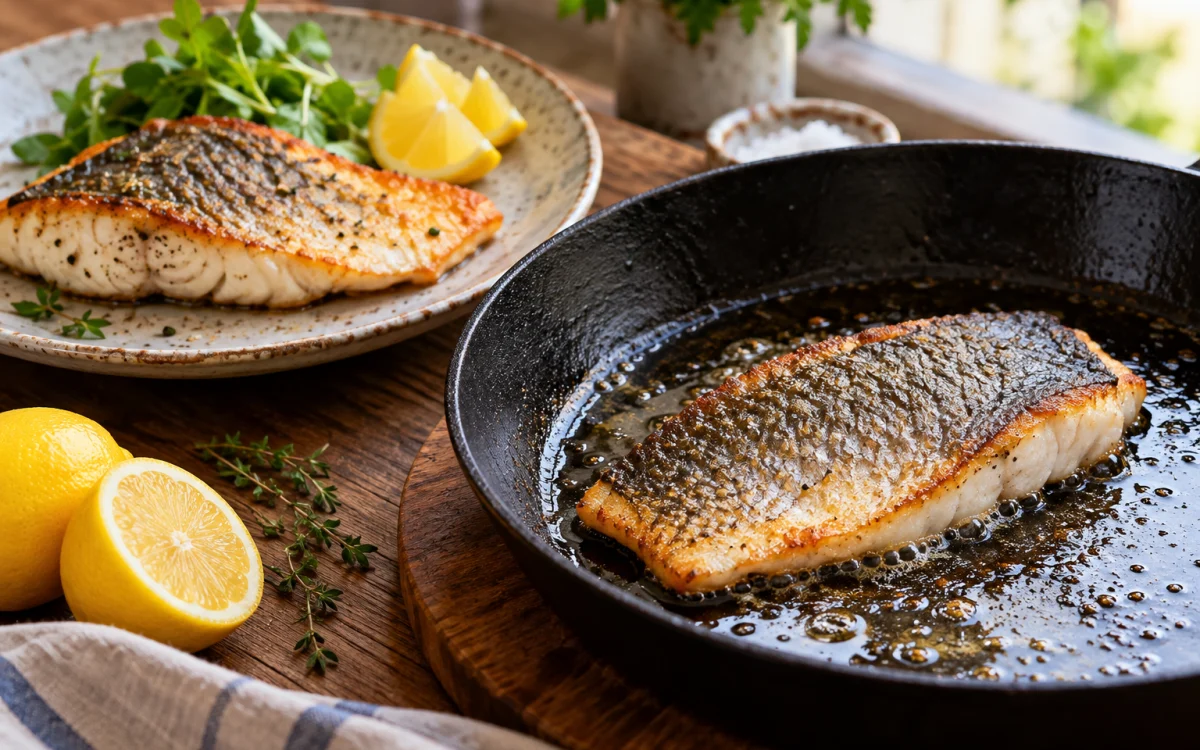
When you pan-fry a fillet with the skin on, the best habit is to start with the skin side down. This simple choice gives crispy skin, a fillet that stays whole and fish that cooks evenly. This guide is for home cooks who have had fish stick to the pan, fall apart when turned or come out dry, and want a method that works for most skin-on fillets.
Why skin side first
- It keeps the fillet in one piece. The skin acts like a holder, so the flesh does not fall apart when you turn it.
- It prevents sticking. The natural oils in the skin help it release from the pan.
- It makes the skin crisp and golden, which adds flavor and texture.
- It cooks evenly. Most of the cooking happens on the skin side, so the flesh stays moist rather than dry.
Step by step
- Pat the fish very dry with paper towels, including the skin. Moisture is what makes fish stick and splatter.
- Season with salt and pepper just before cooking.
- Heat a pan with a thin layer of oil with a high smoke point until it shimmers.
- Place the fillet skin side down and press gently with a spatula for 10 seconds so it stays flat.
- Cook for 3 to 5 minutes, without moving it, until the skin is crisp and the flesh is cooked two thirds of the way up.
- Turn once and cook the other side for 1 to 2 minutes.
Why pressing and waiting matter
Fish skin shrinks and curls as soon as it hits hot oil, which lifts the middle of the fillet away from the pan. Pressing gently for the first few seconds keeps the whole surface in contact, so the skin browns evenly. After that, leave the fillet alone. Moving it too early tears the skin, because it releases from the pan naturally once it has crisped.
Tipps
- Do not crowd the pan. Cook in batches so the temperature stays high.
- If the fish has no skin, cook the presentation side first and be gentle when turning.
- Thin fillets need less time. Fish is done when it turns opaque and flakes easily with a fork.
- Serve at once, with lemon, to keep the skin crisp.
- Use a pan that holds heat well, such as a heavy stainless steel or cast-iron pan. A non-stick pan also works and is more forgiving for beginners.
- Take the fish out of the fridge a few minutes before cooking so that it is not ice-cold in the middle, but do not leave it out for long.
Common mistakes
- Wet fish. Damp skin steams instead of crisping. Dry it well, and dry it again if it is wet from marinating.
- A pan that is not hot enough. If the oil does not shimmer, the skin sticks before it can crisp.
- Adding a lid. Trapped steam softens the skin. Cook uncovered.
- Flipping repeatedly. Turn once. Each extra flip risks breaking the fillet and loses crispness.
- Salting too early. Salt draws moisture out of the surface, so season just before the fish goes into the pan.
Seasoning and serving ideas
Simple seasoning lets the fish speak for itself: salt, pepper and a squeeze of lemon. You can add herbs or a little garlic to the pan near the end of cooking. Serve the fillet skin side up on a bed of rice, salad or roasted vegetables so the crisp skin is not covered by sauce. For a hot, crisp contrast, a side of golden potatoes works well; see our crispy restaurant-style french fries. If you want to learn another pan technique that relies on a very hot surface, read the reverse sear garlic butter steak method, and for a fresh side dish try the simple lettuce salad with lemon dressing.
Food safety
Cook fish until opaque and flaky, keep raw fish cold, and wash the board and knife after handling it. Wash your hands after touching raw fish, and keep it separate from foods that will not be cooked, such as salad.
FAQ
Does this work for every fish?
It works best for skin-on fillets such as salmon, sea bass or trout. Very delicate or very thin fish need gentler heat and less time, so watch them closely.
How do I know when the fish is cooked?
The flesh turns opaque and flakes easily with a fork. When you cook skin side first, you can see the opaque colour climbing the side of the fillet, which tells you when to turn it.
What if the skin sticks anyway?
Wait a little longer. When the skin is properly crisp, it usually releases from the pan by itself. If it is still stuck, slide a thin spatula under it gently rather than pulling.