

🔊 Cook mode: big steps, timers and voice control (say “next”), hands-free.
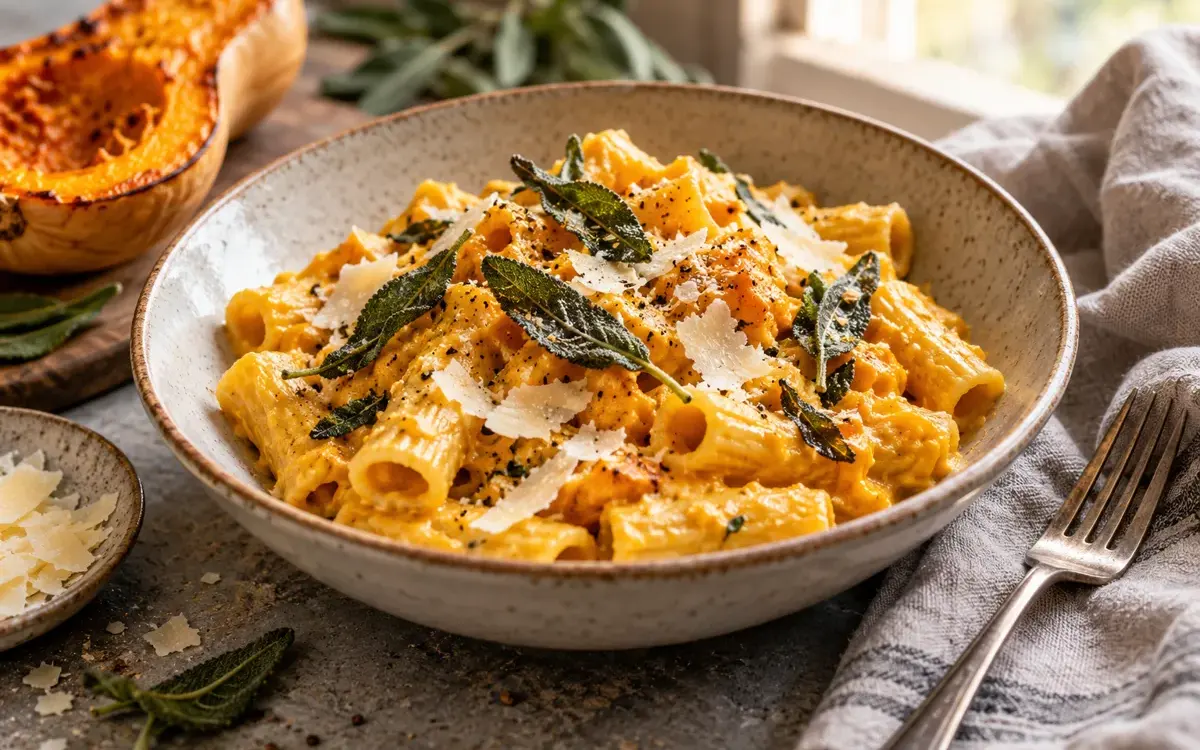
Butternut squash pasta is the dish autumn was made for: sweet, roasted squash blended into a silky sauce that coats every piece of pasta, with no heavy cream needed. It is a favourite with home cooks searching for cosy weeknight dinners, and it is easy to adapt for vegetarians and picky eaters.
Why this sauce works
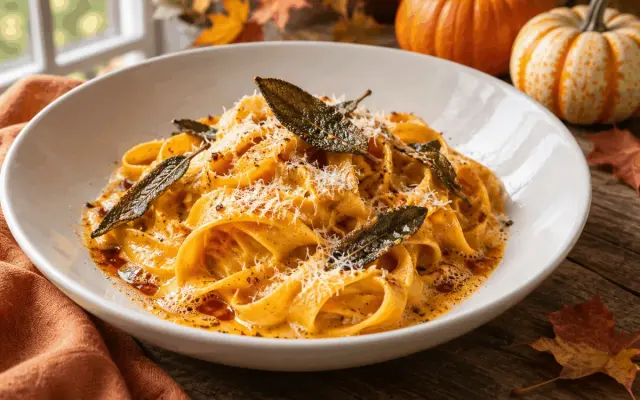
Butternut squash is a pale-orange winter squash with a nutty, gently sweet flavour. Roasting it, rather than boiling, concentrates its sugars and gives deeper, caramelised taste. Blended with a little of the starchy pasta water, garlic and Parmesan, it turns into a velvety sauce that clings to the pasta. Fresh sage fried in butter adds the classic savoury, slightly peppery finish.
Tips for the best result
- Roast, do not steam. Spread the cubes in a single layer with space between them so the edges brown.
- Save pasta water. The starch helps the sauce emulsify. Add it a splash at a time until the sauce is glossy rather than thick.
- Choose shapes with texture. Rigatoni, shells, penne and fusilli hold the sauce well.
- Time-saver. Pre-cut squash from the supermarket works well. Frozen cubes also roast fine; add 5 to 10 minutes.
- Season at the end. Taste after the cheese goes in, because Parmesan adds salt.
Variations
- Protein boost: add crisp bacon, Italian sausage or white beans.
- Vegan: use olive oil instead of butter, nutritional yeast instead of Parmesan, and plant milk to loosen the sauce.
- Extra heat: a pinch of chilli flakes or a little smoked paprika.
- Crunch: top with toasted walnuts or pumpkin seeds.
Serving ideas
Serve with a sharp arugula salad dressed with lemon, and crusty bread. It also makes a lovely vegetarian main for a Thanksgiving table or a relaxed autumn dinner party.
Storage and reheating
Keep leftovers in the fridge for up to 3 days. The sauce thickens as it cools, so reheat gently with a splash of water or milk. The blended sauce alone freezes well for up to 3 months; cook fresh pasta when you are ready to serve.
Who should be careful: the dish contains wheat, dairy and (optionally) nuts. Use gluten-free pasta and check labels if you cook for someone with allergies.
Frequently asked questions
Can I use frozen or pre-cut squash?
Yes. Pre-cut fresh squash saves time; frozen cubes work too, but roast them a few minutes longer and spread them out so they brown instead of steaming.
How do I make it vegan?
Use olive oil instead of butter, skip the Parmesan and stir in 2 tablespoons of nutritional yeast and a squeeze of lemon for a savory, cheesy note.
Which pasta shape is best?
Short tubes with ridges, such as rigatoni or penne, hold the creamy sauce best. Shells and orecchiette are also good choices.
Recipe
Creamy Butternut Squash Pasta with Sage and Parmesan
- Prep
- 15 min
- Cook
- 35 min
- Total
- 50 min
- Calories
- 604
Ingredients
Sauce
Pasta
Sage butter
Method
Heat the oven to 220 C (425 F) and line a baking tray.
Toss the squash and unpeeled garlic with the olive oil, salt and pepper, then spread in a single layer.
Roast for 25 to 30 minutes, turning once, until the edges are golden and the squash is very tender.
Meanwhile, cook the pasta in well-salted water until al dente and save 250 ml of the pasta water before draining.
Squeeze the soft garlic from its skins and blend it with the squash, the Parmesan and 150 ml of pasta water until smooth.
Melt the butter in a large pan over medium heat and fry the sage leaves for 1 to 2 minutes until crisp, then lift them out and keep for garnish.
Add the squash sauce to the sage butter, stir in the pasta and toss over low heat, adding more pasta water until glossy.
Taste, adjust the seasoning and serve topped with the crisp sage and extra Parmesan.
Tips
- Spread the squash with space between pieces so it browns instead of steaming.
- Add pasta water a splash at a time for the right thickness.
- Reheat leftovers gently with a little water or milk.
Nutrition per serving
- Calories
- 604
- Protein
- 18 g
- Carbs
- 88 g
- Fat
- 22 g
- Fiber
- 6 g
Estimated values, for information only.
Vitamins and minerals per serving
- Vitamin A100%+
- Vitamin C42%
- Vitamin E28%
- Magnesium15%
Share of an adult’s daily value (FDA). Estimated from the main ingredients using USDA data, ignoring cooking losses; for information only. What do I need each day?
دیدگاهها