

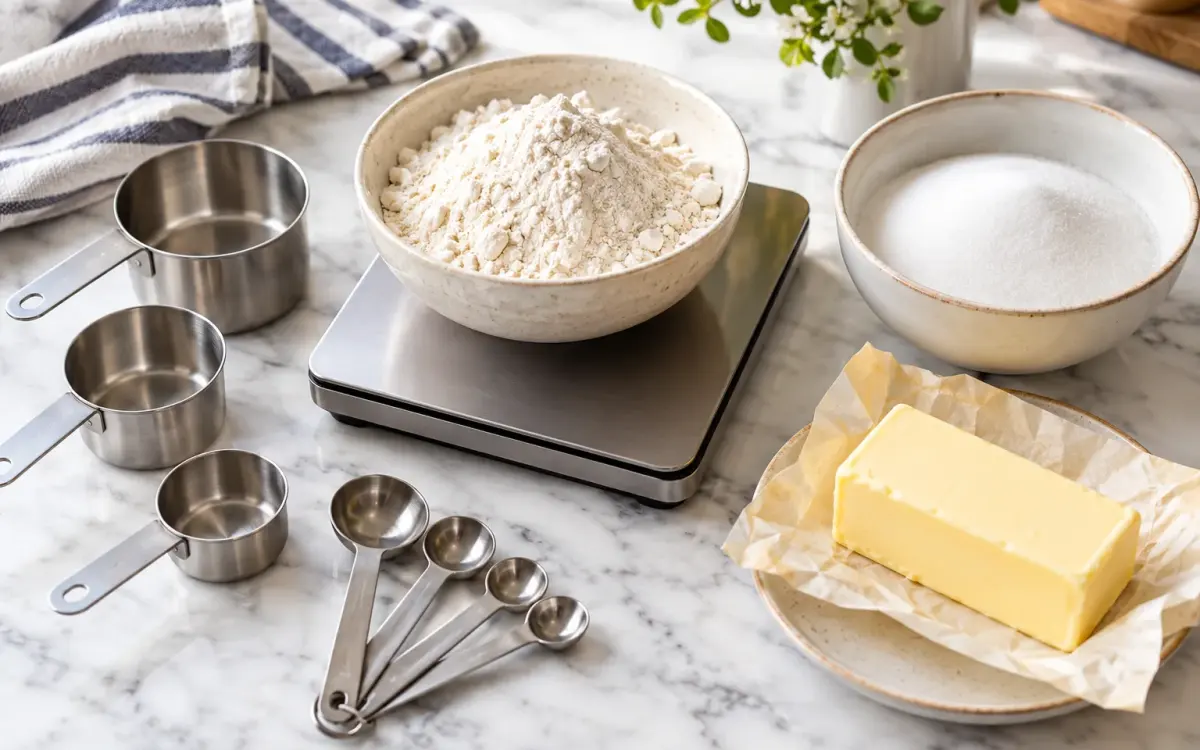
Recipes come in many measuring languages: cups in the United States, grams in most of Europe and Asia, ounces and pounds in the UK, and different oven scales everywhere. This cheat sheet puts the most-used kitchen conversions in one place, so you can follow any recipe, whether it comes from an American blog or a European cookbook.
One rule before you start: for baking, weighing ingredients in grams is more accurate than using cups, because a cup of flour can vary by 20 percent depending on how you scoop it. The weights below are common averages and are good for everyday cooking.
Volume conversions (US)
| Measure | Equals |
|---|---|
| 1 teaspoon | 5 ml |
| 1 tablespoon (3 teaspoons) | 15 ml |
| 1/4 cup (4 tablespoons) | 60 ml |
| 1/3 cup | 80 ml |
| 1/2 cup | 120 ml |
| 1 cup (16 tablespoons) | 240 ml |
| 1 pint (2 cups) | 480 ml |
| 1 quart (4 cups) | about 950 ml |
| 1 fluid ounce | 30 ml |
Weight conversions
| Measure | Equals |
|---|---|
| 1 ounce | 28 g |
| 4 ounces | 113 g |
| 8 ounces | 227 g |
| 1 pound (16 ounces) | 454 g |
| 1 kilogram | 2.2 pounds |
Cups to grams for common ingredients
| Ingredient (1 cup) | Grams (approx.) |
|---|---|
| All-purpose flour | 120 g |
| Bread flour | 125 g |
| Granulated sugar | 200 g |
| Brown sugar, packed | 210 g |
| Powdered sugar | 120 g |
| Butter | 227 g (2 sticks) |
| Honey | 340 g |
| Milk or water | 240 g |
| Rolled oats | 90 g |
| Uncooked rice | 185 g |
| Chopped nuts | 120 to 140 g |
| Cocoa powder | 85 to 100 g |
One stick of butter is 113 g (1/2 cup, 8 tablespoons).
Temperature conversions
To convert Fahrenheit to Celsius, subtract 32 and multiply by 5/9. To convert Celsius to Fahrenheit, multiply by 9/5 and add 32.
Oven temperatures
| Fahrenheit | Celsius | Description |
|---|---|---|
| 275 F | 135 C | Very slow |
| 300 F | 150 C | Slow |
| 325 F | 165 C | Moderately slow |
| 350 F | 175 to 180 C | Moderate |
| 375 F | 190 C | Moderately hot |
| 400 F | 200 C | Hot |
| 425 F | 220 C | Very hot |
| 450 F | 230 C | Very hot |
If your oven is fan-assisted (convection), lower the temperature by about 20 C (25 F) or follow your oven’s manual.
Useful food-safety temperatures
- Poultry such as chicken and turkey: 74 C (165 F).
- Ground meat: 71 C (160 F).
- Pork, beef, veal and lamb steaks and roasts: 63 C (145 F), followed by a 3-minute rest.
- Fish: 63 C (145 F).
Tips for measuring accurately
- Spoon and level. Spoon flour into the cup and level it with a knife; do not scoop directly from the bag, which packs it down.
- Use a scale for baking, especially bread. See our no-knead bread for a recipe that gives exact weights.
- Use liquid measuring cups for liquids and dry measuring cups for dry ingredients.
- Know your cup. A metric cup is 250 ml, an Australian tablespoon is 20 ml and a UK pint is 568 ml, so check where a recipe comes from.
Keep this page bookmarked in your kitchen, and see our thawing guide and Thanksgiving countdown for more practical help.
دیدگاهها