Al dente is an Italian phrase that means “to the tooth”. Pasta cooked al dente is tender but still slightly firm in the center, so it has a pleasant bite, holds its shape in the sauce and does not turn mushy on the plate. It is how pasta is served in Italy, and once you learn to recognize it, your pasta dishes will taste noticeably better.
What you need
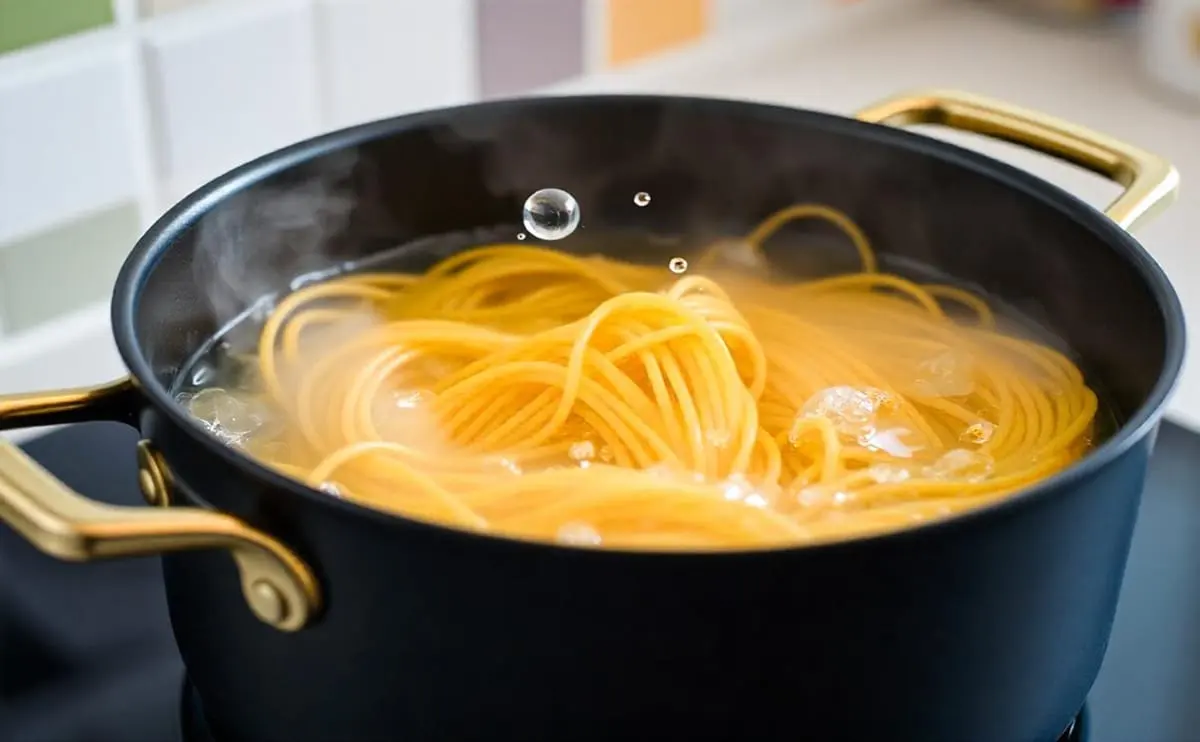
- A large pot: about 4 liters of water for every 400 to 500 g of dried pasta.
- Salt: about 1 tablespoon (10 to 15 g) per 4 liters of water. The water should taste lightly salty.
- A timer and a spoon or tongs for tasting.
How to cook pasta al dente
- Bring the water to a full, rolling boil before adding the pasta.
- Add the salt, then the pasta, and stir well during the first two minutes so it does not stick.
- Keep the water boiling and leave the lid off.
- Check the package time and start tasting about 2 minutes before it ends.
- Drain when the pasta is tender outside but still firm in the very center, with no chalky, raw taste.
- Save a cup of the starchy cooking water before draining.
How to test it
- Bite test: Taste a piece. It should have a slight resistance in the middle but not be hard.
- Look at a cut piece: Cut a strand or tube in half. A tiny pale dot or thin white line in the middle means it is al dente. A wide white ring means it needs more time.
- Do not throw pasta at the wall: if it sticks, it is usually already overcooked.
Typical timing for dried pasta
- Angel hair (capellini): 3 to 4 minutes
- Spaghetti and linguine: 8 to 10 minutes
- Penne and fusilli: 10 to 12 minutes
- Rigatoni: 11 to 13 minutes
- Fresh egg pasta: 2 to 4 minutes; taste after 90 seconds
Whole-wheat and gluten-free pasta can go from firm to soft quickly, so taste them often. Gluten-free pasta is best drained one minute early and rinsed only if the package says so.
Finish in the sauce
For the best texture, drain the pasta one minute early, then finish cooking it in the pan with the sauce for a minute or two, adding a splash of the saved pasta water. The pasta absorbs flavor, and the starch in the water helps the sauce turn glossy and cling to every piece. This is how restaurant pasta like chicken Alfredo or pesto pasta gets its silky sauce.
Pasta for baked dishes and salads
If the pasta will be baked, such as in lasagna or a pasta bake, cook it 2 to 3 minutes less than the package time. It will finish in the oven. For pasta salad, cook it to al dente, then rinse briefly in cold water to stop the cooking and toss with a little oil.
Why al dente matters
- It has a better texture and bite.
- It holds its shape and does not break in the sauce.
- It tends to have a lower glycemic index than very soft pasta, so it raises blood sugar a little more slowly.
- Leftovers reheat better without turning mushy.
Common mistakes
- Too little water: the pasta sticks and cooks unevenly.
- Adding oil to the water: it does not stop sticking, and it makes sauce slide off. Stirring works better. See how to keep pasta from sticking.
- Forgetting the salt: pasta cooked in plain water tastes flat no matter how good the sauce is.
- Rinsing hot pasta: it washes away the starch that helps sauce cling.
- Letting drained pasta sit: it keeps cooking and sticks together. Have the sauce ready first.
Frequently asked questions
Is al dente pasta undercooked?
No. It is fully cooked and safe; it simply has a firm center instead of a soft one.
Can I cook pasta al dente ahead of time?
Yes. Cook it 1 to 2 minutes short, drain, toss with a little oil and refrigerate. Reheat for a minute in boiling water or in the sauce.
Does fresh pasta cook al dente?
Fresh pasta is softer by nature and cooks in a few minutes, so it has less bite than dried pasta.