
🔊 Cook mode: big steps, timers and voice control (say “next”), hands-free.
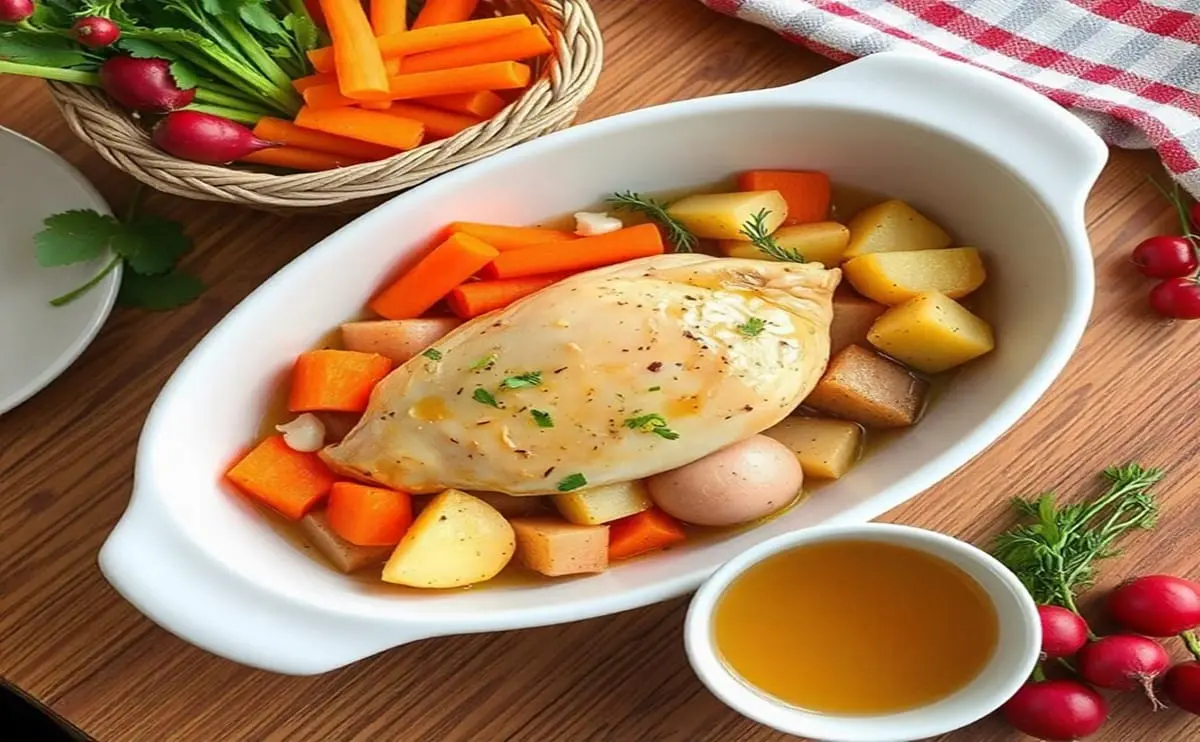
Boiled chicken with potatoes and carrots is one of the simplest dinners you can make: chicken breast, root vegetables, an onion and a few spices simmered together in one pot, with no oil and no frying. It suits anyone who wants a plain, gentle, home-style meal, including families cooking for children or older relatives and people who like to adjust the salt themselves. You get a tender piece of chicken, soft vegetables and a light broth you can sip or save.
The recipe card above has the ingredients and the steps. This article explains how to get tender chicken and a clear broth, how to adapt the dish, and how to store it safely.
Why it works
Gentle simmering keeps lean chicken breast tender, and cooking it with the onion, garlic and bay leaf flavors both the meat and the broth. The carrots and potatoes go in after the chicken has started cooking, so they finish at the same time instead of turning to mush. Turmeric gives a warm color and mild flavor, and everything else is left up to your taste, because the dish is salted and spiced at the end rather than loaded up front.
In the traditional food culture that many readers know, warm spices such as ginger are sometimes added to dishes thought of as cooling, and the original version of this recipe noted that people with a “cold” temperament might add ginger or warm spices. That is a matter of tradition and taste rather than medical advice, and you can simply add ginger if you enjoy it.
Practical tips
- Keep the heat low. Bring the water to a boil, then reduce to a gentle simmer. A hard boil toughens the chicken and clouds the broth.
- Skim the foam. In the first minutes, remove the grey foam from the surface for a clearer broth.
- Cut vegetables evenly. Large, even pieces cook at the same speed. Slice the carrots into rounds of similar thickness and chop the potatoes coarsely.
- Check that the chicken is done. Cut into the thickest piece: the meat should be white all the way through with no pink, and the juices should run clear. A food thermometer reading 74 °C (165 °F) in the thickest part is the standard food-safety target for poultry.
- Salt near the end. This gives you control, and you can salt the dish lightly for everyone and let people add more at the table. Anyone who has been told to limit salt can reduce it as advised by their doctor.
- Finish fresh. Parsley or dill added just before serving brightens the plate. For children, simmer the vegetables a little longer or mash them for easier eating.
Common mistakes
- Adding all the vegetables at the start, so the potatoes fall apart.
- Boiling hard instead of simmering, which leaves dry chicken.
- Washing raw chicken in the sink, which spreads bacteria. Cook it directly and wash your hands and any board or knife that touched it.
- Overcooking the breast. Remove it when it is just cooked and shred or slice it.
Variations and substitutions
- Chicken thighs give a richer broth and more forgiving texture; they need a few extra minutes.
- More protein: increase the amount of chicken for hungrier eaters, such as people who train regularly, and serve with extra vegetables.
- Add vegetables: celery, zucchini or green beans can be added in the final minutes.
- Make it a soup: add rice or noodles to the strained broth; our homemade chicken noodle soup shows how.
- Flavor boosters: a squeeze of lemon juice at the table adds freshness; the squeeze is for taste.
For more about cooking and using chicken, see our guide to chicken or try roast whole chicken when you want a different technique.
Storage and make-ahead
Cool leftovers quickly and refrigerate them within two hours of cooking, in covered containers with the broth so the chicken stays moist. Reheat until steaming hot throughout and do not reheat repeatedly. The strained broth freezes well in small portions; the potatoes soften further after freezing, so cook only as much as you plan to eat if possible. You can chop the vegetables ahead and keep them in the refrigerator so the pot is ready in minutes.
Serving ideas
Serve the chicken and vegetables in a shallow bowl with a ladle of broth, and add a spoonful of plain yogurt, fresh herbs and black pepper. A simple salad and a slice of bread round it out. You can also shred the chicken for sandwiches the next day.
Who should be careful
Poultry can carry bacteria, so cook it thoroughly and keep raw and cooked foods separate. If you are pregnant or breastfeeding, have a chronic condition, take medication or follow a doctor-prescribed diet (for example for heart, kidney or blood sugar concerns), ask your doctor or dietitian about portions, salt and protein that suit you. Anyone with a food allergy should check every ingredient and spice.
This article is for general information and does not replace advice from your doctor or dietitian.
FAQ
How long should I cook the chicken?
In this recipe the whole pot takes about 35 minutes, with the vegetables added after the first 10. Time depends on piece size, so always confirm with a cut or a thermometer rather than the clock alone.
Can I use frozen chicken?
Thaw it fully in the refrigerator first for even cooking and safety, then proceed as written. See our guide on thawing frozen meat safely.
What can I do with the broth?
Drink it warm, use it to cook rice, or turn it into soup. Strain it if you want a clear result.
Recipe
Boiled chicken with potatoes and carrots
- Prep
- 10 min
- Cook
- 35 min
- Total
- 45 min
- Calories
- 190
Ingredients
Method
Preparation: - Wash and chop all ingredients.
Cooking : - Place the chicken, onion, garlic, and spices into a pot.
- Add water and bring to a boil over medium heat.
- After 10 minutes, add the carrots and potatoes.
- Reduce to low heat and simmer until all ingredients are fully cooked.
Serving: Once cooked, you can strain the chicken broth if desired and serve it alongside the meal.
Tips
- 1. Garnish with fresh parsley or dill before serving for enhanced aroma and presentation.
- 2. For children, cook the ingredients until softer or mash them for easier consumption.
- 3. For athletes: use more chicken breast and serve with extra vegetables, and add a squeeze of fresh lemon juice at the table for flavor.
Nutrition per serving
- Calories
- 190
- Protein
- 25 g
- Carbs
- 20 g
- Fat
- 2 g
- Fiber
- 3 g
Estimated values, for information only.
Vitamins and minerals per serving
- Vitamin A44%
- Vitamin C41%
- Potassium27%
- Magnesium19%
Share of an adult’s daily value (FDA). Estimated from the main ingredients using USDA data, ignoring cooking losses; for information only. What do I need each day?