



🔊 Cook mode: big steps, timers and voice control (say “next”), hands-free.
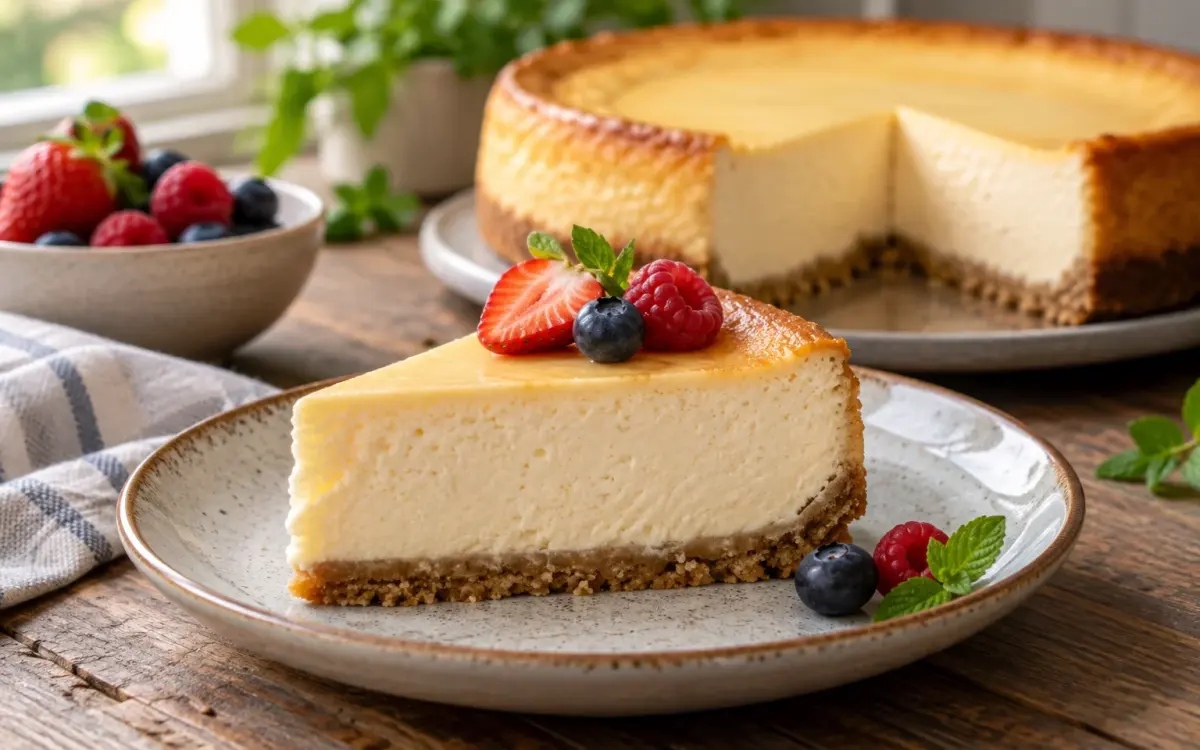
Classic baked cheesecake is the kind of dessert people remember: a buttery biscuit base, a dense but silky filling and a gentle tang from sour cream. This version is for home bakers who want a reliable, bakery-style result without special equipment beyond a springform pan. The full ingredient list and method are in the recipe card above, so here we focus on the details that decide whether the cake turns out creamy or cracked.
Where cheesecake comes from
Cheesecake is often traced back to ancient Greece, while the dense, cream-cheese style known as New York cheesecake became famous in America. The recipe here follows that modern tradition: cream cheese, eggs, sugar and a biscuit crust.
Why it works
- Low, gentle heat. At 160°C (320°F) the eggs set slowly, so the filling stays smooth instead of puffing up and collapsing.
- Sour cream in the filling. It adds a slight tang and keeps the texture soft rather than heavy.
- A long chill. Resting the cake in the fridge lets the filling firm up fully, so it slices cleanly.
Tips for a creamy, crack-free cake
- Soften everything first. Cream cheese straight from the fridge leaves tiny lumps that never fully smooth out. Let it sit at room temperature before blending.
- Mix briefly. Beat only until smooth. Extra whisking adds air, which rises in the oven and then sinks and cracks as the cake cools.
- Use a water bath if you can. Wrap the outside of the pan in foil and set it in a larger tray of hot water. The moist heat protects the surface from drying and cracking.
- Look for a wobble. The edges should be set while the centre still jiggles slightly. It firms up as it cools.
- Cool slowly. Turn the oven off and leave the door ajar for a while before moving the cake to the counter.
Common mistakes
- Baking until the centre is completely firm, which gives a dry, grainy texture.
- Skipping the chilling time and cutting too early, so the slices slump.
- Pressing the crust too thinly. Press firmly and evenly so it holds together when sliced.
Variations and substitutions
- Lighter version: use lower-fat cream cheese and a lower-fat sour cream, and reduce the sugar a little. The texture will be slightly less rich.
- Fruit or nuts: top with fresh berries, or sprinkle chopped nuts over the base before the filling goes in.
- Different crusts: any plain, crisp biscuit works in place of digestive biscuits.
- Flavour: a little lemon zest in the filling brightens the flavour.
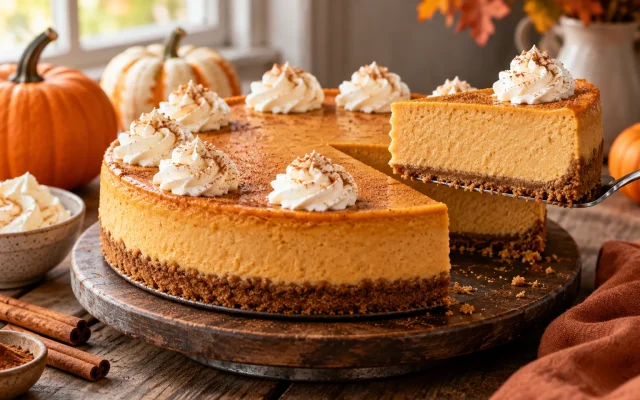
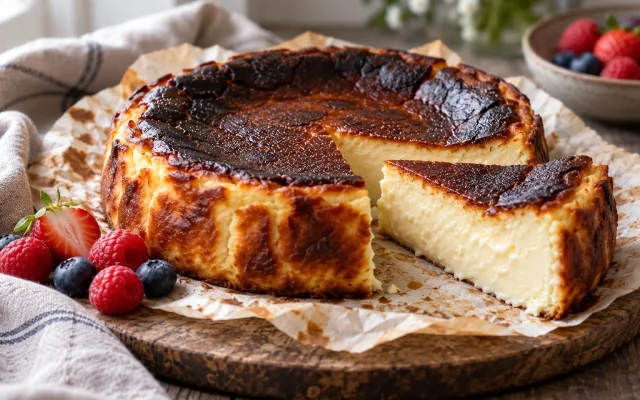
If you like a rustic look, try our Basque burnt cheesecake. For a crowd, mini cheesecakes are easier to portion, and our pumpkin cheesecake is a seasonal alternative.
Nutrition notes
Cheesecake provides some protein and calcium from the dairy, but the classic recipe is high in sugar, fat and calories, so it is best enjoyed in small slices as an occasional treat. People managing diabetes or heart conditions can choose a lighter version and a smaller portion, and should follow the advice of their own doctor or dietitian.
Storage and make-ahead
Cheesecake is better made a day ahead. Keep it covered in the fridge for a few days. Slice it cold with a knife dipped in hot water and wiped dry. It also freezes well when wrapped tightly; thaw it overnight in the fridge.
Serving ideas
Serve with fresh strawberries or a spoonful of fruit compote, or keep it plain with a cup of coffee or tea.
FAQ
Why did my cheesecake crack?
Usually from overmixing, overbaking or cooling too fast. Mix gently, stop baking while the centre still wobbles, and cool slowly.
Can I make it without a water bath?
Yes. It may brown or crack slightly more, but the flavour is the same. Keeping the oven low and cooling slowly helps.
How long should it chill?
At least four hours, but overnight gives the cleanest slices.
Rezept
Classic Cheesecake: Creamy Baked Cheesecake Recipe
- Vorbereitung
- 20 Min.
- Garzeit
- 45 Min.
- Gesamt
- 1 Std. 5 Min.
- Kalorien
- 370
Zutaten
Zubereitung
Finely crush the digestive biscuits and mix with the melted butter.
Press the mixture evenly into the bottom of a springform pan.
In a bowl, blend the cream cheese, sugar, eggs, vanilla extract, and sour cream until smooth.
Avoid overmixing to prevent incorporating too much air.
Pour the filling over the prepared crust.
Place the pan in a preheated oven at 160°C (320°F) and bake for 45–50 minutes until the edges are set and the center remains slightly jiggly.
Let the cheesecake cool to room temperature.
Refrigerate for at least 4 hours (preferably overnight) until completely firm.
Tipps
- Use Room Temperature Ingredients: Bring the cream cheese and eggs to room temperature before mixing for a smoother blend.
- Avoid Overmixing: Overmixing can create excess air bubbles, affecting the texture.
- Water Bath (Bain-Marie): Place the pan in a water bath during baking to prevent the cheesecake from cracking.
- Gradual Cooling: Allow the cheesecake to cool slowly to maintain its texture and prevent cracking.
- Adjust Sweetness: For diabetic or heart-friendly versions, reduce the amount of sugar or use low glycemic sweeteners.
Nährwerte pro Portion
- Kalorien
- 370
- Eiweiß
- 7 g
- Kohlenhydrate
- 29 g
- Fett
- 26 g
- Ballaststoffe
- 1.5 g
Geschätzte Werte, nur zur Information.
Vitamine und Mineralstoffe pro Portion
- Vitamin A38%
- Vitamin B1216%
Share of an adult’s daily value (FDA). Estimated from the main ingredients using USDA data, ignoring cooking losses; for information only. Was brauche ich täglich?