

🔊 Cook mode: big steps, timers and voice control (say “next”), hands-free.
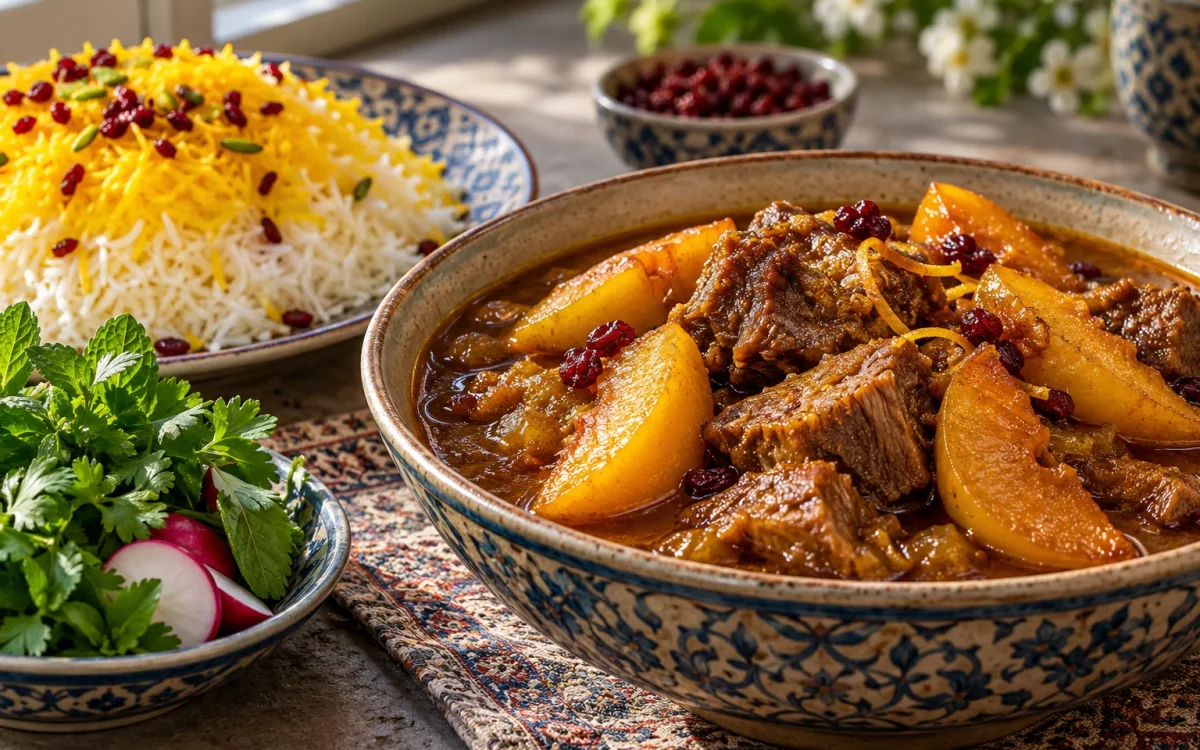
Quince season is short, and Persian cooks make the most of it with khoresh beh: a slow-simmered stew where tender lamb meets golden, fragrant quince in a lightly sweet-and-sour sauce. With Yalda Night about two months away, now is a good time to try it, since quinces are at their best in October and November and the stew tastes even better the next day.
Why this stew works
Raw quince is hard and very tart, but cooking turns it soft, rosy and perfumed, somewhere between apple and pear with a floral note. Persian cooking balances that fruit with browned onion, turmeric, a little cinnamon and bloomed saffron. The sauce should be glossy and lightly thickened, not watery, and the quince slices should hold their shape.
Tips for a better stew
- Choose the right meat. Lamb shoulder or beef chuck both need a long, gentle simmer. Lean, quick-cooking cuts turn dry.
- Brown the onions slowly. Golden onions give the base its depth. Pale onions give a flat stew.
- Fry the quince separately. Browning the slices in butter gives them colour and helps them keep their shape. Add them to the pot only for the final stretch so they do not turn to mush.
- Taste before adding sweetness. Quinces vary a lot in tartness. Add sugar and lemon juice a little at a time until the sauce is balanced.
- Bloom the saffron. Grind it with a pinch of sugar and steep it in a few spoonfuls of hot water for at least 10 minutes.
Variations
Some families add a handful of yellow split peas for body, or a few dried apricots for extra sweetness. Chicken thighs make a quicker version that needs about 45 minutes of simmering. Pears or firm tart apples can stand in for quince if you cannot find it, although the flavour is milder.
Serving ideas and menu
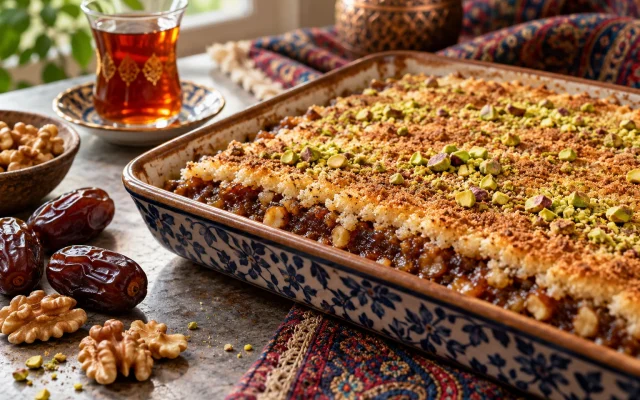
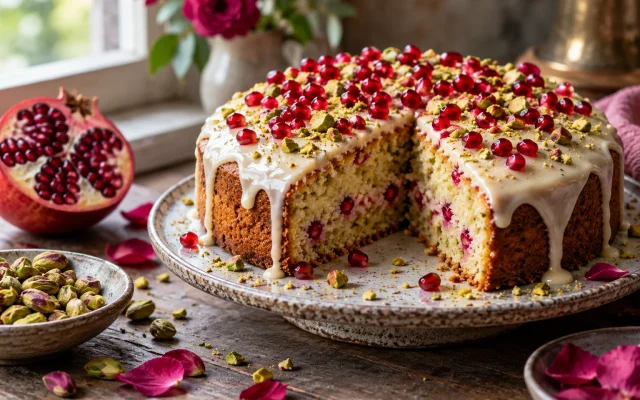
Serve khoresh beh over plain steamed Persian rice with a crisp tahdig, alongside a fresh salad of cucumber, tomato and onion, plain yogurt and a plate of fresh herbs. For a Yalda table, pair it with a pomegranate salad, a platter of nuts and dried fruit, and saffron halva or rice pudding for dessert. Because the stew reheats beautifully, you can cook it a day ahead and spend the evening with your guests.
Storage
Cool the stew completely, then keep it in an airtight container in the refrigerator for up to 3 days. It freezes well for up to 2 months, though the quince will be slightly softer after thawing. Reheat gently on the stove with a splash of water, and avoid boiling hard so the fruit stays intact.
Who should be careful: the dish is rich and contains added sugar, so people watching their sugar or saturated fat intake may prefer smaller portions and less sugar. Always cook the meat until fully tender and cooked through.
Recipe
Khoresh Beh: Persian Quince and Lamb Stew for Autumn
- Prep
- 25 min
- Cook
- 2 h 30 min
- Total
- 2 h 55 min
- Calories
- 430
Ingredients
Stew
Quince
Method
Heat the oil in a heavy pot over medium heat and cook the onions for 15 minutes, stirring often, until deep golden.
Add the turmeric and the lamb, and brown the meat on all sides for about 8 minutes.
Stir in the tomato paste, cinnamon, salt and pepper for 1 minute, then pour in the hot water.
Cover and simmer gently for 90 minutes, until the lamb is nearly tender.
Meanwhile, melt the butter in a skillet and fry the quince wedges over medium heat for 8 minutes, until golden on both sides.
Add the quince, sugar and saffron to the pot, cover and simmer for 40 minutes, shaking the pot rather than stirring so the quince stays whole.
Add the lemon juice, taste, and balance with a little more sugar or lemon if needed.
Rest for 10 minutes and serve over steamed rice.
Tips
- Quinces vary in tartness, so add sugar and lemon juice gradually.
- The stew tastes even better the next day.
Nutrition per serving
- Calories
- 430
- Protein
- 30 g
- Carbs
- 20 g
- Fat
- 26 g
- Fiber
- 4 g
Estimated values, for information only.
Vitamins and minerals per serving
- Vitamin B12100%+
- Zinc37%
Share of an adult’s daily value (FDA). Estimated from the main ingredients using USDA data, ignoring cooking losses; for information only. What do I need each day?

Comments