
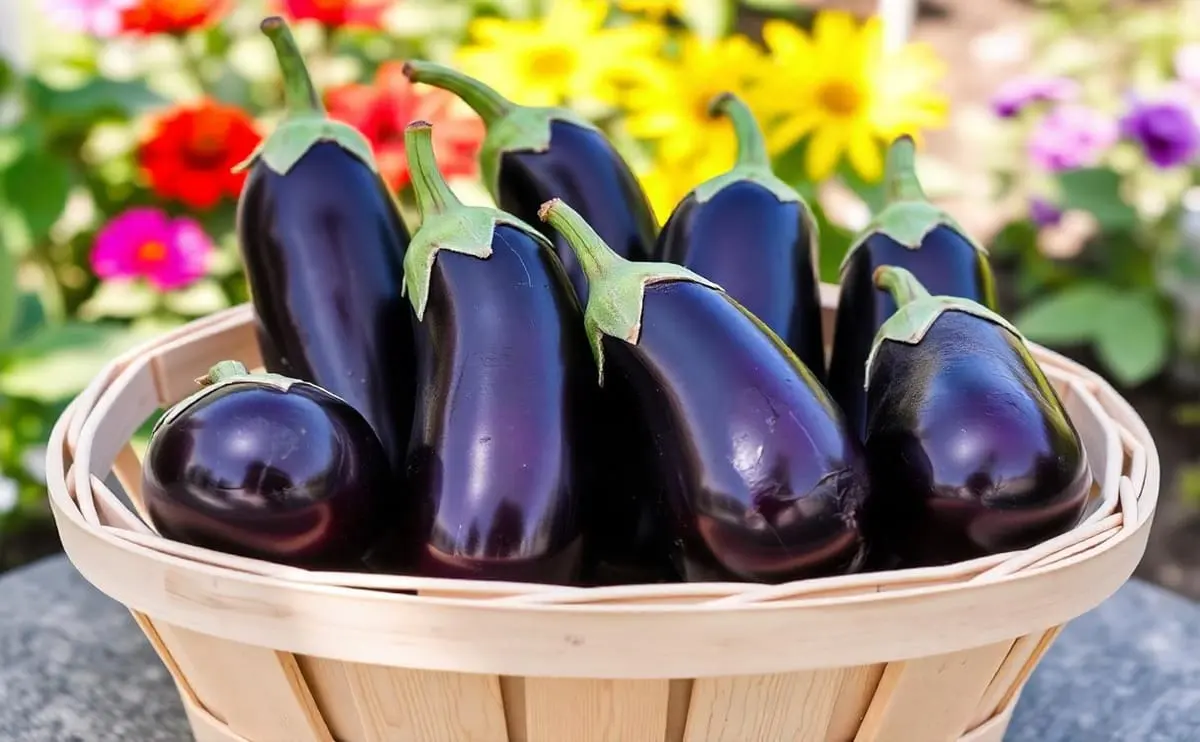
Eggplant (aubergine) is a low-calorie vegetable, with about 25 calories in 100 grams, and it is a staple in Persian, Turkish, Mediterranean, Indian and Asian cooking. It is mostly water, with fiber and plant compounds that give the skin its deep purple color. The challenge is not the eggplant itself but the oil: eggplant soaks up fat like a sponge, so how you cook it decides whether it is a light or a heavy dish.
Nutrition (raw, per 100 g, approximate)
- About 25 calories
- 3 g fiber
- Potassium, manganese, folate and vitamin K in small amounts
- Nasunin (an anthocyanin in the purple skin) and chlorogenic acid, both antioxidants
Possible benefits
- Heart health: fiber and antioxidants such as nasunin and chlorogenic acid may help support healthy cholesterol levels and reduce oxidative stress. Evidence comes mostly from lab and animal studies.
- Blood sugar: fiber slows sugar absorption, which suits people managing diabetes, as long as it is not fried in a lot of oil.
- Fullness and weight: low calories and high water and fiber help you feel full, and eggplant’s meaty texture can replace some meat in stews and pasta.
- Cell protection: nasunin in the skin is an antioxidant studied for protecting cell membranes. Eat the skin when you can.
How to cook eggplant without oil overload
- Roast or grill instead of frying. Brush slices or cubes lightly with oil and roast at 220°C for 20 to 25 minutes, turning once. This uses a fraction of the oil of pan frying.
- Salt it first. Sprinkle slices with salt, leave 20 to 30 minutes, then pat dry. This draws out water, collapses the spongy cells and helps the eggplant absorb less oil. Modern eggplants are rarely bitter, but salting still improves texture.
- Microwave or steam first. Steam or microwave cubes for 3 to 4 minutes, then brown them in a little oil; they absorb much less.
- Roast whole for smoky dips. Prick whole eggplants and roast at 220°C for 40 to 50 minutes, or char them over a gas flame, until collapsed. Scoop out the soft flesh.
Eggplant in Persian cooking
- Mirza ghasemi: smoky eggplant with garlic, tomato and egg from northern Iran.
- Kashk-e bademjan: mashed eggplant with whey (kashk), fried onions, mint and walnuts.
- Khoresh bademjan: a tomato and meat stew with golden eggplant halves.
Many of these dishes traditionally use fried eggplant; roasting or grilling the eggplant first gives a lighter version with the same flavor.
How to choose and store eggplant
- Choose eggplants that feel heavy for their size, with smooth, glossy skin and a fresh green stem.
- Press gently: the flesh should spring back. Soft spots or wrinkled skin mean it is old.
- Smaller eggplants usually have fewer seeds and a sweeter taste.
- Store in a cool spot or the warmest part of the fridge and use within 3 to 5 days. Eggplant does not like very cold temperatures.
- Cut eggplant browns quickly; cut it just before cooking.
Good partners
Eggplant loves tomato, garlic, yogurt, onions, lentils, chickpeas, mint, basil, cumin and smoked paprika.
Who should be careful?
- Eggplant belongs to the nightshade family, like tomatoes and peppers. A few people feel digestive discomfort or have an allergy.
- Raw eggplant is bitter and hard to digest; cook it well.
- Eggplant contains some oxalate; people who form kidney stones may be told to limit high-oxalate foods.
- Fried eggplant can be very high in calories; keep portions modest.
Frequently asked questions
Should I peel eggplant?
Usually not. The skin holds most of the antioxidants. Peel only large, tough eggplants or for very smooth dips.
Why is my eggplant bitter?
Old, large or seedy eggplants can be bitter. Salting and roasting help.
This is general information, not medical advice.