
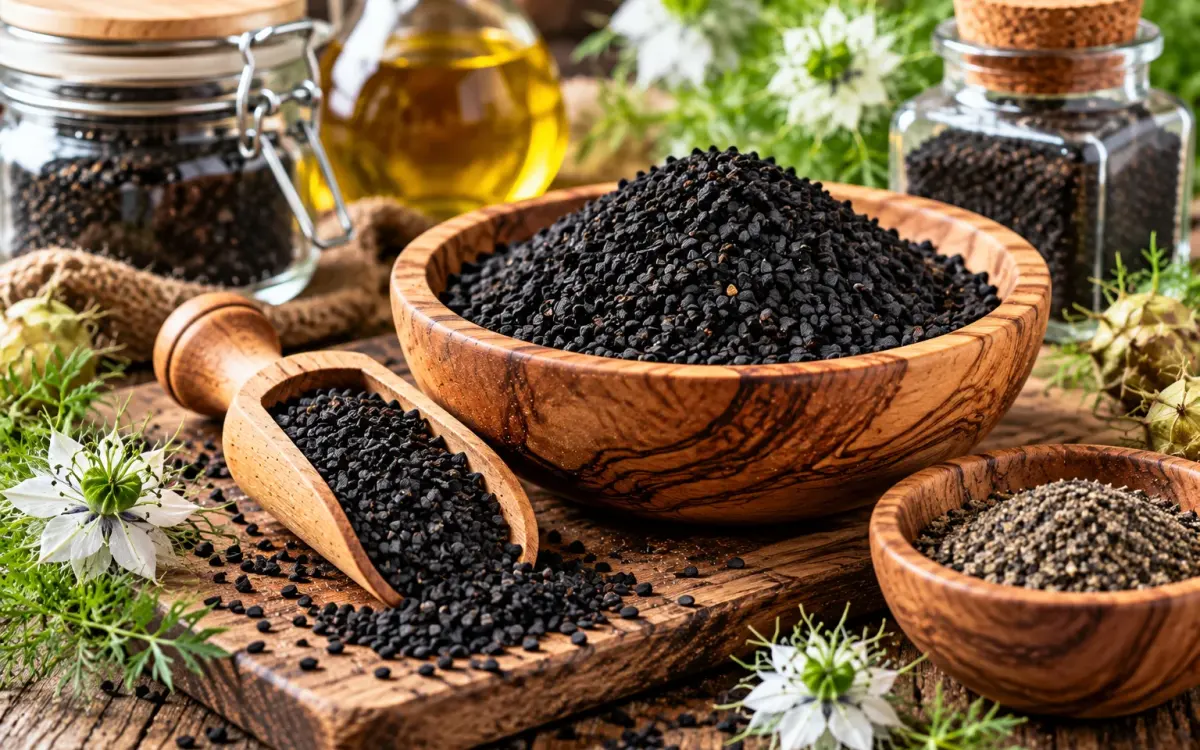
Black seed, also called nigella or black cumin (Nigella sativa, known as siah daneh in Persian), is valued for its peppery, slightly bitter taste and its natural oils. Those oils are also the reason it needs careful storage: once the seeds are ground, the oils begin to break down quickly and the flavor fades. Here is how to keep black seed fresh and how to use it.
The simple rule: grind just before you use it
Whole seeds keep their oils inside a protective shell. Grinding breaks that shell and exposes the oils to air, light and heat. To get the most flavor and nutrition from black seed, keep it whole and grind only the amount you need, using a small spice grinder or a mortar and pestle. Lightly toasting the seeds in a dry pan for 30 seconds before grinding also brings out the aroma.
How to store whole black seeds
- Use an airtight glass jar with a tight lid. Plastic bags let in air.
- Keep it dark and cool. A cupboard away from the stove is better than a shelf above it. Avoid sunny windowsills.
- Keep it dry. Moisture causes clumping and mold; never use a wet spoon.
- Label the date. Whole seeds usually stay good for about a year; ground seeds are best used within a few weeks (up to 3 months).
- For longer storage, keep a sealed jar in the freezer, then take out a small amount into a small jar for daily use to avoid condensation.
What about black seed oil?
Black seed oil is more delicate than the seeds. Store it in a dark glass bottle, keep it in the refrigerator after opening, and use it within the date on the label (usually 6 months to a year, sooner after opening). If it smells sharp or bitter in an unpleasant way or like old paint, it has probably gone off. Buy cold-pressed oil in small bottles.
How to check freshness
- Fresh seeds are shiny, matte black and smell sharp, oniony and peppery when rubbed.
- Old seeds look dull and gray, and smell dusty or musty.
- Seeds with moisture, mold or tiny insects should be discarded.
Easy ways to use black seed
- Sprinkle whole seeds on flatbread, bagels or savory pastries; it is the classic topping of Turkish pide and Persian nan flatbreads.
- Stir a pinch of freshly ground seeds into yogurt or soup.
- Add to salads, roasted vegetables, rice dishes, lentils and pickles.
- Mix with honey as a traditional wellness spoonful (see our notes on honey; never for babies under 1 year).
- Pair with sumac and cumin on roasted chicken or chickpeas.
Flavor and what it is called
Black seed tastes like a mix of oregano, onion, pepper and a little bitterness, with a hint of cumin and nutmeg. It is not the same as black cumin (Bunium persicum) or regular cumin, and it is not onion seed, although it is often called “kalonji” or onion seed in Indian shops.
Health claims: a note of caution
Black seed has been used in traditional medicine for centuries, and some small studies suggest possible effects on blood sugar, cholesterol and inflammation. The evidence is limited, so it is a flavorful food, not a cure. Use culinary amounts. People who are pregnant, who take blood-pressure or diabetes medicines, or who are preparing for surgery should talk to their doctor before taking it in supplements or oil.
Buying tips
- Buy whole seeds from shops with fast turnover, in sealed bags or jars.
- Choose uniform, matte black, uncrushed seeds.
- Smell before buying if possible; a strong aroma means fresh seeds.
Frequently asked questions
Can I use ground black seed in cooking?
Yes, but grind it fresh in small batches.
Does toasting destroy its benefits?
Light toasting for seconds is fine; do not burn it.