The Popsicle, one of the world’s most loved summer treats, began with a simple mistake and a cold night. The story of an 11-year-old inventor, a wooden stick and a patent is one of the best-known tales in food history, and it is a reminder that some of the best inventions come by accident.
The accidental discovery (1905)
According to the family story, in 1905 an 11-year-old boy named Frank Epperson, in San Francisco, was mixing soda powder with water using a wooden stick. He left the cup on the porch overnight. Temperatures fell below freezing, and the next morning the drink was frozen solid around the stick. Frank held the stick, pulled out the frozen drink and tasted it. He was delighted: a cold, sweet treat you could hold by the handle.
The details come mostly from Epperson’s own later account, so historians treat it as the traditional version of the story.
From a childhood treat to a business
Frank made frozen drinks for his friends and later for his own children, who called them “Pop’s ‘sicles”. In 1923, as an adult, he began selling them at a fire fighters’ ball and a seaside amusement park in Oakland, California, and in 1924 he received a patent for a “frozen confection of attractive appearance, which is convenient to handle and to eat” that he called the “Epsicle”. The original flavors included cherry, orange, grape, lemon and strawberry.
The Popsicle brand
Epperson’s children’s nickname became the brand name, Popsicle. In the 1920s he sold the rights to the Joe Lowe Company of New York, and Popsicle became a national favorite. The company later introduced twin sticks that could be broken in half to share, which were popular during the Great Depression because two children could share one nickel treat. Over time, the idea spread, and ice pops in many flavors are now sold around the world under many names.
Fun facts
- Ice pops and similar frozen treats exist in almost every culture, from Persian bastani-style treats and faloodeh to Indian kulfi, Mexican paletas and Italian granita.
- The first fruit flavors were simple: cherry, orange, grape and lemon.
- The original idea needed no machine, just a cup, a stick and a cold night.
- Popsicle is a registered trademark; ice pop is the general name.
- In the US, July is National Ice Cream Month and many families make ice pops at home.
Make your own ice pops at home
You do not need a special mold; paper cups and wooden sticks work.
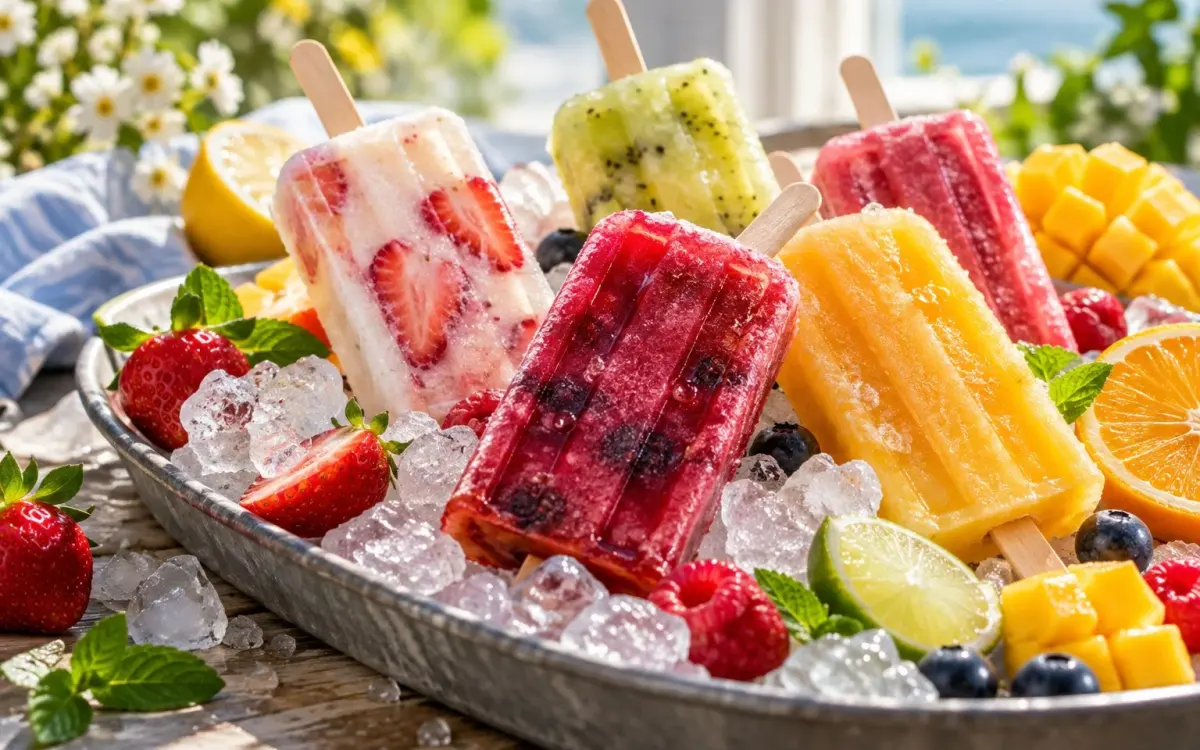
- Choose a base: fruit juice, blended fruit, yogurt, lemonade or coconut water. For a creamy pop, mix plain yogurt with fruit and a little honey (never honey for babies under 1 year).
- Pour into molds or paper cups, leaving 1 cm at the top for expansion.
- Freeze for 1 hour, insert the sticks when the mixture is slushy so they stand straight, then freeze for 4 to 6 hours or overnight.
- To unmold, dip the mold briefly in warm water.
Some ideas: watermelon and mint, strawberry and yogurt, mango and lime, or a pomegranate and mint punch poured into molds. For another quick frozen treat, see frozen yogurt fruit clusters.
Tips for better ice pops
- A little sugar or honey keeps the pops from freezing rock hard.
- Strain seeds from the fruit puree for a smooth texture.
- Layer different colors, letting each layer freeze for 30 to 45 minutes before adding the next.
- Store wrapped or in a freezer-safe container for up to 2 months.
Frequently asked questions
Is the story really true?
It is the traditional version told by the Epperson family and the company. The patent record confirms that he applied in 1923 and was granted it in 1924.
Are ice pops healthy?
Homemade fruit pops are lighter than many desserts, but shop-bought ones can contain a lot of added sugar; check the label.