

🔊 Cook mode: big steps, timers and voice control (say “next”), hands-free.
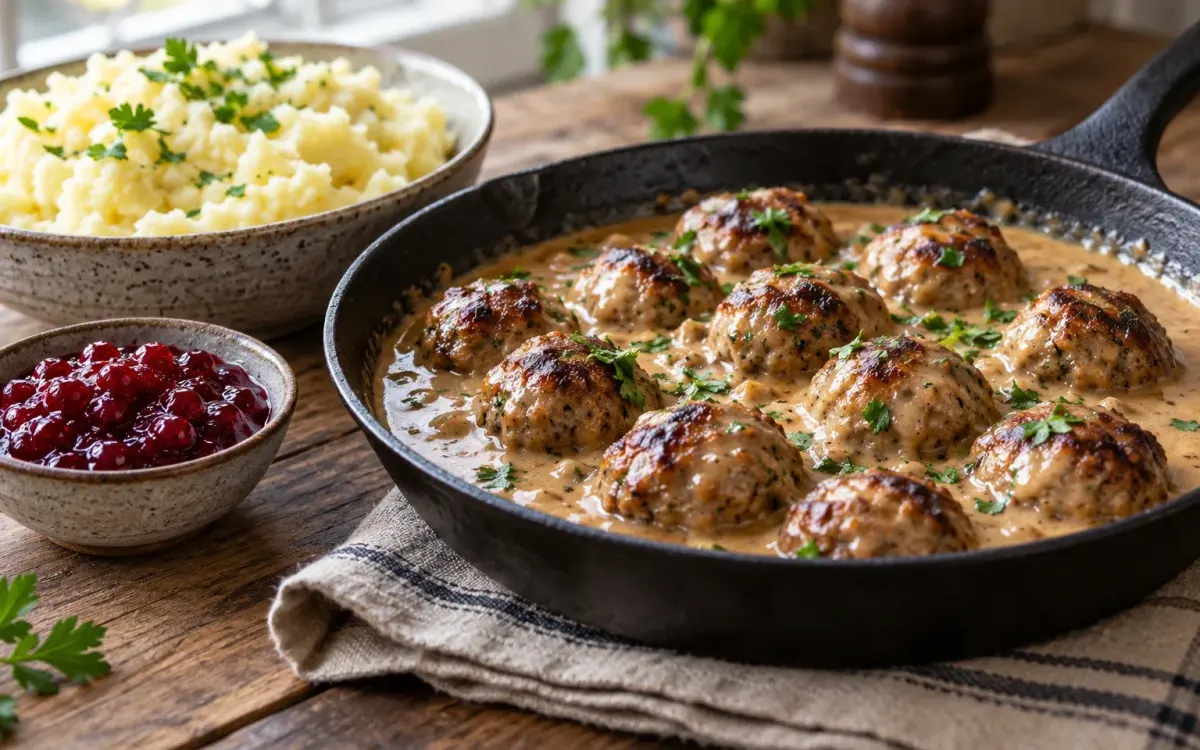
Swedish meatballs are small, tender beef-and-pork meatballs simmered in a silky brown cream gravy and traditionally served with mashed potatoes and tart lingonberry jam. They taste savoury and gently spiced, with a hint of warm allspice and nutmeg. With the holiday party season about to begin, they are one of the easiest dishes to make ahead and keep warm for a crowd, which is why searches for them climb every November and December.
Why this version works
The secret to tender meatballs is a panade: breadcrumbs soaked in milk and mixed into the meat. It holds moisture inside the meatball so they stay soft rather than rubbery. Grating the onion (instead of chopping it) lets it melt into the mix, and using both beef and pork gives flavour and richness. Brown the meatballs in butter, then build the gravy in the same pan so every browned bit ends up in the sauce.
Tips for the best meatballs
- Mix gently. Stir just until combined. Overworking the meat makes the meatballs dense.
- Keep them even. Use a small cookie scoop (about 1 tablespoon) so every meatball cooks at the same speed.
- Wet your hands with cold water to stop the mixture sticking while you roll.
- Don’t boil the gravy. Once the cream goes in, keep it at a gentle simmer so it stays smooth and glossy.
- Season at the end. Broth saltiness varies, so taste the gravy before adding more salt.
Variations
- All beef or turkey: use 1½ lb (675 g) of either; add a little extra butter to the mix for moisture.
- Dairy-light gravy: replace half the cream with extra broth for a lighter sauce.
- Gluten-free: swap the breadcrumbs for gluten-free crumbs and thicken the gravy with a gluten-free flour blend.
- Cocktail-party style: make the meatballs half the size and serve from a slow cooker with toothpicks.
Serving ideas and menu
For dinner, serve over buttery mashed potatoes or egg noodles with a spoonful of lingonberry jam (or cranberry sauce if you cannot find it; most large supermarkets and IKEA-style food shops sell lingonberry jam). Add quick pickled cucumbers or a green salad to cut the richness, and steamed green beans for colour. For a party, keep the meatballs warm in a slow cooker on low.
Make-ahead and storage
Cook the meatballs and gravy up to two days ahead and refrigerate in an airtight container; reheat gently on the stove with a splash of broth. They freeze well for up to three months: cool completely, freeze in the gravy, and thaw overnight in the fridge before reheating.
Recipe
Swedish Meatballs with Creamy Gravy: Tender, Cozy and Make-Ahead
- Prep
- 25 min
- Cook
- 35 min
- Total
- 1 h
- Calories
- 520
Ingredients
Meatballs
Gravy
To serve
Method
Stir the breadcrumbs and milk together in a large bowl and let them soak for 5 minutes.
Add the egg, grated onion, beef, pork, salt, pepper, allspice and nutmeg, and mix gently until just combined.
With wet hands, roll the mixture into about 30 meatballs, each roughly 1 tablespoon.
Melt 2 tablespoons of butter in a large skillet over medium heat and brown the meatballs in batches for about 6 minutes, turning often. Transfer to a plate.
In the same skillet, melt 3 tablespoons of butter, whisk in the flour and cook for 1 minute until pale golden.
Slowly whisk in the broth until smooth, then add the cream, soy sauce and mustard and simmer gently for 5 minutes until lightly thickened.
Return the meatballs to the gravy and simmer for 10 minutes until cooked through. Taste and adjust the salt.
Serve hot over mashed potatoes or noodles with lingonberry jam.
Tips
- Mix the meat gently so the meatballs stay tender.
- Keep the gravy at a gentle simmer after adding the cream so it does not split.
- Make ahead: refrigerate up to 2 days or freeze in the gravy up to 3 months.
Nutrition per serving
- Calories
- 520
- Protein
- 30 g
- Carbs
- 17 g
- Fat
- 37 g
- Fiber
- 1 g
Estimated values, for information only.
Vitamins and minerals per serving
- Vitamin B1287%
- Zinc41%
- Vitamin A19%
Share of an adult’s daily value (FDA). Estimated from the main ingredients using USDA data, ignoring cooking losses; for information only. What do I need each day?


Comments