
Mozzarella is a soft, mild, stretchy cheese from southern Italy, loved on pizza, in salads and in baked pasta. It was traditionally made from water buffalo milk (mozzarella di bufala), but most mozzarella today is made from cow’s milk. Like all cheese, it offers useful nutrients, and it is lighter than many aged cheeses, but it is still best eaten in sensible amounts.
Types of mozzarella
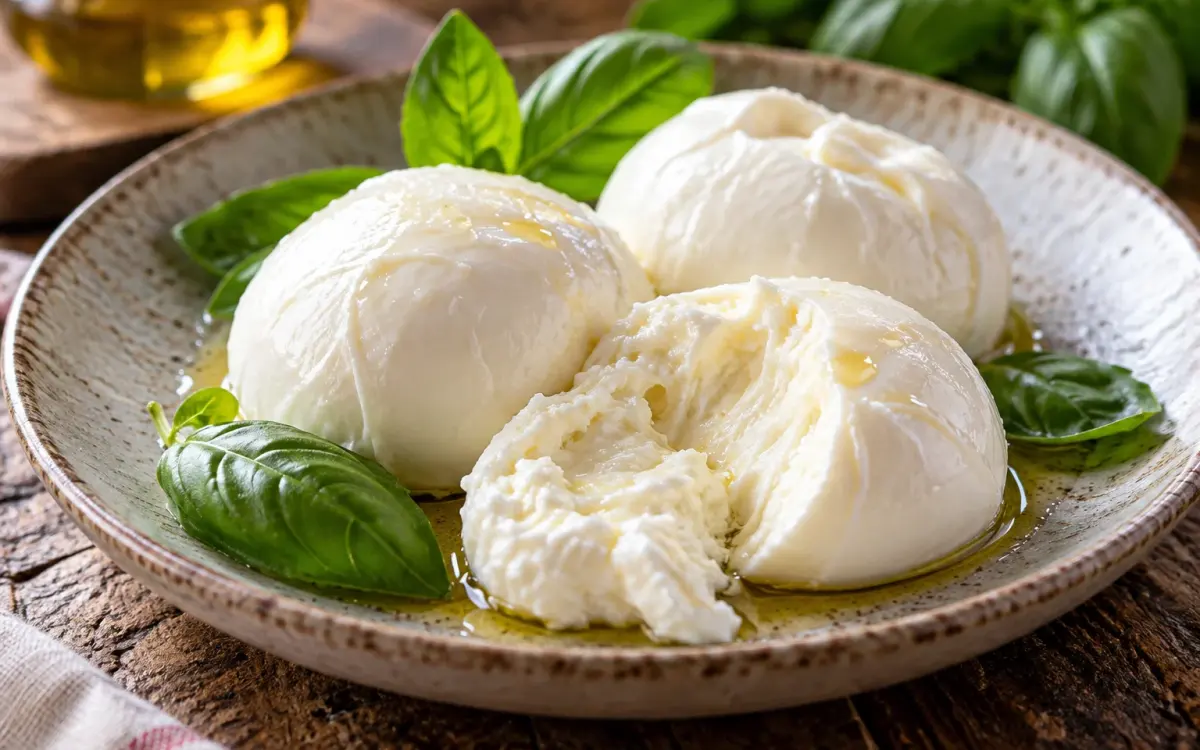
- Fresh mozzarella: soft, moist balls sold in brine or whey. Mild, milky and best eaten raw or lightly warmed.
- Buffalo mozzarella: made from buffalo milk; creamier, richer and higher in fat.
- Burrata: a mozzarella shell filled with cream and soft curds; much richer.
- Low-moisture mozzarella: firmer blocks or shredded cheese, made for melting on pizza and in baked dishes. Available as whole-milk or part-skim.
Nutrition (per 100 g, approximate)
- Fresh whole-milk mozzarella: about 250 to 280 calories, 18 to 22 g protein, 17 to 20 g fat
- Low-moisture part-skim mozzarella: about 280 to 300 calories, 24 g protein, 16 to 18 g fat
- Calcium: roughly 40 to 60% of daily needs
- Vitamin B12, phosphorus, zinc and riboflavin
- Sodium: about 400 to 700 mg, lower in fresh mozzarella than in most hard cheeses
A typical serving is about 30 g, roughly the size of two dice or a thick slice.
Benefits
- High-quality protein supports muscles, tissue repair and fullness.
- Calcium and phosphorus support bones and teeth.
- B12 and zinc support nerves, red blood cells and immunity.
- Lower sodium and fewer calories than many cheeses, such as cheddar or parmesan, especially fresh mozzarella.
- Probiotics: some traditionally made versions contain beneficial bacteria, though most supermarket mozzarella does not.
Drawbacks
- Saturated fat and calories, especially in whole-milk, buffalo mozzarella and burrata.
- Salt, particularly in low-moisture and shredded types and on pizza.
- Lactose: mozzarella has less lactose than milk, and many people with mild lactose intolerance can eat small amounts, but very sensitive people may react.
- Milk allergy: avoid it completely if you are allergic to cow’s milk protein.
- Additives: pre-shredded mozzarella often contains anti-caking starch or cellulose. It is safe, but the cheese melts less smoothly.
Mozzarella compared with other cheeses (per 30 g, approximate)
- Fresh mozzarella: 75 to 85 calories, 120 to 180 mg sodium
- Cheddar: about 120 calories, 180 mg sodium
- Feta: about 75 calories, 300 to 350 mg sodium
- Parmesan: about 120 calories, 450 mg sodium
How to enjoy it healthily
- Choose part-skim mozzarella for baking, such as in a lighter lasagna.
- Use smaller amounts with plenty of vegetables, such as tomato, basil and olive oil in a Caprese salad, or on a vegetable pizza.
- Grate or tear it thinly; a little covers more surface.
- Balance a cheesy meal with a green salad and whole grains.
Cooking tips
- For pizza, use low-moisture mozzarella, or dry fresh mozzarella well on paper towels so the pizza is not watery.
- Add fresh mozzarella to pizza in the last few minutes for a creamier result.
- Grate cheese from a block for the smoothest melt; see our Detroit-style pizza.
Safety and storage
- Pregnant women should choose mozzarella made from pasteurized milk only. Most supermarket mozzarella is pasteurized; check the label.
- Fresh mozzarella keeps in its brine in the refrigerator for about 5 to 7 days after opening; low-moisture blocks last 2 to 3 weeks once opened.
- Freeze shredded low-moisture mozzarella for up to 3 months; fresh mozzarella becomes rubbery and watery when frozen.
- Throw away mozzarella that smells sour, feels slimy or shows mold.
Frequently asked questions
Is mozzarella healthier than other cheeses?
Fresh mozzarella is lower in salt and calories than many aged cheeses, so it is a good choice in sensible portions.
Can I eat mozzarella if I am lactose intolerant?
Many people can eat small amounts. Start with a little and see how you feel.
This is general information, not medical advice.