🔊 Cook mode: big steps, timers and voice control (say “next”), hands-free.
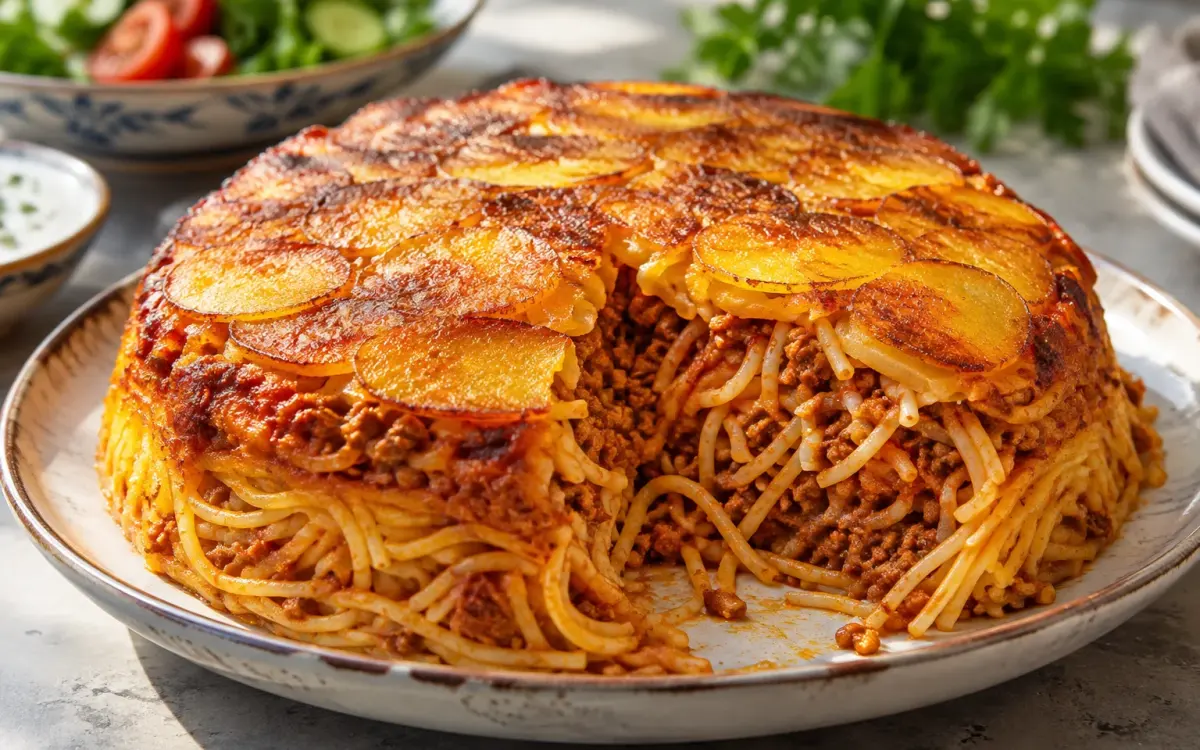
Spaghetti may be an Italian classic, but in Iranian kitchens it gets a different treatment: it is boiled, drained, layered with spiced minced meat and then steamed like rice, so the bottom of the pot turns into a golden tahdig. This version serves four and suits family dinners and gatherings, especially when you want one pot that feeds everyone.
Why it works
The two-stage method keeps the pasta from turning mushy. Boiling it only until al dente leaves room for it to finish cooking in the steam, and draining it completely means it absorbs the flavor of the meat sauce rather than extra water. Turmeric, black pepper and a pinch of cinnamon give the sauce a gently warm, Persian-style aroma, and the oil at the bottom of the pot creates the crisp crust everyone fights over.
Tips for the layering and steaming
- Do not overboil the pasta. Seven to eight minutes is enough; it will keep cooking in the pot. Our guide to cooking pasta al dente explains how to test it.
- Oil the pot well. The oil at the bottom is what makes the tahdig, and a thin drizzle between layers helps stop clumping.
- Alternate layers. Spoon sauce and spaghetti in turns, finishing with a layer of spaghetti.
- Make steam holes. Poke a few holes with the back of a spoon so the steam moves evenly.
- Wrap the lid. A clean cotton cloth (not paper towel) under the lid absorbs steam; if your lid has vent holes you do not need it.
- Keep the heat low and steam for 30 to 40 minutes.
Tahdig options
For potato tahdig, arrange thin potato slices at the bottom of the oiled pot before layering. For a more fragrant crust, mix saffron with the oil that goes at the bottom. If you love tahdig, see our Persian potato tahdig guide for more tips on getting it crisp.
Common mistakes
- Cooking the spaghetti fully in the first boil, which leads to a soft, sticky result.
- Not draining it well, which makes the dish wet.
- Using too high a heat, so the bottom burns before the top steams. If pasta tends to clump, read how to keep pasta from sticking.
- Skipping the cloth or vent holes, which lets condensation drip back and soften the top.
Variations and substitutions
- Whole-wheat spaghetti is an option for people who prefer a higher-fiber pasta, for example those managing blood sugar.
- Less salt: season in small amounts, since the dish is relatively high in sodium; this matters for people with hypertension.
- More protein: use more meat or add lentils to the sauce.
- Child-friendly: keep the spices mild.
The dish is fairly high in calories and carbohydrates, so portion size matters if you are counting either.
Make-ahead and storage
You can cook the meat sauce and boil the pasta ahead, then layer and steam later. Leftovers keep in the fridge for up to 3 days and reheat well in a covered pan or the microwave.
Serving ideas
Serve it with a fresh salad and a bowl of yogurt. A Shirazi salad cuts through the richness nicely.
FAQ
Can I make it without meat?
Yes. Replace the minced beef with cooked lentils or sautéed mushrooms and keep the same spices.
Why is my tahdig not crisp?
Usually there was too little oil or the heat was too low at the start. Heat the oiled pot briefly before layering.
Can I use another pasta?
Yes, but spaghetti layers and steams most evenly; shorter pasta needs a little less boiling time.
Recipe
Middle Eastern Layered Spaghetti Recipe
- Prep
- 15 min
- Cook
- 45 min
- Total
- 1 h
- Calories
- 550
Ingredients
Method
Prepare the Meat Sauce: - Sauté diced onions in oil until golden
- Add ground beef and brown it
- Season with salt, pepper, and turmeric
- Add tomato paste and sauté until fragrant
- Add a little water and simmer until meat is fully cooked
- Finish with a sprinkle of cinnamon
Cook the Pasta: - Bring a large pot of water to boil
- Once boiling, add salt and 2 tablespoons of oil
- Add spaghetti to the boiling water
- Cook for 7-8 minutes until al dente
- Drain completely in a colander
Layering and Steaming: - Oil the bottom of the pot (for tahdig/crispy bottom)
- Optional: arrange sliced potatoes at the bottom for potato tahdig
- Layer spaghetti and meat sauce alternately
- Final layer should be spaghetti
- Reduce heat and steam for 30-40 minutes
Tips
- For steaming, use a clean cotton cloth (not paper towel) to absorb steam
- If the pot lid has holes, no cloth is needed
- Drizzle oil between layers to prevent sticking
- Create holes with the back of a spoon for better steam distribution
- For better tahdig, mix saffron with oil and pour at the bottom
- Chef's Notes:
- For best results, don't overcook the pasta during the initial boiling
- The layering technique is crucial for authentic Iranian-style results
- Can be prepared in advance and reheated
- Leftovers can be stored in the refrigerator for up to 3 days
- Perfect for family gatherings and meal prep
- This recipe combines Italian pasta tradition with Iranian cooking techniques, creating a unique and delicious fusion dish that's become a staple in Iranian households.
Nutrition per serving
- Calories
- 550
- Protein
- 25 g
- Carbs
- 80 g
- Fat
- 15 g
- Fiber
- 3 g
Estimated values, for information only.
Vitamins and minerals per serving
- Vitamin B1268%
- Zinc48%
- Magnesium21%
- Vitamin E20%
- Iron20%
Share of an adult’s daily value (FDA). Estimated from the main ingredients using USDA data, ignoring cooking losses; for information only. What do I need each day?